

Best AI Tools for Content Creators in 2026 (Free & Paid)
The digital landscape in 2026 is more competitive than ever. With millions of blog posts, videos, and social media updates published daily, content creators must produce high-quality material faster while maintaining originality and relevance. This is where AI tools have become essential rather than optional.
AI-powered platforms now help creators brainstorm ideas, write drafts, edit visuals, optimize SEO, and even analyze audience engagement. Instead of replacing human creativity, AI enhances it. Creators who adopt AI tools gain a serious advantage in productivity, consistency, and scalability.
How AI Improves Productivity
AI dramatically reduces the time required for repetitive tasks. Writing outlines, generating captions, repurposing long-form content into social posts, and optimizing articles for search engines can now be done in minutes.
For example, tools like ChatGPT can generate structured blog drafts, rewrite content for clarity, and create headline variations instantly. This eliminates hours of manual brainstorming.
AI also assists with:
- Keyword integration for SEO
- Grammar and tone adjustments
- Content repurposing
- Research summarization
- Automated email sequences
By automating low-value tasks, creators can focus on strategy, storytelling, and brand building, the elements that truly differentiate them.
AI vs Traditional Content Creation
Traditional content creation relies entirely on manual effort. Writers conduct research, draft content, edit multiple versions, and optimize SEO manually. While this approach ensures full control, it is time-consuming and difficult to scale.
AI-powered workflows combine human creativity with machine efficiency. Instead of replacing the creator, AI acts as a co-pilot:
- Humans provide direction and originality.
- AI provides speed and structure.
- Humans refine and personalize.
- AI optimizes and analyzes.
In 2026, relying solely on traditional methods can slow growth. The most successful creators integrate AI strategically without compromising authenticity.
ROI of Using AI Tools
Return on investment (ROI) is one of the strongest reasons creators adopt AI tools.
Here’s why AI delivers measurable returns:
Time Savings: Producing content faster means publishing more frequently.
Higher Output: More content leads to more traffic opportunities.
Improved SEO Performance: AI tools optimize structure and keywords.
Reduced Outsourcing Costs: Fewer freelance editing or writing expenses.
For bloggers and copywriters monetizing through ads, affiliate marketing, or client services, increased productivity directly translates into higher revenue. Even paid AI subscriptions often pay for themselves within weeks when used strategically.
You might also like this: Smart Home Essentials
How We Selected the Best AI Tools
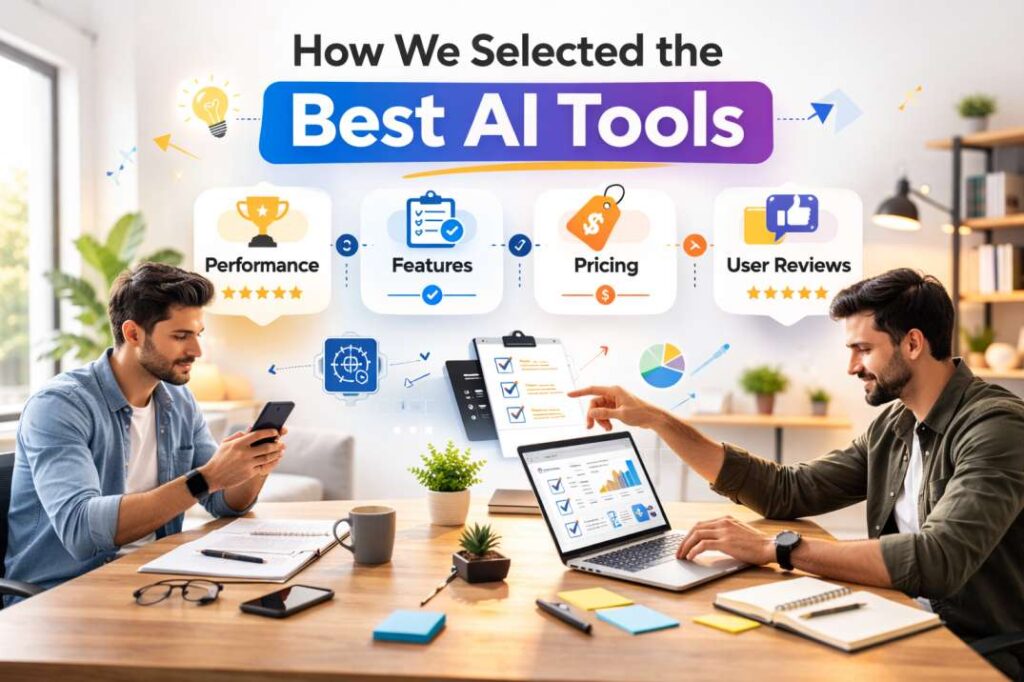
With hundreds of AI platforms available, choosing the best ones requires a structured evaluation. Not every AI tool delivers consistent quality, scalability, or value.
We focused on practical tools that creators can use daily, not experimental or overly complex systems.
Selection Criteria
Each tool was evaluated based on:
- Content quality and coherence
- SEO optimization capability
- Speed and reliability
- Customization options
- Integration with other platforms
- Regular updates and improvements
We also considered whether the tool supports different types of creators, bloggers, copywriters, marketers, and social media managers.
Free vs Paid Comparison Factors
Many AI tools offer free plans, but these often come with usage limits or reduced features. When comparing free vs paid versions, we analyzed:
- Word or usage limits
- Access to advanced models
- Team collaboration features
- Export options
- API or integration capabilities
Free tools are ideal for beginners testing AI workflows. Paid plans, however, are better suited for creators who publish consistently and need advanced capabilities.
Ease of Use & Learning Curve
An AI tool should simplify content creation, not complicate it. Therefore, usability was a major factor.
We prioritized tools with:
- Clean dashboards
- Simple prompt systems
- Pre-built templates
- Tutorials and documentation
In 2026, creators expect intuitive platforms. A steep learning curve reduces efficiency and defeats the purpose of automation.
You might also like this: Quartist Review 2026
Best AI Writing Tools for Bloggers & Copywriters
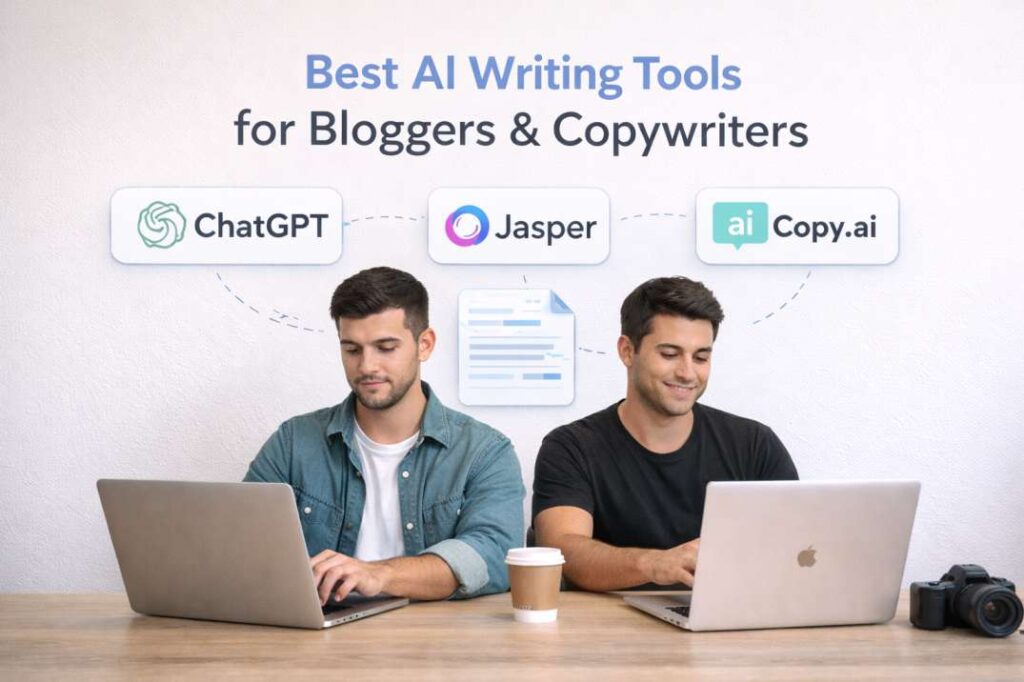
AI writing tools remain the most popular category for content creators. They assist with blog posts, sales pages, ad copy, email marketing, and more.
Below are three leading AI writing tools in 2026.
ChatGPT
ChatGPT continues to dominate the AI writing space due to its versatility and natural language capabilities.
It can:
- Generate long-form blog content
- Create outlines and headlines
- Rewrite and expand drafts
- Produce email sequences
- Assist with SEO structuring
Its conversational interface makes it easy for beginners, while advanced users can leverage detailed prompts for more refined outputs.
ChatGPT works best when paired with human editing to maintain brand voice and originality.
Jasper
Jasper is specifically built for marketers and professional content teams.
Key strengths include:
- Pre-built marketing templates
- Brand voice customization
- Team collaboration features
- SEO integrations
Jasper is particularly useful for agencies managing multiple clients because it allows consistent tone control and campaign scaling.
Copy.ai
Copy.ai focuses heavily on short-form marketing copy.
It excels at:
- Social media captions
- Product descriptions
- Email subject lines
- Ad copy
Copy.ai is ideal for creators and small businesses that prioritize conversion-focused content rather than long-form blogging.
Key Features & Pricing Comparison
When comparing these tools, consider:
Content Depth:
ChatGPT performs strongly in long-form structured content.
Marketing Templates:
Jasper provides industry-specific templates for sales and advertising.
Short-Form Copy:
Copy.ai is optimized for quick, persuasive snippets.
Pricing:
- Free plans are available for testing on most platforms.
- Paid plans typically scale based on word limits and advanced features.
- Team and enterprise plans cost more but provide collaboration tools.
For individual bloggers, starting with a flexible AI assistant and upgrading as traffic grows is often the most cost-effective strategy.
You might also like this: Snaptroid Review 2026
Best AI Image Generation Tools for Creators
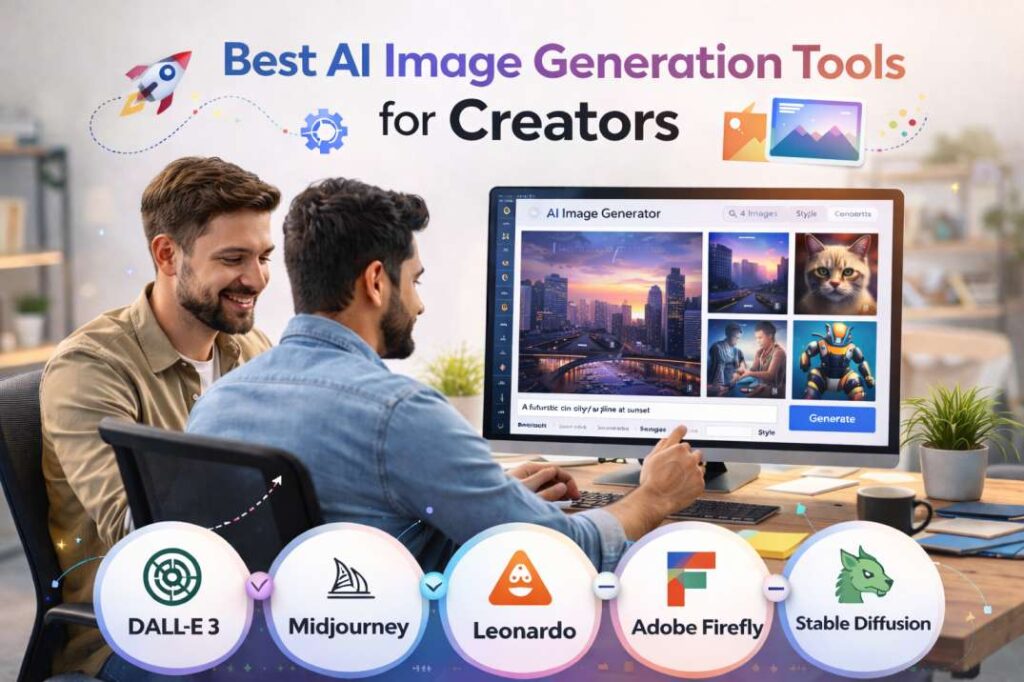
Visual content dominates digital platforms in 2026. From blog thumbnails and YouTube covers to Instagram posts and ad creatives, high-quality visuals directly impact engagement and conversions. AI image generation tools now allow creators to design professional graphics without advanced design skills.
Here are the best AI image generation tools for content creators this year.
Midjourney
Midjourney is widely recognized for producing artistic and highly detailed visuals. It is especially popular among designers, digital artists, and branding professionals.
Midjourney excels at:
- Cinematic illustrations
- Concept art
- Fantasy and futuristic designs
- Stylized branding visuals
Creators can generate unique thumbnails, blog feature images, and promotional artwork with detailed prompts. The platform is known for its strong creative interpretation, making it ideal for projects that require originality and visual storytelling.
However, it works best for stylized content rather than hyper-realistic commercial photography.
DALL·E
DALL·E is designed for generating realistic and creative images from text prompts. It can produce product mockups, social media graphics, and blog visuals within seconds.
Key strengths include:
- Realistic image rendering
- Object editing within images
- Background replacement
- Style adaptation
DALL·E is particularly useful for bloggers and marketers who need fast, high-quality visuals without hiring a photographer or graphic designer. Its flexibility makes it suitable for both professional and beginner creators.
Canva AI Tools
Canva has integrated AI features directly into its user-friendly design interface. This makes it one of the easiest platforms for non-designers.
Canva’s AI tools include:
- Text-to-image generation
- Magic design suggestions
- AI background remover
- Instant content resizing
Unlike standalone AI image generators, Canva combines AI creation with drag-and-drop editing. This is perfect for creators who want to design complete marketing assets such as social posts, presentations, or YouTube thumbnails in one place.
Image Quality & Commercial Rights
When choosing an AI image generator, two factors matter most: quality and commercial usage rights.
Image Quality:
- Midjourney produces visually artistic and stylized results.
- DALL·E focuses more on realistic and versatile images.
- Canva offers practical, ready-to-use marketing visuals.
Commercial Rights:
Most AI platforms allow commercial usage under specific subscription plans. However, creators should always review licensing terms before using AI-generated images in ads, product packaging, or monetized content.
For professional creators, investing in a paid plan ensures better image resolution and clearer usage rights.
Best AI Video Creation Tools for YouTubers
AI video creation tools now simplify scripting, editing, and even avatar-based presentations. These tools are ideal for YouTubers looking to produce content consistently without spending hours editing.
Pictory
Pictory transforms text into engaging videos. Bloggers can convert articles into video summaries, and marketers can turn scripts into visual content within minutes.
Pictory is known for:
- Automatic scene generation
- Stock video integration
- AI voiceovers
- Subtitle automation
It is especially useful for faceless YouTube channels or creators repurposing written content into video format.
Synthesia
Instead of appearing on camera, creators can generate professional-looking presentations with digital presenters.
Key features include:
- AI avatars with natural speech
- Multiple language support
- Corporate training templates
- Script-based video creation
Synthesia is ideal for educational channels, online courses, and corporate explainers where professional delivery matters.
Runway
Runway offers advanced AI video editing capabilities. It is popular among creators who want more control over cinematic effects and visual storytelling.
Runway provides:
- Background removal in videos
- AI-generated motion effects
- Object tracking
- Text-to-video features
For YouTubers who want creative control without mastering complex editing software, Runway bridges the gap between automation and professional editing.
Video Editing & Automation Features
AI video tools offer powerful automation that saves hours of manual work:
- Auto subtitles and captions
- Script-to-video conversion
- Voice cloning and AI narration
- Scene detection and trimming
- Smart background editing
These features help creators maintain consistency and publish more frequently. Instead of spending days editing, creators can focus on research, scripting, and audience engagement.
Best AI Tools for Social Media Content
Social media requires speed, creativity, and consistency. AI tools now help creators schedule posts, generate captions, and analyze performance without hiring large teams.
Ocoya
Ocoya combines content generation with scheduling features. It helps creators write captions, design posts, and plan content calendars from one dashboard.
Ocoya is useful for:
- Automated caption writing
- Social post templates
- Hashtag suggestions
- Multi-platform scheduling
This makes it ideal for entrepreneurs and influencers managing multiple accounts.
Hootsuite AI Features
Hootsuite has integrated AI-driven features into its established scheduling system.
Its AI tools assist with:
- Caption refinement
- Optimal posting time suggestions
- Performance insights
- Trend analysis
For creators focused on analytics and long-term growth, Hootsuite’s AI-powered insights help improve engagement and audience targeting.
Caption & Hashtag Generators
AI-powered caption and hashtag generators have become essential for boosting reach. These tools analyze keywords, trends, and audience behavior to suggest optimized text.
Benefits include:
- Improved discoverability
- Faster content creation
- Increased engagement potential
- Consistent brand messaging
Whether integrated within larger platforms or used as standalone tools, caption and hashtag generators help creators stay competitive in crowded social feeds.
You might also like this: Simbramento Review 2026
Best AI Tools for SEO & Content Optimization
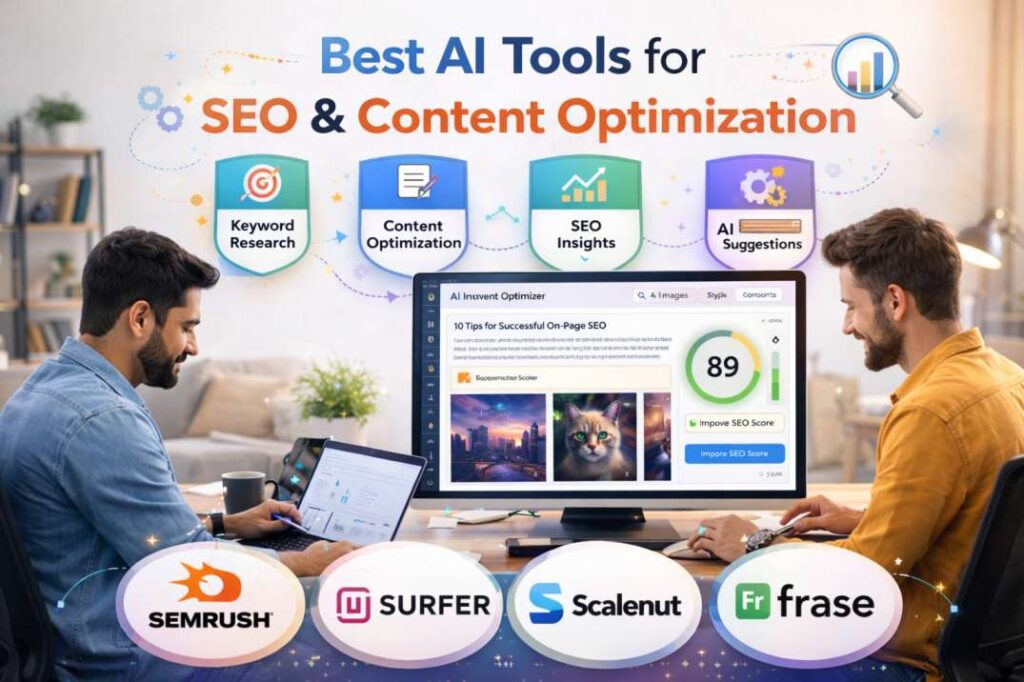
Search engine visibility remains the backbone of online growth in 2026. Even the most creative content won’t generate traffic if it isn’t optimized for search intent and keywords. AI-powered SEO tools now simplify research, optimization, and performance tracking, helping creators rank faster and smarter.
Surfer SEO
Surfer SEO is one of the most popular AI-driven content optimization platforms. It analyzes top-ranking pages and provides real-time recommendations for improving your article.
Key benefits include:
- Keyword density suggestions
- Content structure optimization
- NLP-based keyword analysis
- SERP competitor insights
Surfer SEO is especially useful for bloggers and affiliate marketers who want data-backed content strategies. By following its optimization guidelines, creators can increase their chances of ranking on competitive keywords.
Frase
Frase focuses on content research and AI-assisted writing. It helps users build SEO briefs by analyzing search results and extracting key topics competitors cover.
Frase stands out for:
- Automated content briefs
- Question-based keyword discovery
- AI-generated outlines
- Content gap analysis
This makes it ideal for writers who want to streamline research before drafting articles.
AI Keyword Research Capabilities
Modern AI tools go beyond basic keyword volume metrics. They analyze user intent, semantic relationships, and competitor strategies.
Advanced AI keyword research features include:
- Long-tail keyword clustering
- Intent categorization (informational, commercial, transactional)
- Trending topic detection
- SERP difficulty estimation
These insights allow creators to target opportunities with higher ranking potential and better conversion rates.
Free AI Tools for Beginners in 2026
Not every creator can invest in premium subscriptions right away. Fortunately, many AI tools offer free access, making it easier for beginners to explore automation.
Completely Free Tools
Some AI platforms provide limited but free features. Examples include:
- ChatGPT (basic access tier)
- Canva AI features (limited tools)
These tools allow users to experiment with content generation, design creation, and brainstorming without financial commitment.
Freemium AI Platforms
Freemium tools offer free access with upgrade options for advanced features. Platforms like Copy.ai and Pictory often provide trial credits or limited monthly usage.
Freemium models are beneficial for testing performance before committing to paid plans.
Limitations of Free Plans
While free AI tools are attractive, they often come with restrictions:
- Word or usage caps
- Limited advanced features
- Lower-quality output models
- Restricted export options
Beginners can start with free tools, but scaling typically requires upgrading to premium plans for consistent results.
You might also like this: Axurbain Review 2026
Pros and Cons of Using AI for Content Creation
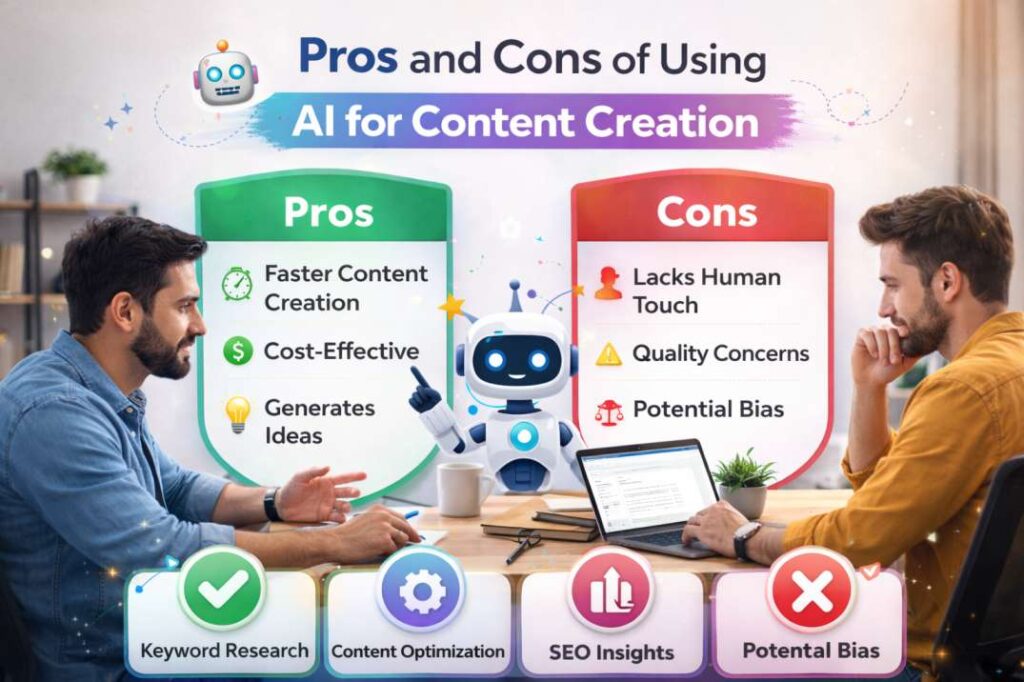
AI has transformed digital publishing, but it comes with both strengths and limitations.
Advantages
- Faster content production
- Improved SEO optimization
- Reduced outsourcing costs
- Easier idea generation
- Content repurposing automation
AI helps creators maintain consistency and stay competitive in crowded markets.
Potential Risks
- Over-reliance on automation
- Generic or repetitive outputs
- Reduced originality if not edited properly
- Inaccurate factual information
AI content should always be reviewed and refined to ensure accuracy and authenticity.
Ethical & Copyright Concerns
Creators must consider ethical use and intellectual property guidelines. AI-generated content may draw from large datasets, raising questions about originality.
Best practices include:
- Adding personal insights
- Fact-checking outputs
- Reviewing licensing terms for AI-generated images and media
Responsible use protects both your brand reputation and audience trust.
How to Choose the Right AI Tool for Your Needs
Not all AI tools serve the same purpose. Selecting the right one depends on your content format and goals.
For Bloggers
Bloggers benefit most from AI writing and SEO tools such as Surfer SEO and Frase. These platforms improve search rankings and streamline article creation.
For YouTubers
Video creators should prioritize AI video platforms like Pictory or advanced editing tools for faster production and subtitles.
For Social Media Influencers
Influencers managing multiple platforms can use tools like Hootsuite to automate scheduling and analyze engagement performance.
For Agencies
Agencies require scalable solutions with collaboration features, advanced reporting, and brand voice customization. Investing in premium plans ensures team efficiency and consistent output quality.
Frequently Asked Questions (FAQs)
Can AI-generated content rank on Google?
Yes, AI-generated content can rank if it is high-quality, optimized for search intent, and reviewed by humans for accuracy and originality.
Are AI tools replacing human creators?
No. AI enhances productivity but cannot replace human creativity, storytelling, and emotional intelligence.
Which AI tool is best for YouTube videos?
Tools like Pictory help convert scripts into engaging videos quickly, making them popular among YouTubers.
Are AI tools safe to use?
Most reputable AI platforms are safe when used responsibly. Always review privacy policies and content usage rights before publishing.
You might also like this: What Is Dougahozonn?
Conclusion
AI tools for SEO, content optimization, video production, and social media management are reshaping digital content creation in 2026. Whether you choose free platforms to start or invest in premium subscriptions for scaling, the key is strategic usage.
By combining AI efficiency with human creativity, creators can produce optimized, engaging, and scalable content that stands out in competitive online spaces.