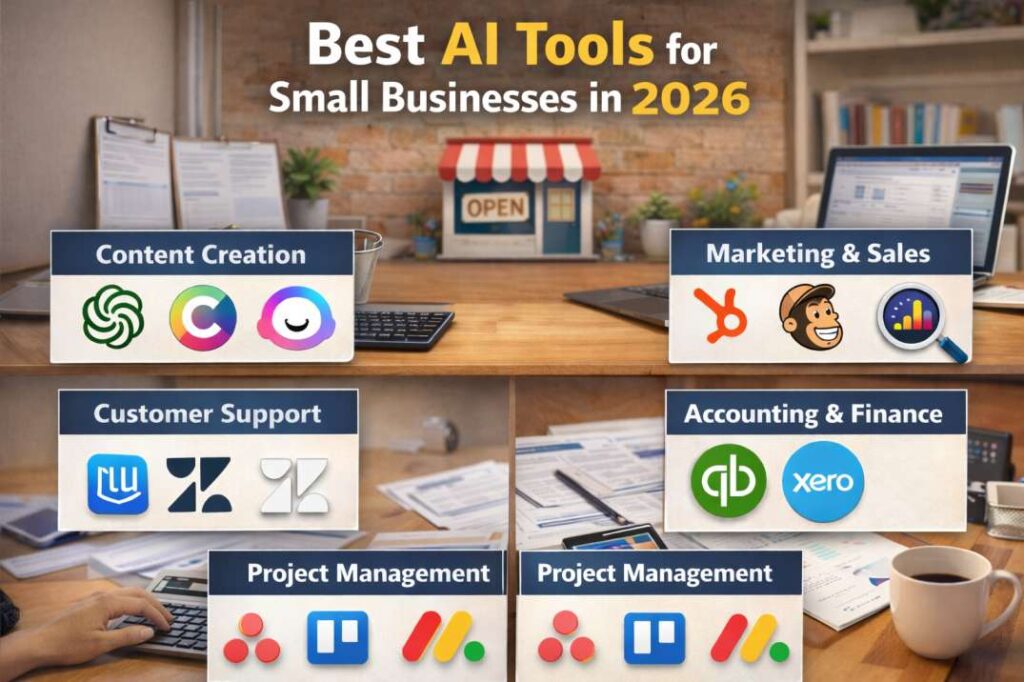

Best AI Tools for Small Businesses in 2026
Artificial intelligence is no longer a luxury reserved for large corporations; it is now a necessity for all organizations. In 2026, AI tools have become essential for small and medium-sized enterprises (SMEs) that want to compete, scale, and survive in fast-moving markets. From automating repetitive tasks to enhancing marketing performance, AI is revolutionizing how small businesses operate daily.
Rising Competition and Automation Demand
Small businesses now compete not only with local rivals but also with global brands. E-commerce, digital marketing, and remote services have leveled the playing field, but they have also intensified competition. Customers expect fast responses, personalized experiences, and consistent quality.
AI-powered tools help small businesses meet these expectations. Chatbots handle customer queries 24/7, automated email sequences nurture leads, and AI analytics tools provide actionable insights. Without automation, small teams struggle to keep up with growing demands. AI ensures that even a two- or three-person team can deliver enterprise-level efficiency.
Cost Reduction and Operational Efficiency
Hiring full-time employees for every task is expensive. Payroll, training, and operational overhead can quickly consume a small business budget. AI tools reduce these costs by automating routine processes such as invoicing, email responses, social media posting, and customer support.
Instead of hiring multiple specialists, businesses can use AI writing assistants, design tools, and CRM systems to handle tasks in minutes. Employees can focus on strategic activities like partnerships, innovation, and customer relationships rather than repetitive manual work.
AI as a Growth Multiplier for SMEs
AI does more than cut costs; it accelerates growth. Predictive analytics help identify sales opportunities. AI-driven marketing platforms improve ad targeting. Smart recommendation systems increase average order value.
When small businesses use AI strategically, they gain insights that were once available only to large enterprises. Data-driven decisions reduce guesswork and increase success rates. In 2026, AI is not just a support tool; it is a growth engine for SMEs aiming to scale faster and smarter.
You might also like this: Complete Guide to Google AdSense Approval
How We Selected the Best AI Tools
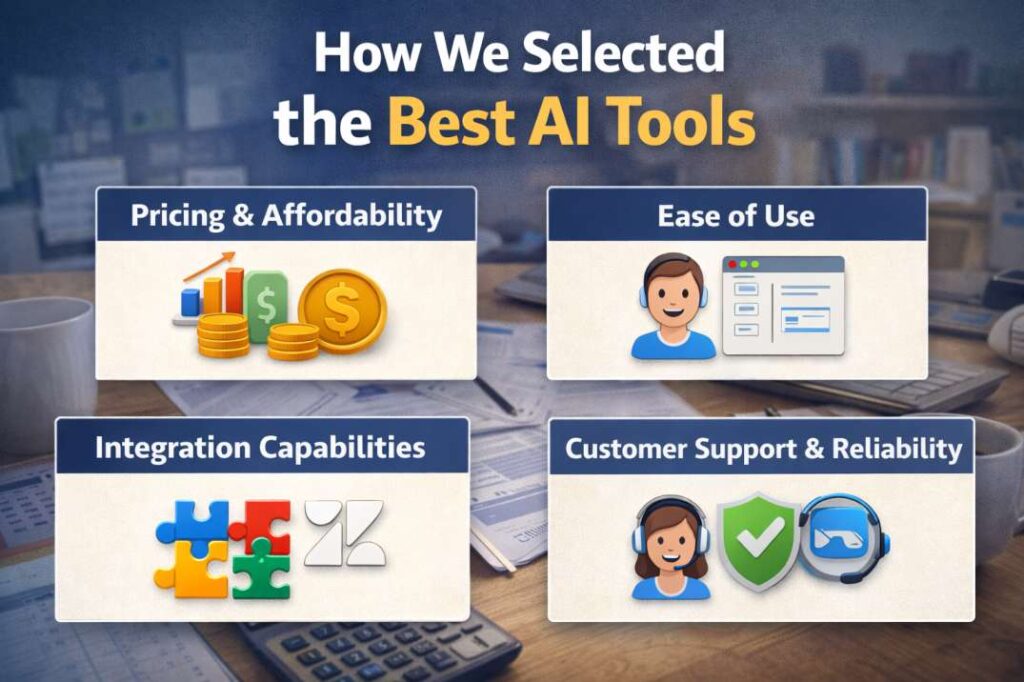
Choosing the right AI tools can be overwhelming because hundreds of options are available. To create a reliable list, we evaluated tools based on practical criteria that matter most to small businesses.
Pricing and Affordability
We prioritized AI tools that offer flexible pricing models, including free plans or affordable entry-level packages. Tools that provide strong value for money, balancing features with cost, ranked higher in our evaluation.
Transparent pricing, no hidden fees, and scalable plans were also important factors. A good AI tool should grow alongside your business without dramatically increasing expenses.
Ease of Use for Non-Technical Users
Most small business owners are not tech experts. Complicated dashboards and technical setups can discourage adoption. We selected tools with intuitive interfaces, simple onboarding processes, and helpful tutorials.
User-friendly AI platforms allow teams to get started quickly without hiring developers or IT specialists. Drag-and-drop editors, ready-made templates, and clear dashboards make implementation smooth and efficient.
Integration Capabilities
No tool works in isolation. The best AI solutions integrate seamlessly with popular platforms such as CRM systems, email marketing software, accounting tools, and e-commerce stores.
Integration capabilities reduce workflow friction. For example, connecting your AI content tool with your website CMS or linking your CRM with your email marketing software saves time and eliminates manual data entry.
Customer Support and Reliability
Technical issues can disrupt business operations. That’s why we evaluated customer support responsiveness, knowledge bases, live chat options, and system uptime.
Reliable AI tools must offer consistent performance and timely assistance. Strong community support and regular updates are also indicators of a trustworthy platform.
Best AI Tools for Content Creation
Content marketing remains one of the most powerful strategies for attracting and retaining customers. These AI tools help small businesses produce high-quality content efficiently.
OpenAI (ChatGPT) for Copywriting and Automation
ChatGPT has become one of the most widely used AI writing tools for businesses. It helps generate blog posts, product descriptions, email campaigns, and social media captions within minutes.
Small businesses use ChatGPT to brainstorm ideas, outline articles, and automate customer communication scripts. It also assists with rewriting content, improving grammar, and optimizing tone. By reducing writing time significantly, ChatGPT allows teams to focus on strategy and publishing consistency.
Canva AI for Graphics and Branding
Visual content plays a major role in branding and marketing. Canva AI simplifies graphic design for non-designers. With AI-powered templates, background removal, and text-to-image features, businesses can create professional visuals without hiring a designer.
From social media posts to presentations and marketing materials, Canva AI ensures brand consistency and saves hours of manual design work.
Jasper for Marketing Teams
Jasper is designed specifically for marketing-focused content creation. It offers brand voice customization, campaign templates, and SEO-friendly writing assistance.
Marketing teams benefit from its collaborative features and pre-built frameworks for ads, landing pages, and email sequences. Jasper helps maintain consistent messaging across multiple campaigns while increasing content production speed.
Best AI Tools for Marketing and Sales
Marketing and sales automation can significantly increase revenue while reducing manual effort. These tools stand out in 2026 for small businesses.
HubSpot AI for CRM and Email Automation
HubSpot integrates AI directly into its CRM system. It automates lead scoring, email personalization, and customer segmentation. Small businesses can track customer interactions and tailor follow-ups based on behavior.
AI-powered insights help sales teams prioritize high-value prospects, improving conversion rates and reducing wasted effort.
Mailchimp AI Campaign Optimization
Mailchimp uses AI to optimize email subject lines, sending times, and audience segmentation. Its predictive analytics suggest the best strategies to improve open rates and click-through rates.
For small businesses, this means smarter campaigns without deep marketing expertise. Automated workflows nurture leads while the AI continuously improves performance.
Surfer SEO for Content Optimization
Small businesses can improve their content structure, keyword usage, and readability based on data-driven recommendations.
You might also like this: What Is BinusCX?
Best AI Tools for Customer Support
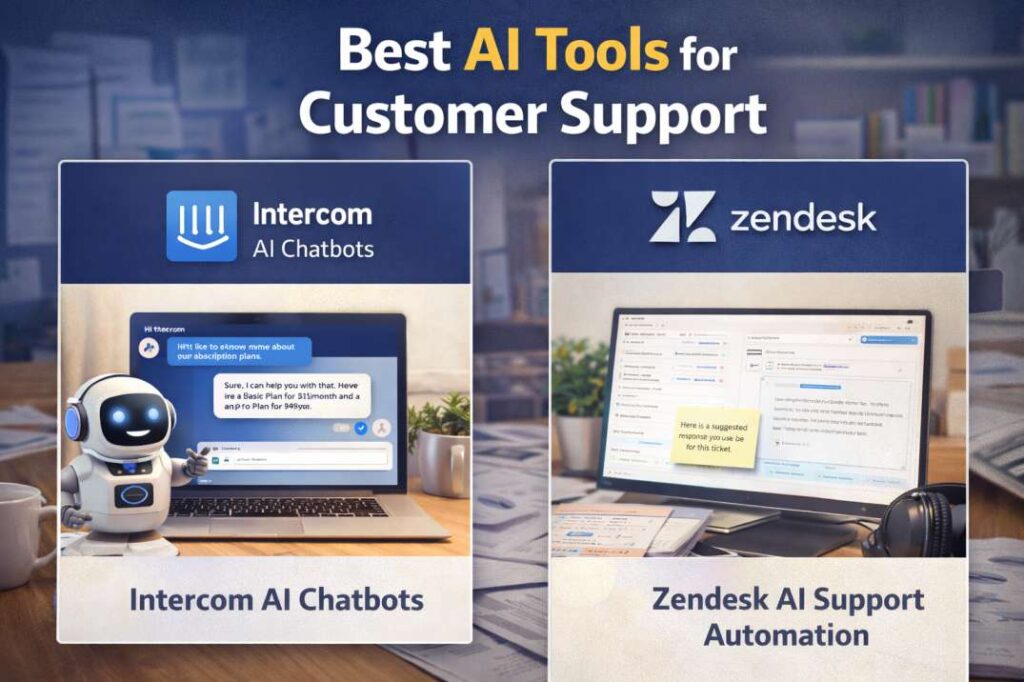
Delivering fast and personalized customer service is critical for small businesses in 2026. Customers expect immediate responses, accurate solutions, and seamless communication across channels. AI-powered customer support tools help businesses meet these expectations without hiring large support teams.
Intercom AI Chatbots
Intercom has evolved into a powerful AI-driven customer messaging platform. Its AI chatbots can handle common customer questions instantly, guide users through troubleshooting steps, and even recommend products based on browsing behavior.
For small businesses, this means 24/7 availability without increasing staffing costs. Instead of manually answering repetitive questions about pricing, shipping, or account setup, AI chatbots provide consistent responses within seconds. Intercom’s AI also learns from conversations over time, improving accuracy and personalization.
Another major benefit is the automation of lead qualification. The chatbot can collect contact details, identify purchase intent, and pass high-quality leads directly to the sales team. This shortens response times and increases conversion rates while maintaining a professional customer experience.
Zendesk AI Support Automation
Zendesk integrates AI into its helpdesk and ticketing system to streamline support operations. Its AI tools categorize tickets, suggest responses to agents, and prioritize urgent issues automatically.
Small businesses benefit from faster resolution times and improved team productivity. Instead of sorting tickets manually, the system routes them to the appropriate department. AI-generated reply suggestions also help support agents respond more efficiently while maintaining a consistent tone.
Zendesk’s analytics provide insights into common customer pain points, enabling businesses to improve products or services proactively. By combining automation with human support, small businesses can deliver high-quality service without overwhelming their teams.
Best AI Tools for Accounting and Finance
Financial management is one of the most time-consuming aspects of running a small business. AI tools simplify accounting processes, reduce errors, and provide real-time financial insights.
QuickBooks AI Automation
QuickBooks uses AI to automate bookkeeping tasks such as expense categorization, invoice generation, and bank reconciliation. Transactions are automatically sorted into appropriate categories, reducing manual data entry and minimizing errors.
For small businesses, this automation saves valuable time and ensures accurate financial records. AI-powered cash flow forecasting also helps business owners anticipate potential shortfalls and plan investments wisely.
Another key advantage is automated tax preparation support. By organizing financial data throughout the year, QuickBooks simplifies tax filing and reduces stress during tax season.
Xero Smart Financial Insights
Xero leverages AI to provide intelligent financial reporting and predictive insights. Its dashboard offers a real-time overview of income, expenses, and outstanding invoices.
AI-driven analytics highlight trends and patterns that might otherwise go unnoticed. For example, Xero can identify slow-paying clients or seasonal revenue fluctuations. These insights empower business owners to make proactive decisions and optimize financial strategies.
Automation features such as invoice reminders and recurring billing reduce administrative workload. As a result, businesses maintain steady cash flow while focusing on growth activities rather than paperwork.
Best AI Tools for Project Management
Efficient project management ensures that tasks are completed on time and within budget. AI-powered platforms enhance collaboration, automate workflows, and provide better visibility into team performance.
Asana AI Task Management
Asana integrates AI to improve task planning and workload distribution. It can suggest deadlines, identify bottlenecks, and recommend task prioritization based on project timelines.
Small businesses benefit from better coordination among team members. AI insights help managers allocate resources effectively and prevent missed deadlines. Automated progress tracking keeps everyone aligned without constant manual updates.
Asana’s predictive features also highlight potential risks before they become serious problems, enabling teams to adjust strategies in advance.
Trello AI Workflow Automation
Trello’s AI enhancements streamline workflow automation through smart suggestions and rule-based triggers. Tasks can automatically move between boards based on status changes, deadlines, or team actions.
For small teams, this reduces the need for constant monitoring. AI-powered automation ensures that projects move smoothly from planning to completion. Visual boards combined with intelligent task management make Trello a user-friendly yet powerful solution.
Monday.com AI Productivity Tools
Monday.com incorporates AI tools to analyze performance data and recommend efficiency improvements. From automated notifications to predictive timelines, the platform enhances transparency and accountability.
Its AI features can generate summaries of project updates, saving managers time. By identifying workflow inefficiencies, Monday.com helps businesses optimize processes and increase overall productivity.
You might also like this: Miuzo Explained
Pricing Comparison of Top AI Tools
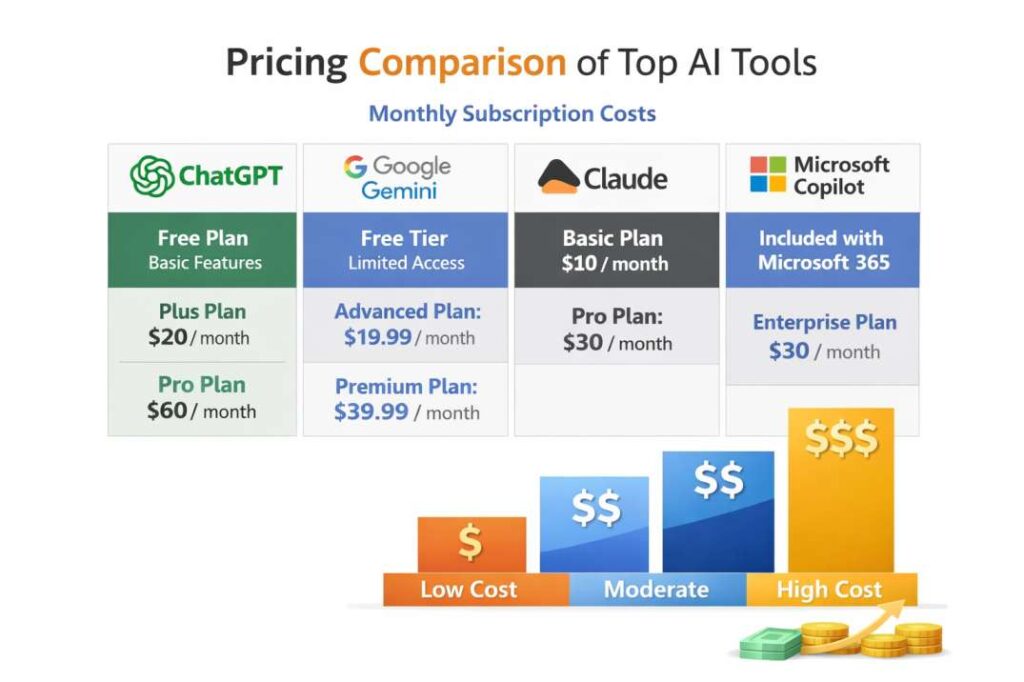
Pricing plays a significant role in selecting the right AI solution. Small businesses must balance features with affordability to maximize value.
Free vs Paid Plans
Many AI tools offer free plans with limited features, making them ideal for startups testing new technologies. However, advanced automation, analytics, and integration capabilities are often available only in paid tiers.
Free versions are useful for basic tasks, but growing businesses typically require premium plans for scalability. Evaluating feature limitations and upgrade costs is essential before committing long-term.
Best Budget-Friendly AI Tools
Tools like Trello and Canva (for design needs) often provide cost-effective plans for small teams. Accounting platforms such as Xero and QuickBooks offer scalable pricing based on business size.
When selecting a budget-friendly option, consider not only the monthly fee but also the time saved and operational improvements gained through automation.
ROI Considerations
Return on investment (ROI) should guide every purchasing decision. AI tools that reduce labor hours, increase sales conversions, or prevent financial errors often justify their subscription costs quickly.
For example, an AI chatbot that converts additional leads each month may generate revenue far exceeding its monthly fee. Similarly, automated accounting software can prevent costly mistakes and penalties.
Ultimately, the best AI tool is one that aligns with your business goals, improves efficiency, and delivers measurable results. By investing strategically in customer support, finance, and project management AI solutions, small businesses can operate smarter, reduce costs, and position themselves for sustainable growth in 2026.
Pros and Cons
Artificial intelligence is transforming how small businesses operate, compete, and grow. However, like any technology, AI adoption comes with both benefits and challenges. Understanding the pros and cons helps business owners make informed decisions and avoid costly mistakes.
Advantages of AI Adoption
One of the biggest advantages of AI in small businesses is automation. AI tools can handle repetitive tasks such as data entry, customer inquiries, appointment scheduling, and email marketing. This saves time and allows employees to focus on high-value work like strategy and relationship building.
Another key benefit is improved decision-making. AI-powered analytics tools process large amounts of data quickly and provide actionable insights. Business owners can identify customer trends, forecast sales, and optimize pricing strategies based on real-time information.
AI also enhances customer experience. Chatbots, personalized recommendations, and automated follow-ups create smoother interactions. Faster response times and tailored communication build trust and improve brand loyalty.
Finally, AI increases operational efficiency. From inventory management to marketing campaigns, automation reduces errors and lowers operational costs, helping small businesses remain competitive in crowded markets.
Potential Risks and Limitations
Despite its advantages, AI adoption is not without risks. One major concern is data privacy and security. AI systems often rely on sensitive customer data, and inadequate protection can lead to breaches or compliance issues.
Another limitation is overdependence on automation. Relying entirely on AI can reduce human oversight, which may result in errors, miscommunication, or poor customer experiences in complex situations.
Cost can also be a challenge. While many AI tools are affordable, advanced features may require premium subscriptions. For startups with tight budgets, improper tool selection can strain finances.
Additionally, AI tools require proper setup and training. Without understanding how to use them effectively, businesses may fail to see meaningful results.
Check Security and Data Privacy
Security should never be overlooked. Ensure that the AI tool complies with data protection regulations and uses encryption to safeguard sensitive information.
Review privacy policies, data storage practices, and access control features. Reliable platforms typically provide transparency about how data is processed and stored. Protecting customer trust is just as important as improving efficiency.
You might also like this: Best AI Tools for Content Creators
Future of AI for Small Businesses
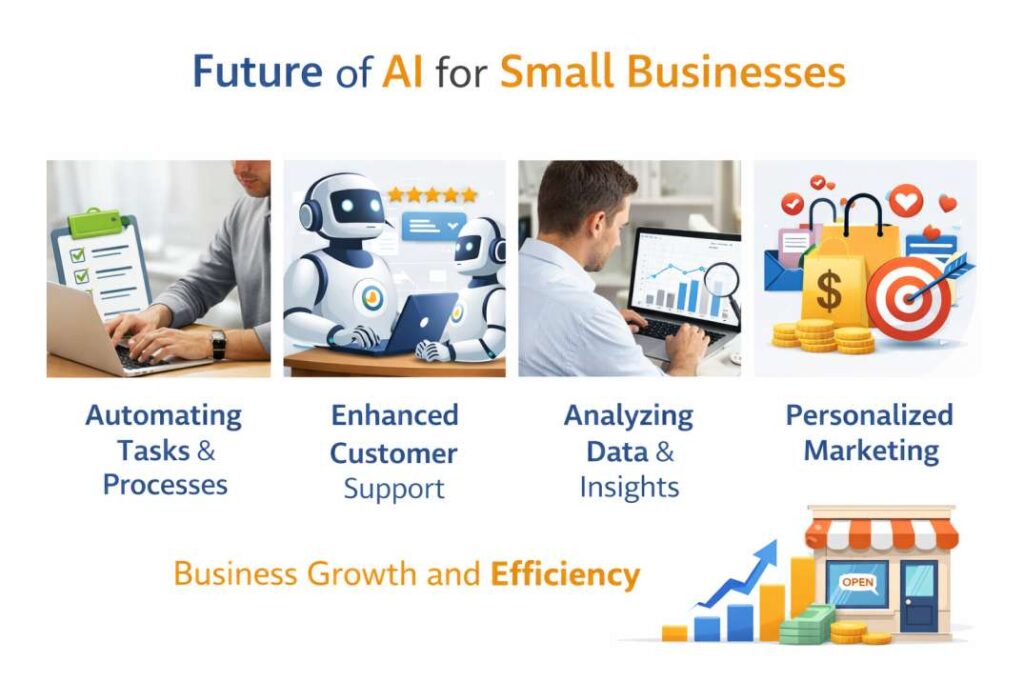
The role of AI in small businesses continues to evolve rapidly. In 2026 and beyond, emerging technologies will create even more opportunities for innovation and growth.
AI Trends to Watch in 2026
One major trend is hyper-personalization. AI tools are becoming more advanced at analyzing customer behavior to deliver highly customized experiences. From targeted email campaigns to dynamic website content, personalization will drive higher engagement rates.
Another growing trend is predictive analytics. AI systems can forecast demand, anticipate inventory shortages, and identify high-value leads before competitors do. This proactive approach allows small businesses to stay ahead of market changes.
Voice search optimization and AI-powered virtual assistants are also expanding. As customers increasingly use voice-enabled devices, businesses must adapt their digital strategies to remain visible.
The Role of Automation and Human Collaboration
While automation is powerful, the future of AI is not about replacing humans; it is about collaboration. AI handles repetitive tasks and data analysis, while humans focus on creativity, empathy, and complex problem-solving.
Successful businesses will integrate AI as a support system rather than a replacement. Combining machine efficiency with human judgment creates a balanced approach that maximizes productivity and innovation.
Common Mistakes to Avoid When Using AI Tools
Adopting AI without a clear strategy can lead to disappointment. Avoiding common mistakes ensures you get the most out of your investment.
Over-Reliance on Automation
Automation is beneficial, but excessive dependence on AI can harm customer relationships. For example, chatbots may struggle with complex or emotional issues. Always provide an option for human support when necessary.
Maintain a balance between automated processes and personal interaction to preserve authenticity and trust.
Ignoring Data Quality
AI systems rely heavily on accurate data. Poor-quality or outdated information can produce misleading insights and ineffective strategies.
High-quality input leads to reliable output and better decision-making.
Not Training Your Team
Even the best AI tools require proper usage. Failing to train employees can result in underutilization or costly mistakes.
Provide onboarding sessions, tutorials, and ongoing learning opportunities. When your team understands how to leverage AI effectively, productivity increases significantly.
FAQs About AI Tools for Small Businesses
Are AI Tools Expensive for Small Businesses?
Not necessarily. Many AI tools offer free or affordable starter plans designed for small teams. Costs increase with advanced features, but the return on investment often outweighs the expense when used strategically.
Can AI Replace Employees?
AI is designed to assist, not replace. It automates repetitive tasks but lacks human creativity, emotional intelligence, and strategic thinking. Most small businesses use AI to support their teams rather than eliminate roles.
Which AI Tool Is Best for Beginners?
The best AI tool depends on your specific needs. Beginners often start with user-friendly platforms that offer intuitive dashboards and strong customer support. Tools focused on content creation, email automation, or project management are usually easy entry points.
Conclusion About AI Tools for Small Businesses
AI tools have become essential for small businesses aiming to remain competitive in 2026. They offer automation, efficiency, improved decision-making, and enhanced customer experiences. However, success depends on choosing the right tools, maintaining data security, and balancing automation with human expertise.
By understanding the advantages and limitations of AI, setting clear goals, and avoiding common mistakes, small businesses can unlock sustainable growth. When implemented strategically, AI becomes more than a technology; it becomes a long-term partner in innovation and success.