
At-Home Insemination: A Practical Guide to Trying to Conceive on Your Own Terms
For many individuals and couples, the path to parenthood doesn’t always follow a straight line through a doctor’s office. Whether you’re using donor sperm, navigating a long-distance relationship with a partner, or simply prefer the comfort and privacy of your own home, at-home insemination has become a legitimate and increasingly popular option for people trying to conceive. It’s not a shortcut or a substitute for medical care when medical care is needed but for many, it’s a practical, empowering way to take an active role in the conception process.
This guide walks through what at-home insemination actually involves, who it tends to work best for, and what you should know before you start.
What Is At-Home Insemination?
At-home insemination, most commonly referred to as intracervical insemination (ICI), is a method of introducing sperm into the vaginal canal near the cervix without the need for a clinical setting. It’s essentially a simplified version of the intrauterine insemination (IUI) procedures performed in fertility clinics, minus the catheter placement into the uterus itself and the associated cost and appointment scheduling.
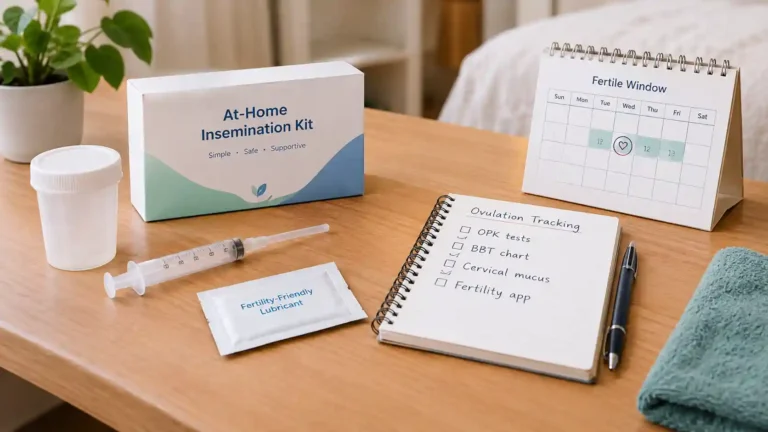
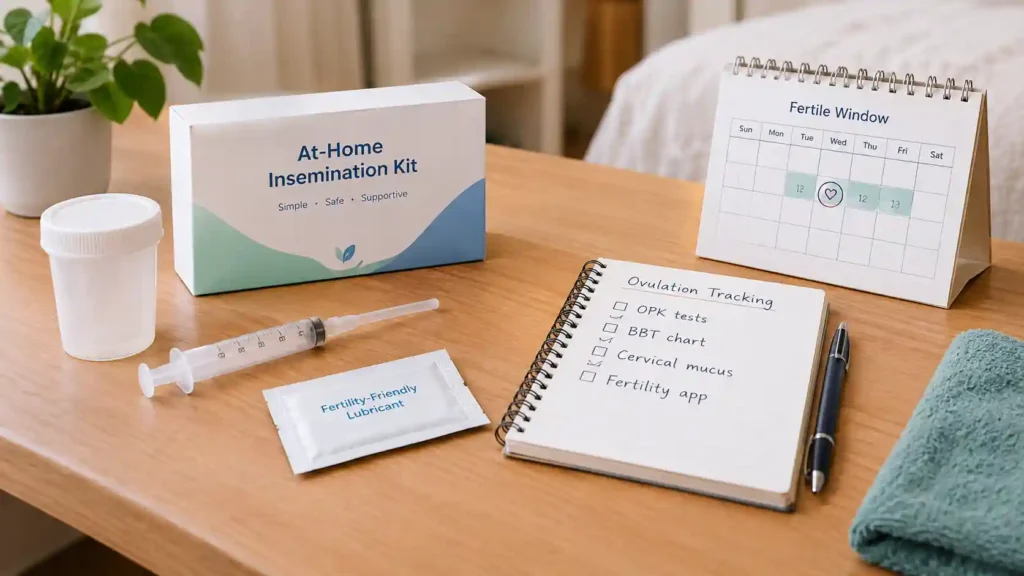
The process typically involves collecting a semen sample either fresh from a partner or thawed from a donor and using a specialized tool to place it near the cervix during the fertile window. Many people choose to use an At home insemination kit for humans, which is designed specifically to make this process straightforward, hygienic, and comfortable to perform without professional assistance. These kits typically include soft-tip syringes designed to reduce discomfort while accurately depositing sperm exactly where it needs to be.
This approach has grown in popularity among single parents by choice, LGBTQ+ couples, and heterosexual couples dealing with mild fertility challenges such as low sperm motility, ejaculation difficulties, or vaginismus that makes intercourse difficult during ovulation.
Who Considers At-Home Insemination?
At-home insemination isn’t one-size-fits-all, but it tends to appeal to a fairly specific set of circumstances:
Single Parents by Choice
Individuals who want to become parents without a partner often turn to at-home insemination using donor sperm from a sperm bank or known donor. It offers privacy, control over timing, and significantly lower costs than repeated clinical IUI cycles.
LGBTQ+ Couples
Same-sex female couples frequently use at-home insemination as a first step in family building, often with sperm from a known donor or a cryobank. It allows both partners to be closely involved in a process that might otherwise feel clinical or impersonal.
Couples with Mild Male-Factor Infertility
When there are minor issues with sperm motility or count, but not severe enough to require IVF or ICI/IUI in a clinical setting, some couples try at-home methods before or alongside consulting a fertility specialist.
People with Physical or Situational Barriers to Intercourse
Conditions like vaginismus, erectile difficulties, or even relationships where partners are frequently apart during ovulation windows can make timed intercourse unreliable. At-home insemination offers an alternative that doesn’t depend on those variables.
Your Fertility Window
Timing is the single most important factor in successful inseminationhome-based or clinical. Sperm can survive in the reproductive tract for approximately three to five days under ideal conditions, but the egg itself is only viable for about 12 to 24 hours after ovulation. This means insemination needs to happen in the days leading up to and including ovulation, not after.
There are several ways to track ovulation accurately:
Ovulation Predictor Kits (OPKs): These detect the surge in luteinizing hormone (LH) that occurs 24–36 hours before ovulation. Testing daily starting a few days before your expected fertile window helps pinpoint the optimal time.
Basal Body Temperature (BBT) Tracking: This method involves taking your temperature every morning before getting out of bed. A slight rise in temperature confirms that ovulation has occurred, though it’s more useful for confirming past ovulation than predicting future ovulation.
Cervical Mucus Monitoring: As ovulation approaches, cervical mucus typically becomes clearer, stretchier, and more slippery often compared to raw egg whites. This texture change signals peak fertility.
Fertility Tracking Apps: Many people combine app-based cycle tracking with OPKs or BBT for a more complete picture, especially if cycles are irregular.
Most people find that combining at least two of these methods gives a more reliable read on ovulation timing than relying on any single method alone.
Preparing for At-Home Insemination
Once you understand your cycle and have chosen a method for timing insemination, a bit of preparation goes a long way toward improving comfort and consistency.
Choosing Your Sperm Source
If you’re using a sperm donor, whether known or through a licensed cryobank, make sure you understand the legal and health screening implications. Sperm banks typically test donors for infectious diseases and genetic conditions, and using frozen, screened sperm adds a layer of safety that unscreened fresh samples from an unknown source do not offer. If using a known donor, many people still opt for STI testing beforehand as a precaution.
Gathering Your Supplies
Having the right tools makes the process considerably easier. A specimen cup for collection, a soft-tip syringe (rather than a rigid one, which can cause discomfort or minor injury), and a clean, private space are the basics. Some people also use fertility-friendly lubricants, since many standard lubricants can interfere with sperm motility.
Creating a Comfortable, Low-Stress Environment
Stress doesn’t directly cause infertility, but a calm, unhurried environment can make the physical process smoother and less anxiety-inducing. Many people find it helpful to plan the insemination for a time when they won’t be rushed or interrupted.
The Insemination Process, Step by Step
While specifics can vary slightly depending on the kit or method used, the general process looks like this:
- Collect the sample. If using fresh sperm, it should be used within 15–30 minutes of collection for best results. Frozen donor sperm needs to be thawed according to the cryobank’s instructions.
- Draw the sample into the syringe. Using a soft-tip syringe designed for this purpose helps avoid spilling or wasting samples, and reduces the risk of minor cervical irritation.
- Position yourself comfortably. Lying down with hips slightly elevated (a pillow under the hips can help) is a common position that may assist with retention.
- Insert the syringe and slowly deposit the sample near the cervix. This should be done gently and without force.
- Remain lying down for 15–30 minutes. While there’s no strong evidence that this dramatically improves outcomes, many people find it a reassuring part of the process.
- Repeat if recommended. Some protocols suggest inseminating on two consecutive days around predicted ovulation to increase the chances that sperm and egg are both present and viable at the same time.
Realistic Expectations
It’s important to approach at-home insemination with grounded expectations. Even under ideal clinical conditions, the average chance of conception in a single cycle for a healthy couple is generally estimated to be in the range of 15–25%, and that’s with intercourse or IUI. At-home ICI success rates are typically discussed as being somewhat lower than clinical IUI, since IUI places sperm directly into the uterus, bypassing the cervix and giving sperm a head start.
This doesn’t mean at-home insemination isn’t effectivemany people do conceive successfully this way, sometimes within a few cycles. But it does mean that patience, accurate timing, and realistic planning around multiple attempts are important parts of the process. If several cycles pass without success, it’s worth consulting a fertility specialist to rule out underlying issues that might need medical attention, such as blocked fallopian tubes, hormonal imbalances, or significant sperm quality concerns.
When to Consider Professional Support
At-home insemination is a reasonable starting point for many, but it’s not the right fit for everyone, and it shouldn’t replace medical care when medical care is warranted. You should consider speaking with a fertility specialist if:
- You’re over 35 and have been trying for more than six months without success
- You’re under 35 and have been trying for more than a year
- You have a known condition affecting fertility, such as PCOS, endometriosis, or a history of pelvic infections
- Your partner has a known or suspected sperm quality issue
- You’ve had irregular or absent periods
- Previous pregnancies have ended in early loss
A fertility specialist can run bloodwork, perform imaging, and offer more targeted interventions like IUI or IVF if at-home methods aren’t working after a reasonable period of trying.
Final Thoughts
At-home insemination offers a meaningful, accessible option for people who want more control, privacy, and flexibility in their conception journey. It won’t work for every situation, and it isn’t a replacement for professional fertility care when that care is needed but for many individuals and couples, it represents a practical middle ground between unassisted conception and the cost and complexity of clinical procedures.
Success depends heavily on accurate ovulation tracking, quality sperm handling, and realistic expectations about timelines. Approaching the process with patience, good information, and the right tools can make a meaningful difference in both the experience and the outcome. As with any fertility journey, it’s worth staying attuned to your body, tracking your progress over multiple cycles, and knowing when it might be time to bring in additional medical support.