
Entry-Level UHF Radios for Small Businesses: What to Look for Before You Buy
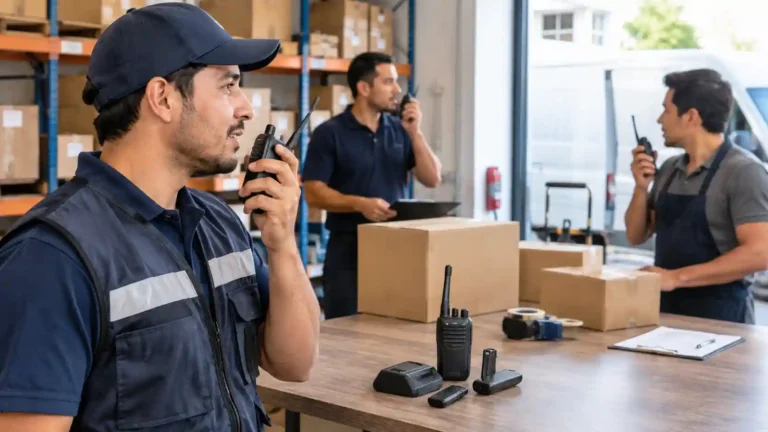
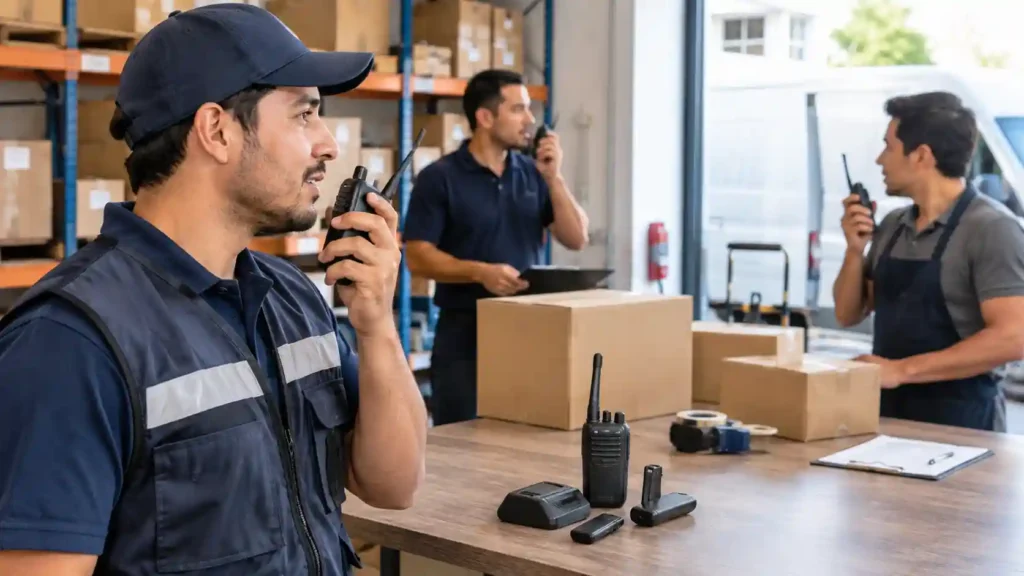
Small businesses across Mexico from local delivery services to independent workshops and small retail chains often reach a point where phone calls and group chats simply aren’t fast enough. When a warehouse supervisor needs to reach a driver instantly, or a restaurant manager needs to coordinate staff during a busy shift, a basic two-way radio often solves the problem more efficiently than any app.
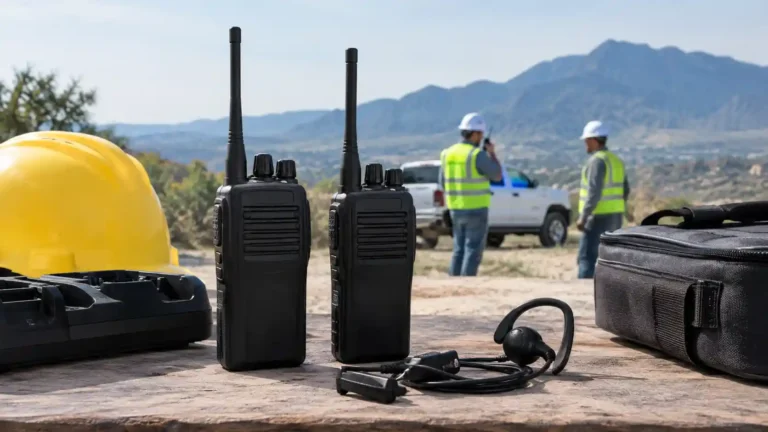
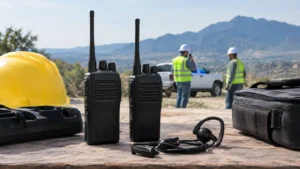
This guide walks through what actually matters when choosing an entry-level UHF radio for a small team, so you can avoid overpaying for features you won’t use or underbuying on durability you’ll regret later. When comparing options online, it helps to look at listings that clearly state both the durability standard and the ingress protection rating side by side, since manufacturers don’t always test for the same conditions. A model like the PCredCom catalog page for the Kenwood TK-3000 KV2 is a good example of how these specifications are typically presented together, making it easier to judge whether a radio actually fits your working conditions rather than guessing from a generic product description.
Why UHF Is Usually the Right Starting Point
For most small businesses operating indoors or in urban environments offices, stores, restaurants, small warehouses UHF (Ultra High Frequency) radios tend to outperform VHF alternatives. UHF signals handle walls, metal shelving, and building structures better, which matters if your team is moving between a stockroom, a sales floor, and a loading dock. VHF radios, by contrast, are generally better suited to open outdoor spaces like farms or large properties with fewer obstructions.
If your daily operations happen mostly inside a building or across a compact urban area, UHF is almost always the more practical choice, and it’s the band most entry-level business radios are built around.
The Core Features Worth Prioritizing
Durability Ratings That Match Real Conditions
Not every business needs a radio built to military specifications, but for teams working in warehouses, workshops, delivery operations, or outdoor retail, some level of ruggedness pays off quickly. A radio that’s dropped occasionally, exposed to dust, or used in light rain needs at least basic protection to avoid frequent replacements. An IP54 rating, for example, protects against dust ingress and splashing water from any direction, which covers most everyday accidents without requiring a fully waterproof unit. Similarly, a MIL-STD-810 durability rating indicates the device has been tested against drops, vibration, temperature extremes, and humidity a useful baseline for equipment that will be handled roughly during a normal workday.
Channel Capacity for Small Teams
Entry-level radios commonly offer somewhere between 4 and 16 channels. For a small team, this is usually more than enough, since most small businesses only need one or two active channels plus a couple of backups in case of interference from other radios in the area. What matters more than the total channel count is whether the radio supports quick channel switching without digging through menus, since staff under time pressure need to change channels in seconds, not minutes.
VOX and Hands-Free Operation
Voice-Operated Transmission (VOX) allows the radio to start transmitting automatically when it detects speech, without requiring the user to press the push-to-talk button. This is particularly useful in roles where hands are occupied kitchen staff, warehouse workers carrying boxes, or technicians working with tools. Not every job requires VOX, but for physically active roles, it noticeably reduces missed communications.
Scan Function
A scan feature lets the radio automatically cycle through channels to find active conversations, which is useful for businesses running multiple departments or teams on separate channels who occasionally need to monitor more than one at a time. It’s a small feature, but it prevents the need to manually switch back and forth throughout a shift.
DTMF Signaling
DTMF (Dual-Tone Multi-Frequency) capability allows the radio to send tone-based signals, similar to a telephone keypad. In basic setups, this is mostly used for selective calling or interfacing with certain repeater systems. Small businesses that don’t plan to expand into repeater-based networks may not need this immediately, but it’s a useful feature to have available if the business grows and communication needs become more complex.
Battery Life and Practical Accessories
For most retail, hospitality, and small warehouse operations, an eight-to-ten-hour battery life covers a full shift without needing a swap. It’s worth checking whether the radio comes bundled with a charger, spare antenna, and a belt clip, since these accessories are easy to overlook when comparing prices but add real cost if purchased separately later.
A belt clip in particular matters more than it seems radios that are constantly being set down and picked up are far more likely to be dropped or misplaced. A secure, comfortable clip encourages staff to actually wear the radio rather than leaving it on a counter, which defeats the purpose of having it in the first place.
Setting Realistic Expectations for Range
One of the most common mistakes small business buyers make is expecting advertised range figures to reflect real-world performance. A radio marketed with a long-range specification is almost always tested in open, obstruction-free conditions. Inside a building with concrete walls, metal shelving, or multiple floors, that range can shrink significantly. For most small business environments a single store, a small office, a compact warehouse this isn’t usually a problem, since the actual distances involved are much shorter than the advertised maximum. It only becomes relevant if your team operates across a larger campus, multiple buildings, or outdoor areas spanning several hundred meters.
Matching the Radio to Your Team’s Daily Reality
Before comparing specific models, it helps to write down a short list of real-world conditions: How many hours per day will the radio be used? Will it be dropped or exposed to dust and moisture regularly? Does the team need hands-free operation? Will more than one department need separate channels?
Answering these questions first prevents two common mistakes buying an overly basic radio that frustrates staff with dropped signals or accidental button presses, or overspending on professional-grade features designed for much larger operations. For most small businesses, a durable, UHF radio with a handful of channels, decent battery life, and solid drop resistance covers day-to-day needs without unnecessary cost.
Final Thoughts
Choosing a two-way radio for a small business doesn’t need to be complicated once you understand which features actually apply to your working conditions. Prioritize durability that matches your environment, battery life that covers a full shift, and enough channels to keep departments organized without overcomplicating daily use. A well-matched, reasonably priced radio will end up getting used consistently, which is ultimately the only feature that really matters equipment that sits in a drawer because it’s inconvenient or unreliable isn’t solving anything, no matter how many specifications it lists on paper.