

Generative AI in Everyday Life: Transforming Work, Creativity, and Leisure
Generative AI is a branch of artificial intelligence designed to create new content, whether it’s text, images, music, or videos, by learning patterns from existing data. Unlike conventional AI, which focuses on analyzing and predicting outcomes, generative AI produces original outputs that mimic human creativity. Its applications span from drafting emails and writing articles to producing artwork and composing music, making it a versatile tool in everyday life.
Brief History and Evolution
The roots of generative AI trace back to the 1990s, with early attempts using statistical models and rule-based systems to generate text or simple images. The landscape changed dramatically in the mid-2010s with the introduction of deep learning techniques and neural networks. Tools like Generative Adversarial Networks (GANs) and transformer models enabled AI to create highly realistic content. Today, models such as GPT and DALL·E demonstrate how generative AI has evolved into a sophisticated technology capable of generating human-like outputs in multiple domains.
How It Differs from Traditional AI
Traditional AI primarily focuses on pattern recognition, classification, and decision-making based on historical data. For instance, traditional AI can detect spam emails or predict stock trends, but doesn’t generate new ideas or creative content. Generative AI, in contrast, synthesizes new outputs by understanding the underlying patterns in data and producing content that didn’t exist before. This fundamental difference allows generative AI to be used not only in analytical tasks but also in creative and innovative processes.
Generative AI in the Workplace
Automating Routine Tasks
One of the most practical applications of generative AI in the workplace is automation. Tasks such as drafting reports, creating presentations, summarizing documents, or even generating code snippets can now be performed efficiently by AI. This reduces manual effort and frees up employees to focus on higher-value activities. Companies adopting these tools have reported increased productivity and faster turnaround times, demonstrating how AI can transform day-to-day operations.
Enhancing Decision-Making with AI Insights
Generative AI also enhances decision-making by analyzing complex datasets and producing actionable insights. For example, AI can generate predictive models, suggest strategic options, or even simulate potential outcomes for business scenarios. This not only accelerates the decision-making process but also reduces human error, allowing managers to make more informed choices in a rapidly changing market environment.
Improving Collaboration and Communication
Collaboration is another area where generative AI shines. AI-powered tools can draft emails, prepare meeting summaries, and even create collaborative documents in real time. They also facilitate remote teamwork by generating content tailored to different stakeholders, ensuring everyone has access to clear and concise information. By streamlining communication, generative AI helps teams work more efficiently and reduces the likelihood of misunderstandings or missed tasks.
You might also like this: Complete Guide to Google AdSense Approval
AI and Creativity

Generating Art, Music, and Literature
Generative AI has made a profound impact on creative fields. Artists, musicians, and writers can now leverage AI to produce new content or enhance existing work. For instance, AI can generate realistic paintings, compose original music, or draft creative stories based on user prompts. This not only accelerates the creative process but also opens new avenues for experimentation, enabling creators to explore styles and ideas they might not have considered otherwise.
AI-Assisted Design and Innovation
Beyond traditional art, generative AI plays a critical role in design and innovation. Architects, product designers, and engineers use AI to prototype concepts, optimize structures, or create visual simulations. Generative AI can propose multiple design iterations quickly, allowing professionals to test and refine their ideas faster than ever. This collaborative approach between humans and AI fosters innovation while reducing the time and cost associated with product development.
Challenges and Ethical Considerations in Creative AI
Despite its benefits, generative AI raises ethical and practical challenges. Concerns include copyright infringement, authenticity of AI-generated work, and potential biases in content. For example, AI trained on biased datasets may unintentionally produce discriminatory outputs. Creators and organizations must establish clear guidelines for ethical AI use, ensuring transparency, fairness, and respect for intellectual property. Striking a balance between leveraging AI’s capabilities and maintaining ethical standards is essential for sustainable adoption.
AI in Leisure and Entertainment
Personalized Recommendations in Media and Gaming
Generative AI has revolutionized the way we consume media and engage with entertainment. Streaming platforms and gaming services now use AI algorithms to analyze user preferences, viewing habits, and interaction patterns. This enables highly personalized recommendations, suggesting movies, series, music, or games tailored to individual tastes. By predicting what a user is likely to enjoy, AI enhances the overall experience, keeps engagement high, and reduces decision fatigue. Gamers, for example, may receive customized challenges or in-game content, creating a more immersive and enjoyable experience.
Virtual Experiences and AI-Generated Content
Beyond recommendations, AI is creating entirely new virtual experiences. AI-generated content includes realistic game environments, procedurally generated music, and immersive digital worlds for virtual reality (VR). Artists and developers use AI to design interactive experiences that adapt in real time based on user input. This level of personalization was previously impossible and allows for endless creative exploration. Whether it’s a virtual concert, an AI-generated storyline, or a digital museum tour, AI is transforming entertainment into an interactive, engaging, and adaptive experience.
The Rise of AI Influencers and Digital Avatars
Another emerging trend is the rise of AI influencers and digital avatars. These AI-created personalities appear on social media, interact with audiences, and even endorse products. They offer brands a scalable way to maintain a consistent online presence while engaging with followers creatively. Beyond marketing, digital avatars are also used in gaming and virtual events to represent real users, creating lifelike interactions in digital spaces. This technology highlights how AI is not just a tool for content creation but also a medium for social and cultural innovation.
Educational and Learning Applications
Personalized Tutoring and Content Creation
Generative AI is transforming education by providing personalized tutoring and content generation. AI systems can adapt lessons to a student’s learning pace, identify knowledge gaps, and provide targeted exercises. Educators can also use AI to create study materials, quizzes, and interactive modules in minutes, saving time while maintaining high-quality educational content. This tailored approach improves learning outcomes and ensures students remain engaged, even in diverse and large classrooms.
AI for Research and Knowledge Discovery
In research, generative AI accelerates knowledge discovery by analyzing vast datasets, generating summaries, and suggesting insights. Scientists, academics, and students can quickly access relevant information, identify trends, and produce reports or literature reviews. AI tools can also simulate experiments or model complex systems, reducing the time and resources required for research. By enhancing analytical capabilities, generative AI empowers learners and researchers to explore ideas more efficiently and innovate faster.
Potential Risks and Misuse in Education
Despite its advantages, AI in education comes with risks. Additionally, biased datasets can lead to inaccurate or unfair assessments, potentially disadvantaging certain learners. Privacy concerns also arise when AI systems collect and store student data. To mitigate these risks, institutions must implement ethical guidelines, ensure transparency, and balance AI use with traditional teaching methods. Responsible adoption is key to maximizing AI’s benefits without compromising educational integrity.
You might also like this: What Is BinusCX?
Everyday Tools and Smart Assistants
AI in Smartphones and Home Devices
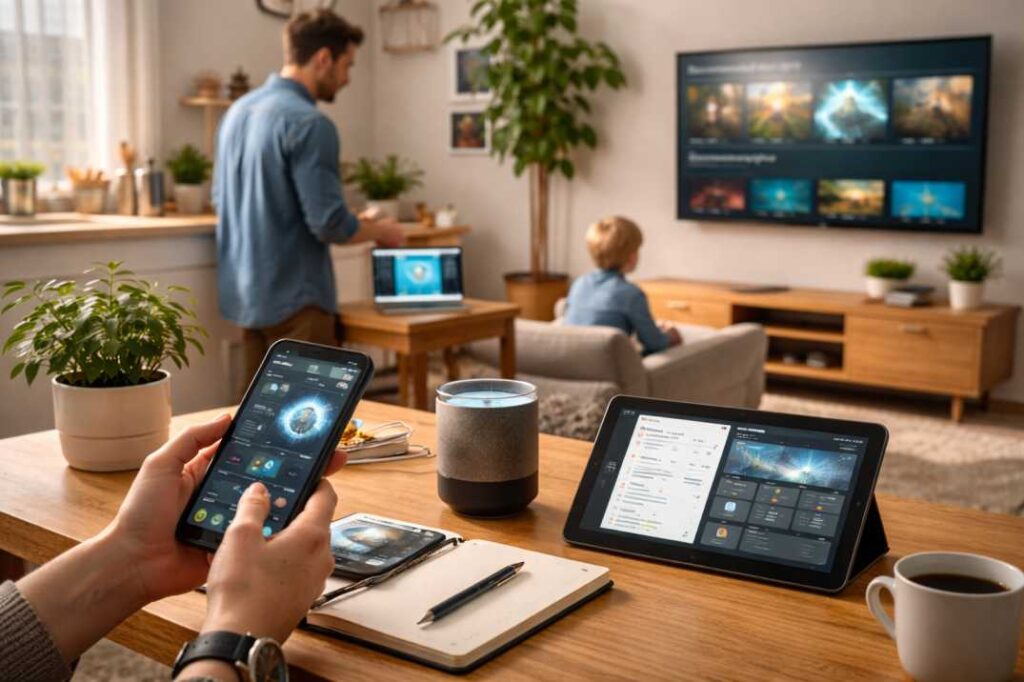
Generative AI powers a wide range of everyday tools, from smartphones to smart home devices. Voice assistants, smart speakers, and connected appliances leverage AI to understand user commands, anticipate needs, and perform tasks automatically. Whether setting reminders, controlling lighting, or generating shopping lists, these devices simplify daily routines and make technology more intuitive. The seamless integration of AI into consumer electronics has turned ordinary devices into intelligent helpers that adapt to user behavior over time.
Enhancing Productivity Through AI Apps
AI-driven applications also boost productivity in personal and professional contexts. From automatic calendar management to drafting emails, AI tools reduce repetitive tasks and streamline workflows. Professionals can leverage AI for scheduling, document summarization, and even project planning, saving valuable time and minimizing errors. These tools empower users to focus on creative or strategic work, demonstrating how AI integration improves efficiency and effectiveness across various domains.
Security and Privacy Considerations
However, everyday AI usage introduces significant security and privacy considerations. Personal data, including voice commands, location, and preferences, is collected and processed to improve AI functionality. Without proper safeguards, this data can be vulnerable to misuse or breaches. Users must be aware of privacy settings, encrypt sensitive information, and choose devices from reputable providers. Manufacturers, on the other hand, are responsible for implementing robust security measures to protect users and ensure that AI remains a trusted companion in daily life.
Societal Impact of Generative AI
Shaping Work Culture and Employment
Generative AI is reshaping work culture by automating repetitive tasks and enhancing productivity, allowing employees to focus on more strategic and creative responsibilities. Roles involving routine data processing or content generation are particularly susceptible, whereas jobs requiring human judgment, empathy, and complex problem-solving remain valuable. Organizations must balance automation with upskilling initiatives to ensure employees adapt successfully to an AI-driven workplace.
Influence on Social Interaction and Communication
Generative AI has a profound impact on social interaction, influencing how people communicate online and offline. AI-powered chatbots, virtual assistants, and digital avatars provide instant support and engagement, transforming customer service and online communities. Social media platforms also utilize AI to personalize content feeds, increasing engagement but sometimes creating echo chambers. While AI enables more efficient communication, users must remain mindful of overreliance, which can affect authentic human connections.
Ethical and Legal Challenges
As generative AI becomes more integrated into daily life, ethical and legal challenges emerge. Issues such as deepfake content, misinformation, and copyright infringement pose serious risks. Biased datasets can result in discriminatory outputs, and privacy violations are a growing concern. Governments and organizations must establish regulations and ethical guidelines to govern AI usage, ensuring accountability, transparency, and fairness. Addressing these challenges is crucial to maintaining public trust and fostering responsible AI adoption.
Future Outlook
Emerging Trends in Generative AI
The future of generative AI promises exciting innovations across industries. Advances in multimodal AI combining text, images, and video will enhance content creation and interactive experiences. AI-driven personalization will continue to refine recommendations in media, education, and marketing. Additionally, collaborative AI tools will support creative and professional endeavors, making workflows more efficient and inclusive. These trends indicate a future where AI augments human capabilities rather than replacing them.
Predictions for Work, Creativity, and Leisure
In the workplace, generative AI will enable smarter decision-making, automate complex analyses, and support hybrid collaboration models. Creative industries will see AI assisting in music, visual arts, and literature, expanding the boundaries of human imagination. Leisure experiences will become increasingly immersive, with AI-generated virtual environments, adaptive games, and personalized media content. These advancements will make everyday life more convenient, engaging, and creatively enriched, highlighting AI’s transformative potential.
Preparing for an AI-Driven World
To thrive in an AI-driven world, individuals and organizations must embrace continuous learning and ethical AI practices. Skills such as critical thinking, digital literacy, and AI oversight are essential. Organizations should implement robust data security measures, ethical guidelines, and employee training programs. By fostering collaboration between humans and AI, society can maximize the benefits of technology while minimizing risks, ensuring a future that is both innovative and responsible.
You might also like this: Miuzo Explained
FAQs About Generative AI in Daily Life
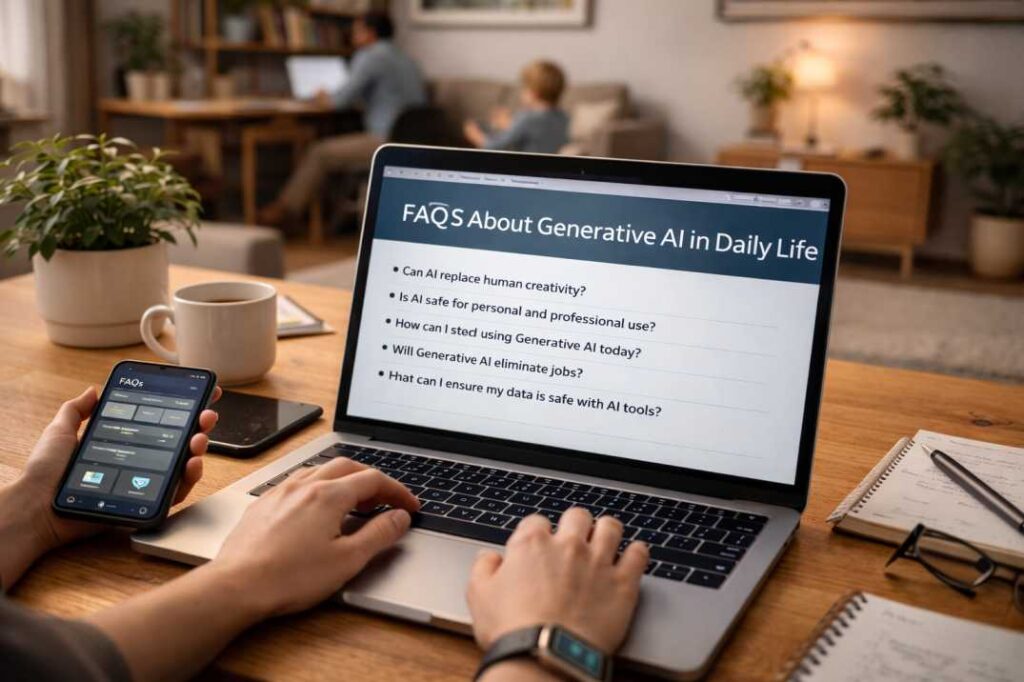
Can AI Replace Human Creativity?
No, AI cannot fully replace human creativity. While it can generate content and assist in ideation, human intuition, emotion, and cultural context remain irreplaceable. AI serves as a tool to augment, not substitute, creative expression.
Is AI Safe for Personal and Professional Use?
Yes, when used responsibly. Choosing reputable platforms, managing privacy settings, and understanding AI limitations ensures safe usage. Ethical practices and data security are crucial for both personal and professional applications.
How Can I Start Using Generative AI Today?
Begin by exploring accessible tools such as AI writing assistants, design platforms, or AI-powered learning apps. Start with small projects to understand capabilities and gradually integrate AI into daily workflows for efficiency and creativity.
Will Generative AI Eliminate Jobs?
AI may automate certain routine tasks, but it also creates new opportunities in AI development, oversight, and creative fields. Upskilling and adapting to evolving roles can help mitigate displacement risks.
How Can I Ensure My Data is Safe with AI Tools?
Use platforms with strong security policies, enable encryption, and review privacy settings. Avoid sharing sensitive information unnecessarily and stay informed about how data is stored and processed by AI services.
Conclusion
Generative AI is rapidly transforming how we work, create, and engage with the world. Its ability to generate content, optimize workflows, and personalize experiences presents immense opportunities across industries. However, ethical, legal, and social challenges must be carefully managed to ensure responsible adoption. By embracing AI as a collaborative tool and prioritizing education, privacy, and transparency, society can harness its potential to enhance creativity, productivity, and leisure. The future is one where humans and AI work together, shaping a more efficient, innovative, and connected world.