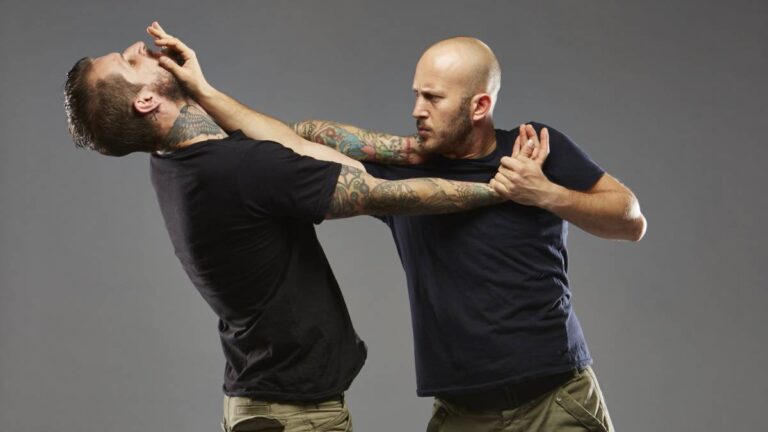
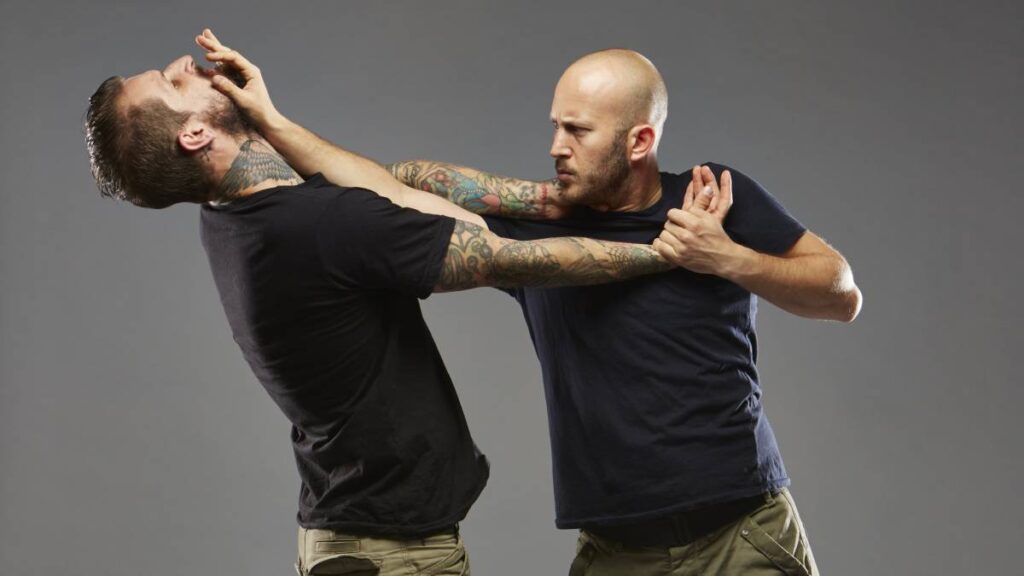

Most people think about personal safety only after something unsettling happens: a car that follows a little too closely, a stranger who ignores a clear “no,” or a news story that hits too close to home. Self-defense is often pictured as a set of dramatic techniques for a worst-case moment. In reality, the most valuable parts of personal protection begin long before any physical contact. They involve noticing your surroundings, understanding how threats develop, and trusting yourself enough to act early. This article looks at what modern, evidence-based self-defense involves, why a trauma-informed approach matters, and how Krav Maga and No Gi Jujitsu fit into a complete personal safety strategy.
Self-Defense Is a Skill Set, Not Just a Set of Moves
A common misconception is that being able to defend yourself means being able to win a fight. Real-world violence rarely resembles a sparring match. It tends to be sudden, chaotic, and close-range, and it often begins with manipulation, intimidation, or a surprise approach rather than a fair confrontation. Effective training therefore has to cover far more than punches and kicks. It should teach awareness, boundary setting, verbal de-escalation, escape, and, when necessary, decisive physical action. It should also prepare people for the stress response that comes with fear, because technique is only useful if you can access it under pressure.
This broader view is why the strongest programs pair physical instruction with real education about how harm actually happens. In Orlando, Florida, Shaan Saar Krav Maga offers a good illustration of this philosophy, combining evidence-based and trauma-informed Krav Maga and No Gi Jujitsu with insight drawn from criminal behavior analysis and human trafficking investigation. Whatever school a person ultimately chooses, the lesson is the same: the best self-defense programs treat safety as a combination of knowledge, physical skill, and mindset, rather than a collection of tricks to memorize.
What “Evidence-Based” Means in Self-Defense
The phrase “evidence-based” is common in medicine and psychology, but it is less familiar in martial arts. Applied to self-defense, it means that what is taught should be grounded in how violence and stress actually work, not in tradition alone or in what looks impressive in a demonstration.
In practice, an evidence-based approach tends to include several features:
- Techniques chosen for simplicity under stress. Under adrenaline, fine motor control declines. Movements that rely on gross motor skills, such as strikes, framing, pushing off, and creating distance, are more dependable than intricate sequences.
- Training that is tested against resistance. Drills should include a partner who reacts realistically, so students learn what holds up when someone is actually moving, pulling, or pushing back.
- Attention to how attacks unfold. Instruction reflects how real assaults commonly begin, including surprise, grabs, clinches, and being pushed or taken to the ground.
- Willingness to update. Good instructors revise their methods as they learn more about what works, rather than defending a curriculum simply because it has always been taught that way.
For a beginner, this approach is reassuring. It signals that the goal is not to turn you into a fighter but to give you a small number of dependable tools and the judgment to use them.
Why Trauma-Informed Training Matters
Many people who seek out self-defense classes do so because of something that has already happened to them, or to someone they love. Others carry a general anxiety about being vulnerable in public spaces. A trauma-informed approach recognizes this reality and designs the training environment accordingly.
In a trauma-informed setting, instructors are aware that certain drills, sudden physical contact, or raised voices can trigger strong reactions in some students. Rather than treating that as weakness, they build in choice, communication, and pacing. Students are encouraged to set their own limits, to pause when they need to, and to progress at a speed that feels safe. Consent around partner contact is explicit and respected.
This is not about making training soft. It is about making it sustainable. A person who feels safe enough to stay in the room will learn more, retain more, and grow more confident than someone who is pushed past their limits and never returns. For many students, the experience of practicing boundaries and saying “stop” in a controlled environment is itself part of the empowerment.
Krav Maga: Practical Principles for Real Situations
Krav Maga is a self-defense system developed for practical use, and its appeal lies in its focus on efficiency. Rather than emphasizing sport rules or ritual, it concentrates on dealing with common threats quickly and getting to safety.
Several principles define the system:
- Avoidance and awareness come first. The best outcome is never being in the confrontation at all.
- Simultaneous defense and counterattack. Instead of blocking and then responding, students learn to protect themselves and act in the same motion.
- Natural movements. Techniques are built on instinctive reactions, such as flinching or raising the hands, so they are easier to recall under stress.
- Escape as the objective. The aim is to create an opening and leave, not to prove anything.
- Scenario-based practice. Training often places students in realistic situations, such as being grabbed from behind, pinned against a wall, or approached by multiple people, so they can rehearse decision-making as well as technique.
Because these principles are simple, they suit a wide range of people, including those with no athletic background.
No Gi Jujitsu: Control, Leverage, and Ground Skills
Even the best stand-up skills cannot cover every situation. Many real altercations end up in a clinch or on the ground, whether through a shove, a tackle, or a slip. That is where No Gi Jujitsu adds real value.
Practiced without the traditional uniform, No Gi Jujitsu reflects the reality that people usually wear ordinary clothing when they are attacked. Students learn how to use leverage, positioning, and timing to stay safe when someone larger or stronger has the advantage. Key skills include escaping pins, protecting the head and body, controlling an attacker’s posture, and standing back up safely.
Ground training also teaches composure. Being held down is frightening, and the ability to stay calm, breathe, and work through options is a skill that transfers to other stressful situations. Combined with Krav Maga’s stand-up and threat-focused methods, No Gi Jujitsu gives students a fuller picture of how to handle violence at every range.
Understanding Criminal Behavior: Awareness Before Confrontation
One of the most useful shifts a student can make is moving from asking “How do I fight?” to “How do I avoid needing to?” That is where an understanding of criminal behavior becomes powerful.
People who intend harm rarely choose targets at random. They tend to look for opportunity, such as someone distracted, isolated, or seemingly unlikely to resist. They may test boundaries first, using conversation, false friendliness, or small violations to see how a person responds. Learning to recognize these patterns gives you time, and time is the most valuable resource in any dangerous situation.
Recognizing Warning Signs
Awareness training typically emphasizes noticing behaviors and context rather than profiling appearances. Examples include someone who repeatedly appears in different places along your route, a person who insists on help you have declined, or an approach that tries to close distance or steer you toward a less visible spot. None of these signs proves bad intent, but they justify attention and a change of plan.
Setting and Enforcing Boundaries
Boundaries are a self-defense skill. Speaking clearly, using a firm voice, creating physical distance, and refusing to negotiate with someone who ignores your “no” can end many situations early. Practicing these responses out loud, in a supportive setting, makes them far easier to use when it matters.
Human Trafficking Awareness and Personal Safety
Human trafficking is a serious concern that often goes unrecognized because it does not always look the way people expect. It frequently involves deception, coercion, and gradual control rather than sudden abduction. Understanding how traffickers build trust, isolate targets, and exploit vulnerability can help people protect themselves and others.
Self-defense education that draws on this field brings a valuable perspective. Students can learn to spot manipulation tactics, question suspicious offers or relationships that seem too good to be true, and understand how isolation and dependence are used as tools of control. This knowledge is relevant to everyone, and especially to parents, educators, healthcare workers, and travelers.
The point is not to create fear. It is to replace vague anxiety with concrete understanding, which is far more empowering. When you know what manipulation looks like, you are harder to manipulate.
Training for Professionals in Security-Related Roles
Personal protection is not only a personal concern. People who work in security, hospitality, healthcare, education, social services, and similar fields often face tense situations as part of their jobs. For them, training that blends physical skill with behavioral understanding can be especially useful.
Professionals benefit from learning how to de-escalate conflict, manage space, recognize escalating behavior, and respond proportionately. They also need to understand the legal and ethical dimensions of using force, since acting beyond what a situation requires can create serious consequences. Programs that emphasize judgment and restraint alongside technique help professionals protect both themselves and the people in their care.
The Mental Side of Empowerment
Physical skills are only half the story. Many students report that the most lasting benefit of self-defense training is not a particular technique but a change in how they carry themselves. Confidence, posture, and the willingness to speak up all tend to improve when a person knows they have options.
Training also builds resilience. Practicing under controlled stress teaches you that you can feel fear and still think clearly. Over time, that experience reduces the sense of helplessness that often accompanies worry about personal safety. This is what holistic self-defense aims for: a person who feels capable, aware, and in control of their own decisions.
How to Choose a Self-Defense Training Center
If you are considering training, a few questions can help you evaluate your options:
- Does the curriculum address awareness and de-escalation, or only fighting? A complete program covers the full spectrum of safety.
- Are the instructors experienced and transparent about their backgrounds? Look for real expertise in the areas they claim.
- Is the environment respectful and inclusive? You should feel comfortable asking questions and setting limits.
- Is training realistic but safe? Good programs use resistance and scenarios while managing injury risk.
- Does the school welcome beginners? You should never need prior experience to start.
Visiting in person, observing a class, and speaking with instructors will tell you more than any brochure. Trust your instincts about whether the culture is a good fit.
Building Safer Habits Beyond the Gym
Training is most effective when it connects to daily life. A few simple habits can strengthen your overall safety:
- Stay aware of your surroundings and limit distractions, especially in parking lots and unfamiliar areas.
- Plan your routes and know where exits and populated areas are.
- Share your plans with someone you trust when meeting new people.
- Listen to your intuition and act on discomfort without needing to justify it.
- Practice your skills regularly, since confidence fades without repetition.
These habits cost little and add up over time, turning safety into a routine rather than an emergency response.
Final Thoughts
Real self-defense is about far more than fighting. It combines practical physical skills, a clear understanding of how threats develop, and the mental strength to act with confidence. Evidence-based methods keep training grounded in reality, while a trauma-informed approach ensures that people from all backgrounds can learn without being retraumatized. Disciplines such as Krav Maga and No Gi Jujitsu provide the tools, and education about criminal behavior and exploitation provides the awareness to use them wisely.
Whether you are looking for personal protection, professional security skills, or a holistic path to feeling safer and stronger, the best first step is simple: choose a program that respects both the science of safety and the person you are, and begin learning at your own pace.