
Blame Shifting: How Toxic People Escape Accountability Today
Blame-shifting is something that can really hurt people’s feelings in relationships, unhealthy friendships, and families that do not work well together. It happens when someone does not want to say they did something, so they blame someone else instead. Over time, this can make the person who is being blamed feel confused, guilty and very tired.
In relationships, people talk to each other honestly, say sorry when they do something wrong, and work together to find solutions. In bad relationships, people often do not want to take responsibility for what they did. When talking about problems like adults, one person might try to manipulate the conversation to make themselves look good, avoid getting in trouble, or stay in control.
Blame-shifting is not about being defensive. It is a pattern of behaviour that is meant to change how people see what is really going on. Understanding how blame-shifting works can help people see when someone is trying to manipulate them before it hurts their self-esteem and emotional well-being.
What Is Blame Shifting?
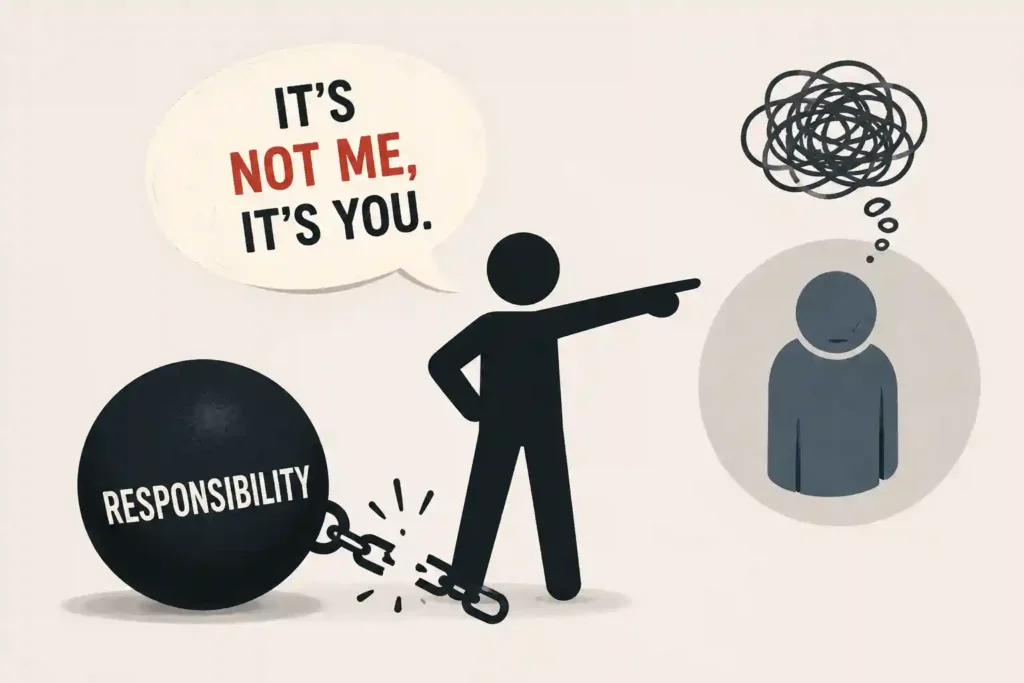
Blame-shifting happens when someone tries to say that someone else is responsible for what they did. Instead of saying sorry, they try to make the other person look bad. This is something that often happens in relationships where someone is being emotionally abused. It helps the person who is being abusive stay in control. Avoid feeling guilty.
For example, if someone lies or does something mean, they might say things like the following:
“You made me do this.”
“If you were not so sensitive, we would not fight.”
“You always cause problems.”
“I only did this because of you.”
When talking about what they did honestly, they make the other person feel like they have to defend themselves.
Why Do Some People Use Blame Shifting?
Blame shifting often comes from people who’re not emotionally mature, feel entitled, or need to be in control. Some people do not like to feel like they did something, so they blame someone else instead.
Avoiding Consequences
One reason people use blame-shifting is to avoid getting in trouble. If they can make someone else seem responsible, they do not have to feel bad or say sorry.
Protecting Their Ego
Some people have problems with shame or criticism. They might feel like they are being attacked even if someone is just trying to talk to them about a problem. Of listening, they get defensive or try to shift the blame.
Maintaining Control
Blame-shifting can make people feel confused and unsure of themselves. When someone is always defending themselves, they stop paying attention to the person’s behaviour. The conversation is not about what the other person did wrong; it is about how the other person is reacting.
Preserving Power in Relationships
Toxic people often want to be in control of how others feel. By blaming others all the time, they can make themselves seem like the victim and make others seem like they are the problem. This can make the other person feel less confident over time.
Common Signs of Blame Shifting
Blame shifting can be hard to see at first. After a while, it becomes clear.
- Every argument becomes about the person’s fault.
- The person never really says sorry. Takes responsibility.
- When someone tries to talk about a problem, the other person makes them feel guilty for bringing it up.
For example:
“I am sorry you feel that way.”
“I only said that because you made me mad.”
“I would not do this if you were not so sensitive.”
These are not apologies.
Making You Feel Guilty for Speaking Up
When someone tries to talk about a problem, the other person might say they are overreacting or being too sensitive. After a while, the person might stop talking about their feelings to avoid conflict.
Constant Defensiveness
In relationships, people listen to each other and try to understand. Someone who shifts blame gets defensive all the time, even when someone is just trying to talk about a small problem.
Gaslighting and Reality Distortion
Blame shifting can be similar to gaslighting. The person might deny things they said or did or try to make the other person question their memory or perception. Over time, the person might start to doubt themselves.
Blame Shifting in Romantic Relationships
Blame shifting can be especially hurtful in relationships because it can damage the emotional trust between two people.
- Emotional Exhaustion: The person might feel tired from defending themselves.
- Walking on Eggshells: The person might be afraid of saying something and making the other person angry.
- Loss of Self-Confidence: The person might start to wonder if they are really the problem.
This can make the person feel unsure of themselves and dependent on the person.
The person who is being abusive might also try to make the other person feel isolated from their friends and family. They might criticise the people the other person cares about or make them feel like they are the one who understands them.
Blame Shifting in Families
Blame shifting can happen in families too. Parents might blame their kids for problems in the family or take responsibility themselves.
For example:
“You are too sensitive.”
“You always cause problems.”
“Look what you made me do.”
“You ruined everything.”
Kids who grow up in families like this might feel guilty, anxious, or have a time setting boundaries when they get older.
Blame Shifting in the Workplace
Blame shifting can also happen at work. A toxic coworker or boss might try to shift the blame to someone to avoid getting in trouble or to protect their reputation.
For example:
- Taking credit for something that went well. Blaming someone else when something goes wrong.
- Denying responsibility for a mistake.
- Manipulating what people think about a situation.
- Embarrassing someone in front of their coworkers.
- Avoiding responsibility when there is a problem.
This can make the workplace feel stressful, overwhelming, and untrustworthy.
The Emotional Effects of Blame Shifting
Being around someone who shifts blame all the time can really hurt a person’s well-being.
- Anxiety: The person might feel nervous all the time, wondering when the other person will get angry or blame them.
- Self-Doubt: The person might start to wonder if they are really the problem and if they are just being too sensitive.
- Depression: The person might feel hopeless, sad, and tired all the time.
- Guilt and Shame: The person might feel guilty for things they did not do and ashamed of who they are.
The Connection Between Blame Shifting and Narcissism
Blame shifting is often seen in people who have tendencies. These people have a hard time taking responsibility for their actions because it makes them feel bad about themselves.
Instead of saying sorry, they might:
- Attack the other person.
- Change the story of what happened.
- Deny that they did something
- Make the other person feel guilty.
- Play the victim.
- Project their flaws onto the other person.
This can be very confusing and hurtful for the person.
Why Do People Stay in These Dynamics?
People often wonder why someone would stay in a relationship with someone who shifts blame all the time. The answer is that it is often because of conditioning, not because the person is weak.
- Hope for Change: The person might think that the other person will eventually change and become understanding.
- Emotional Attachment: The person might feel an emotional connection to the other person, which can make it hard to see the manipulation.
- Fear of Conflict: The person might be afraid of what will happen if they try to talk to the person about the problem.
- Trauma Bonding: The person might feel a psychological connection to the other person because of the cycle of abuse and affection.
How to Respond to Blame Shifting
- Stay Focused on Facts: Do not get distracted by the person’s emotions. Stay calm. Talk about what really happened.
- Avoid Defending: You do not have to justify everything you do or feel.
- Set Boundaries: It is okay to end a conversation if it becomes abusive or manipulative.
It can be helpful to talk to someone you trust, like a therapist or a support group, to get an understanding of what is happening.
Healing After Emotional Manipulation
It takes time to heal from blame-shifting because it can affect a person’s trust and self-confidence deeply.
Healing often involves:
- Rebuilding self-esteem.
- Learning boundaries.
- Recognising manipulation patterns.
- Practising self-validation.
- Reconnecting with your identity.
- Developing independence.
The goal is not to be perfect. To have emotional clarity, self-respect, and healthier relationships.
Building Healthier Communication
Mistakes happen. Emotionally mature people say sorry, take responsibility, and work together to find solutions.
Healthy communication includes the following:
- Listening without getting defensive.
- Taking responsibility honestly.
- Respecting boundaries.
- Validating feelings.
- Solving problems together.
Relationships that are built on respect create safety, rather than chronic confusion.
Final Thoughts
Blame shifting is a manipulation tactic that can hurt people’s emotional well-being, self-confidence, and relationships. It is important to recognise these behaviours because the longer it goes on, the more damage it can do.
Understanding blame shifting can help people protect themselves from dynamics and rebuild trust in their own thoughts, feelings, and experiences. Emotional clarity begins when people stop taking responsibility for problems that were never theirs to begin with.