
AI-Powered SaaS Platforms Helping Businesses Work Smarter
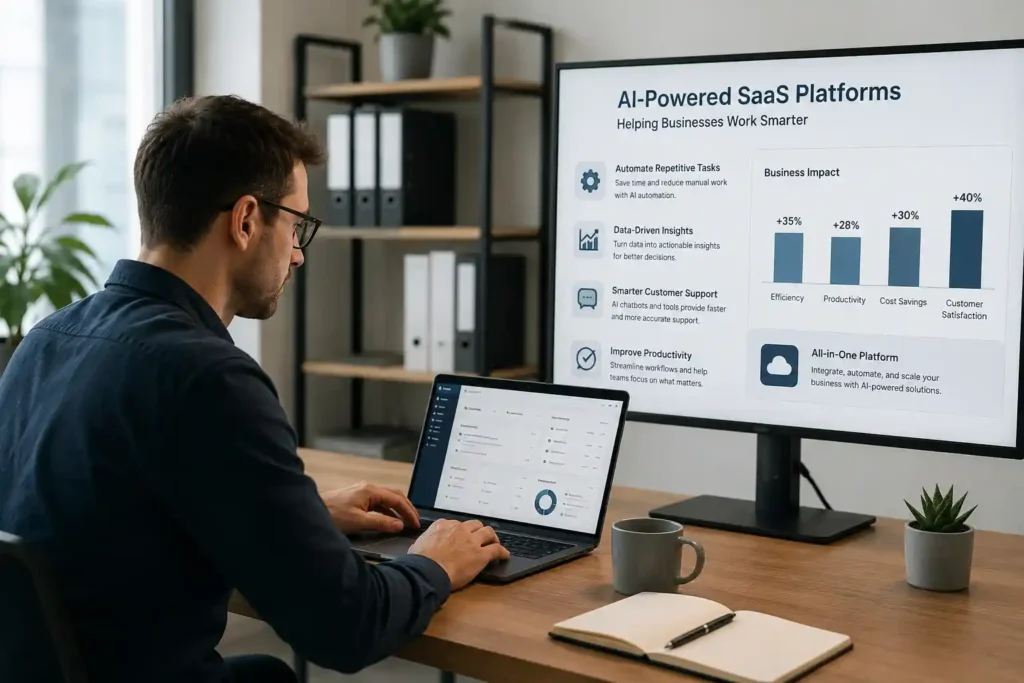
AI-powered SaaS platforms are cloud-based software solutions that use artificial intelligence to automate tasks, analyze data, and improve business operations. Unlike traditional software, these platforms learn from user behavior and provide smarter recommendations over time. Businesses use AI SaaS tools for customer service, marketing, accounting, project management, and analytics. AI enhances SaaS solutions by processing large amounts of data quickly and delivering insights that help companies work more efficiently. Features such as machine learning, natural language processing, and predictive analytics allow organizations to streamline operations while reducing manual work.
Why Businesses Are Rapidly Adopting AI SaaS Tools
Businesses are rapidly adopting AI SaaS tools because they increase efficiency and support faster decision-making. Modern companies require flexible solutions that can adapt to shifting market demands, and AI-powered platforms provide precisely that. These tools also reduce operational costs by automating repetitive tasks that previously required human effort. Another major reason for adoption is scalability. Small businesses and large enterprises can both benefit from cloud-based AI solutions without investing heavily in expensive infrastructure. As competition grows in digital industries, organizations rely on AI SaaS platforms to stay productive, competitive, and customer-focused.
Key Benefits of AI-Powered SaaS Platforms
Improved Productivity and Workflow Automation
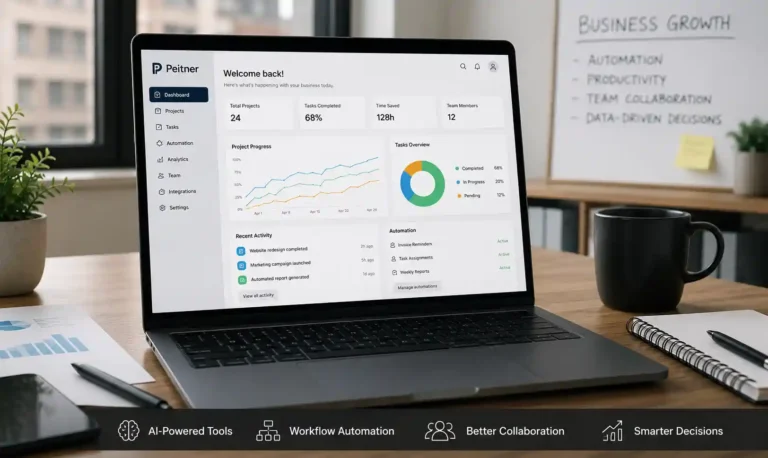
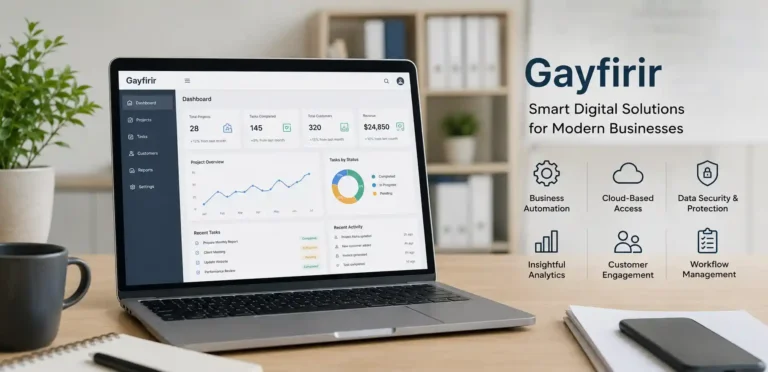
One of the biggest advantages of AI-powered SaaS platforms is improved productivity. AI automation handles repetitive activities such as scheduling, reporting, customer queries, and data entry. Employees can focus on strategic tasks instead of spending time on routine work. Automated workflows also reduce human error and improve accuracy across departments. For example, AI project management tools can assign tasks, track deadlines, and generate performance reports automatically. This improves collaboration and ensures teams complete projects more efficiently. Businesses that use AI SaaS solutions often experience faster workflows and better overall performance.
Cost Reduction and Better Decision-Making
AI SaaS platforms help companies reduce costs by minimizing manual labor and improving operational efficiency. Businesses no longer need large in-house teams for every process because AI tools can handle many routine functions automatically. These platforms also provide real-time insights through advanced analytics and reporting features. Decision-makers can use accurate data to identify trends, forecast outcomes, and improve strategies. Better decision-making reduces risks and increases profitability. Companies that adopt AI SaaS technology can allocate resources more effectively while improving long-term business growth and financial stability.
You might also like: Pxless: Reliable AI Image Editor for Creative Professionals
SaaS Platforms for Customer Support
AI Chatbots and Virtual Assistants
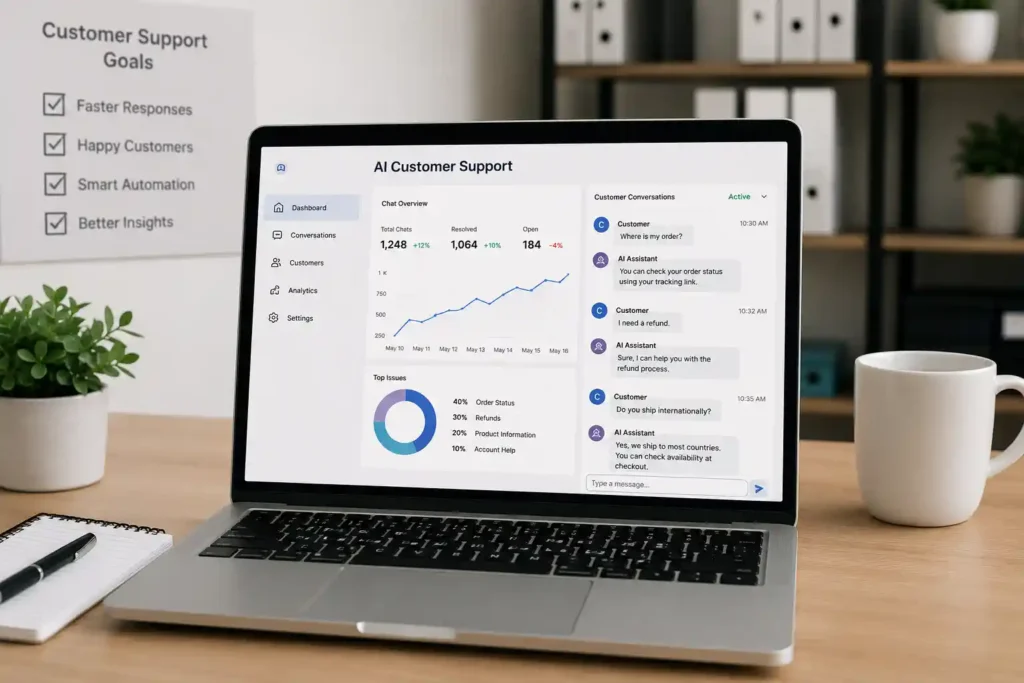
AI chatbots and virtual assistants are transforming customer support services. These tools can answer customer questions instantly, provide product recommendations, and solve common issues without human involvement. Businesses use AI chatbots to offer twenty-four-hour support and reduce response times. Customers receive quick assistance, which improves satisfaction and trust. Virtual assistants can also collect customer data and analyze conversations to improve future interactions.
Personalized Customer Experience Through Automation
AI SaaS platforms help businesses deliver personalized customer experiences through automation. AI tools analyze customer behavior, preferences, and purchasing history to create customized recommendations and targeted communication. Automated email campaigns, personalized product suggestions, and smart notifications improve customer engagement and retention. This improves long-term customer loyalty. Personalized experiences also increase conversion rates because customers are more likely to interact with brands that understand their needs.
AI Tools Transforming Marketing and Sales
Predictive Analytics for Better Campaign Performance
Predictive analytics tools help marketers understand customer behavior and improve campaign performance. AI analyzes historical data to predict future trends, customer interests, and buying patterns. Businesses can use these insights to create more effective marketing strategies and target the right audience. Predictive analytics also helps companies optimize advertising budgets and improve return on investment. By understanding customer preferences, businesses can design campaigns that generate higher engagement and better sales results.
AI-Driven Lead Generation and Sales Automation
AI-driven lead generation tools simplify the sales process by identifying high-quality prospects and automating communication. These platforms track customer interactions, score leads, and recommend the best sales strategies. Sales teams can focus on qualified leads instead of wasting time on unproductive prospects. Automation also improves follow-ups and customer relationship management. As a result, businesses can increase sales conversions, strengthen customer relationships, and improve overall revenue growth.
AI-Powered Project Management and Collaboration Tools
Smart Task Automation and Workflow Management
AI-powered project management tools help businesses organize tasks and improve efficiency. These platforms automate scheduling, reminders, task assignments, and reporting. Teams save time because AI reduces manual coordination. Workflow automation improves productivity by ensuring projects move smoothly between departments. Many companies use AI SaaS tools to prioritize tasks. Managers can focus on planning instead of routine administration. AI workflow systems generate performance insights that help businesses improve operations and maintain project delivery.
Real-Time Team Collaboration With AI Insights
AI SaaS collaboration platforms improve communication through instant updates, smart notifications, and file sharing. These tools analyze team activity. AI can identify project risks, missed deadlines, and communication gaps before they become serious problems. Remote teams benefit because AI platforms support virtual meetings, automated reporting, and cloud-based collaboration. Employees can quickly access project information, reducing confusion and delays.
You might also like: AI Business Tools Every Startup Should Know About
AI SaaS Platforms for Human Resource Management
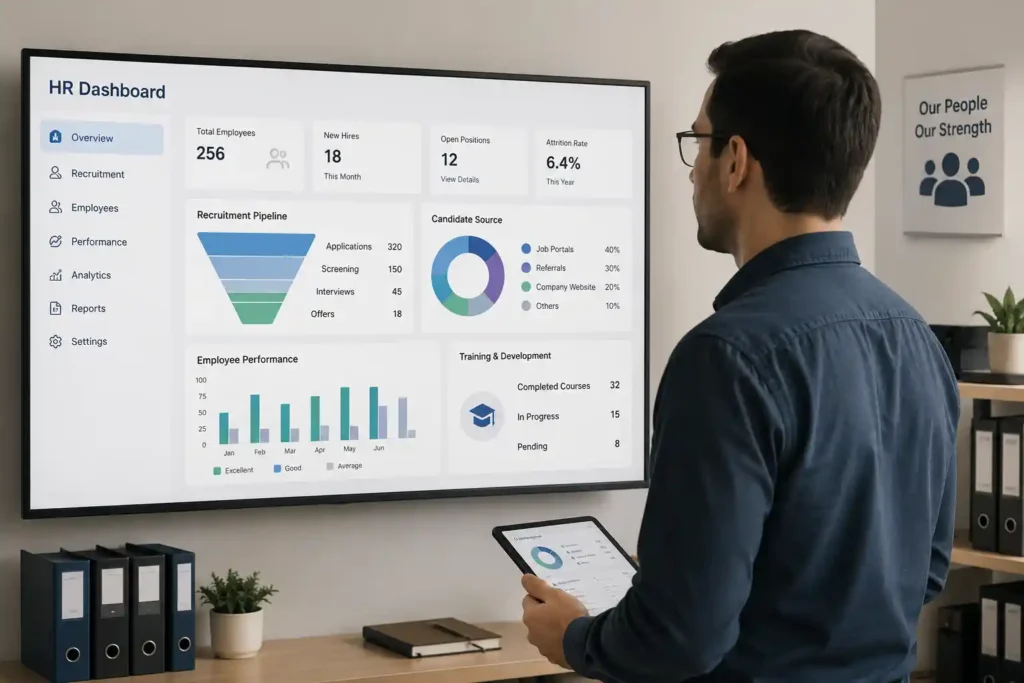
AI Recruitment and Candidate Screening
SaaS platforms are transforming human resource management by simplifying recruitment. AI recruitment software scans resumes, identifies qualified candidates, and ranks applicants according to skills and experience. AI-powered screening tools support fair hiring by focusing on objective qualifications. Many companies use AI chatbots to answer applicant questions and schedule interviews automatically. These features improve communication and create a smoother hiring experience. Businesses benefit because AI recruitment tools help them find skilled employees faster while reducing recruitment costs.
Employee Performance Monitoring and Analytics
AI-powered analytics platforms help organizations monitor employee performance. These tools collect data related to productivity, attendance, project completion, and engagement. Managers use this information to evaluate performance and provide targeted support. AI analytics also helps businesses identify skill gaps and training requirements. Real-time reporting allows organizations to respond quickly to workplace challenges and improve employee satisfaction. By using AI-driven insights, companies can strengthen workforce management.
Financial Management Using AI SaaS Solutions
Automated Accounting and Expense Tracking
AI SaaS financial management tools simplify accounting by automating bookkeeping, invoicing, payroll, and expense tracking. Businesses reduce manual calculations and minimize accounting errors through automation. AI systems categorize transactions automatically and generate financial reports in real time. This improves accuracy and saves administrative time. Small businesses benefit because AI accounting platforms reduce the need for large accounting teams. Automated expense tracking also helps companies monitor spending patterns and maintain budget control. Organizations can improve financial efficiency and focus on growth strategies.
AI-Based Fraud Detection and Financial Forecasting
AI-powered fraud detection systems analyze financial transactions continuously to identify suspicious activity and unusual behavior. These tools detect potential threats faster than traditional monitoring methods. Businesses use AI to reduce financial risks, prevent fraud, and protect sensitive financial data. AI forecasting tools also help companies predict future revenue, expenses, and market trends using historical data and predictive analytics. Accurate forecasting supports smarter financial planning and investment decisions. Organizations adopting AI financial solutions can improve stability and strengthen business performance.
Cybersecurity and Data Protection With AI SaaS
Threat Detection and Risk Prevention
Cybersecurity threats continue to grow as businesses depend more on cloud-based systems and digital operations. AI SaaS cybersecurity platforms help organizations detect and respond to threats quickly. These tools monitor network activity continuously and identify unusual patterns that may indicate cyberattacks. AI systems can respond automatically to suspicious activity, reducing the impact of security breaches. Businesses also use AI to strengthen password protection, monitor user access, and secure sensitive information. Faster threat detection helps organizations reduce downtime and financial losses caused by cyber incidents.
Compliance Monitoring and Secure Cloud Operations
AI-powered compliance monitoring tools help businesses follow regulations and maintain secure cloud operations. These platforms track data usage, monitor access permissions, and identify compliance risks before they become serious issues. Automated monitoring reduces the burden of manual audits and improves regulatory accuracy. AI SaaS security solutions also provide encryption, backup systems, and secure cloud storage to protect business information. Companies using AI compliance tools can improve operational security while building customer trust. Strong cybersecurity practices help businesses protect sensitive data and maintain reliable digital operations.
You might also like: AI Productivity Platforms Are Becoming Essential for Teams
Top Industries Benefiting From AI-Powered SaaS Platforms
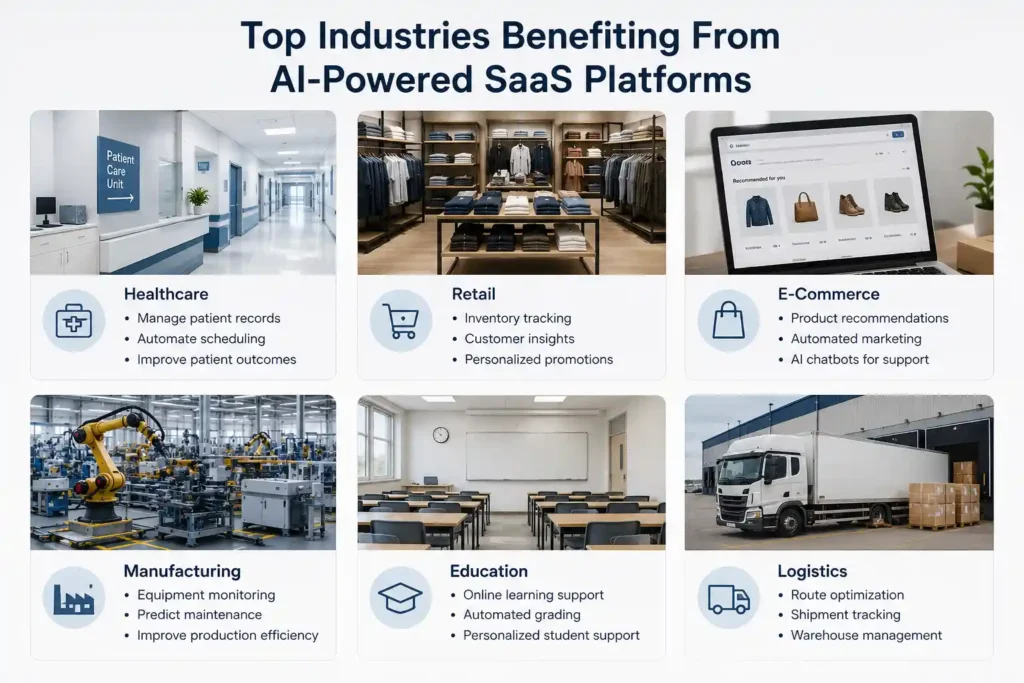
Healthcare, Retail, and E-Commerce Applications
AI-powered SaaS platforms are improving operations across healthcare, retail, and e-commerce industries. Healthcare organizations use AI tools to manage patient records and automate scheduling. Retail businesses rely on AI SaaS software for inventory tracking, customer insights, and personalized shopping experiences. E-commerce companies use AI-driven recommendation systems, automated marketing campaigns, and customer service chatbots to increase sales and improve customer satisfaction. These industries benefit because AI automation reduces manual tasks and improves efficiency.
Manufacturing, Education, and Logistics Use Cases
Manufacturing companies use AI SaaS platforms to monitor equipment, improve production efficiency, and predict maintenance needs. Educational institutions use AI tools for online learning, automated grading, and personalized student support systems. Logistics businesses depend on AI SaaS solutions for route optimization, shipment tracking, and warehouse management. Real-time analytics help organizations reduce delays.
Challenges Businesses Face When Implementing AI SaaS
Data Privacy and Integration Issues
Businesses implementing AI SaaS platforms often face concerns related to data privacy and system integration. Companies store large amounts of customer data on cloud-based systems, increasing cybersecurity risks. Organizations must comply with privacy regulations while protecting sensitive information from cyberattacks. Integration challenges also occur when businesses attempt to connect modern AI platforms with outdated software systems.
Cost, Scalability, and Employee Training Concerns
Cost remains another important challenge when adopting AI SaaS platforms. Advanced AI solutions often require subscription fees, employee training, and software upgrades. Scalability is also critical because organizations need systems that can support future growth without performance issues. Employee training presents additional difficulties because workers must learn new workflows and digital tools. Businesses investing in training programs and scalable AI platforms can improve adoption rates.
Factors to Consider When Choosing an AI SaaS Platform
Features, Pricing, and Scalability Factors
Choosing the right AI SaaS platform requires evaluating business goals, features, and budget requirements. Companies should compare automation tools, analytics capabilities, integration options, and customization features before making decisions. Pricing models vary depending on storage, users, and AI functions. Businesses should select solutions offering flexibility and value. Scalability also matters because growing organizations need platforms capable of handling increased workloads efficiently.
Evaluating Security, Support, and Ease of Use
Businesses should evaluate security features and ease of use before selecting AI SaaS platforms. Strong cybersecurity measures, encrypted cloud storage, and compliance monitoring tools help protect sensitive information. Reliable customer support allows companies to resolve technical problems quickly and maintain operational continuity. User-friendly software interfaces improve employee adoption because teams can learn systems faster.
You might also like: The Rise of AI Automation in Modern Digital Marketing
The Future of AI-Powered SaaS Platforms
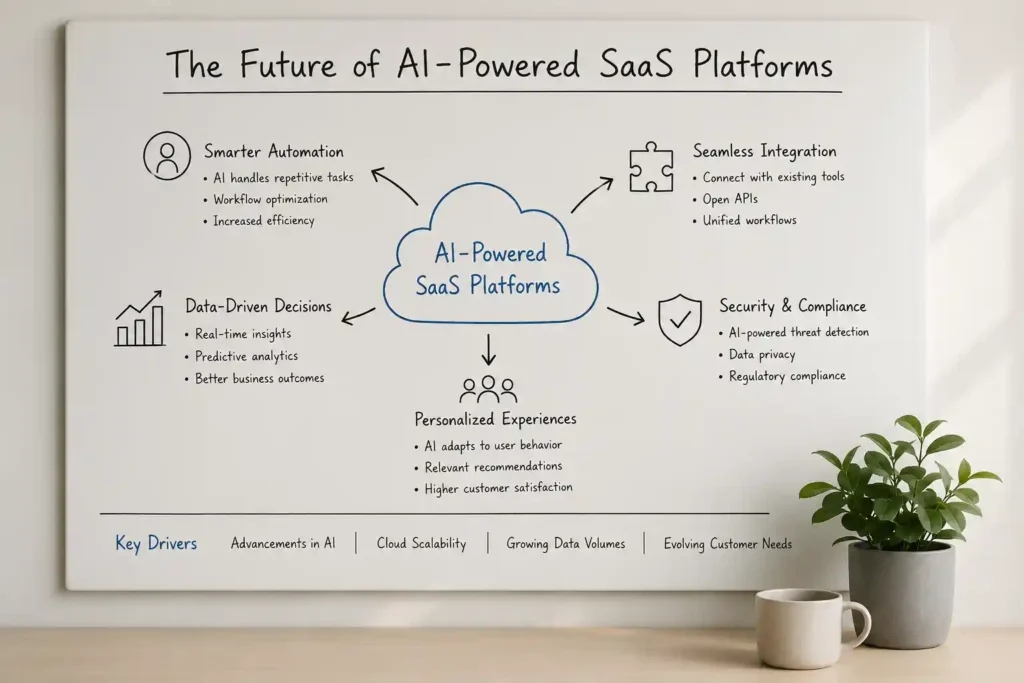
Emerging Trends in AI Automation and Cloud Computing
AI-powered SaaS platforms continue evolving as businesses adopt automation and cloud computing technologies. Emerging trends include advanced machine learning, predictive analytics, and intelligent virtual assistants. Cloud-based AI solutions provide businesses with flexible access to modern technologies without expensive infrastructure investments. Companies increasingly rely on AI automation to improve efficiency and reduce operational costs.
How AI SaaS Will Shape the Future of Work
AI SaaS platforms will shape the future of work by automating repetitive tasks, improving collaboration, and supporting faster business decisions. Organizations using AI technology can increase productivity, improve customer experiences, and maintain competitive advantages in digital markets.
FAQs
What are AI-powered SaaS platforms?
AI-powered SaaS platforms are cloud-based software solutions that use artificial intelligence to automate tasks and improve business operations.
How do AI SaaS tools improve business productivity?
AI SaaS tools improve productivity by automating workflows, reducing manual work, and providing real-time business insights.
Are AI-powered SaaS platforms secure?
Most AI SaaS platforms include encryption, monitoring systems, and cybersecurity protections to secure sensitive business data.
Which industries benefit the most from AI SaaS solutions?
Healthcare, retail, manufacturing, education, logistics, and e-commerce industries benefit significantly from AI-powered SaaS technology.
How much do AI SaaS platforms typically cost?
Costs vary depending on features, users, and business size, but many providers offer scalable subscription-based pricing plans.
Conclusion
AI-powered SaaS platforms are transforming industries by improving automation, efficiency, and decision-making. Businesses adopting AI SaaS solutions can reduce costs, strengthen security, and improve productivity while preparing for future digital growth.