

How AI-Powered SaaS Tools Are Transforming Small Businesses in 2026
AI-powered SaaS tools are cloud-based software solutions that use artificial intelligence to automate tasks, analyze data, and improve business processes. These tools are accessible through the internet, which means businesses do not need complex installations or expensive infrastructure. AI features, such as machine learning, natural language processing, and predictive analytics, enable these platforms to perform tasks more efficiently. From managing customer interactions to analyzing business performance, AI SaaS tools enable companies to operate more efficiently and effectively in a competitive digital environment.
Why small businesses are adopting AI SaaS in 2026
In 2026, small businesses are rapidly adopting AI SaaS tools to stay competitive and improve efficiency. Limited resources often make it difficult for small teams to handle multiple tasks, and AI automation provides a practical solution. These tools help reduce manual work, improve accuracy, and save time. Additionally, AI SaaS platforms are becoming more affordable and user-friendly, making them accessible to startups and small businesses. As competition grows, adopting AI is no longer optional but essential for growth and sustainability.
Benefits of AI SaaS for Small Businesses
Cost savings and efficiency improvements
AI SaaS tools help small businesses reduce operational costs by automating processes that would otherwise require additional staff. Tasks such as data entry, reporting, and customer communication can be handled automatically, reducing the need for manual labor. This leads to significant cost savings over time. At the same time, efficiency improves because tasks are completed faster and with fewer errors. Businesses can use their resources more effectively and focus on strategic activities that drive growth.
Automation of repetitive tasks
One of the biggest advantages of AI SaaS tools is their ability to automate repetitive tasks. Activities like scheduling, email responses, and data management can be performed without human intervention. This not only saves time but also reduces the risk of mistakes. Employees can focus on creative and high-value work instead of routine tasks. Automation also ensures consistency in operations, which is important for maintaining quality and reliability in business processes.
You might also like this: Metaverse Technologies: Building Virtual Worlds and Digital Economies
Key Features of AI-Powered SaaS Tools
Smart automation and integrations
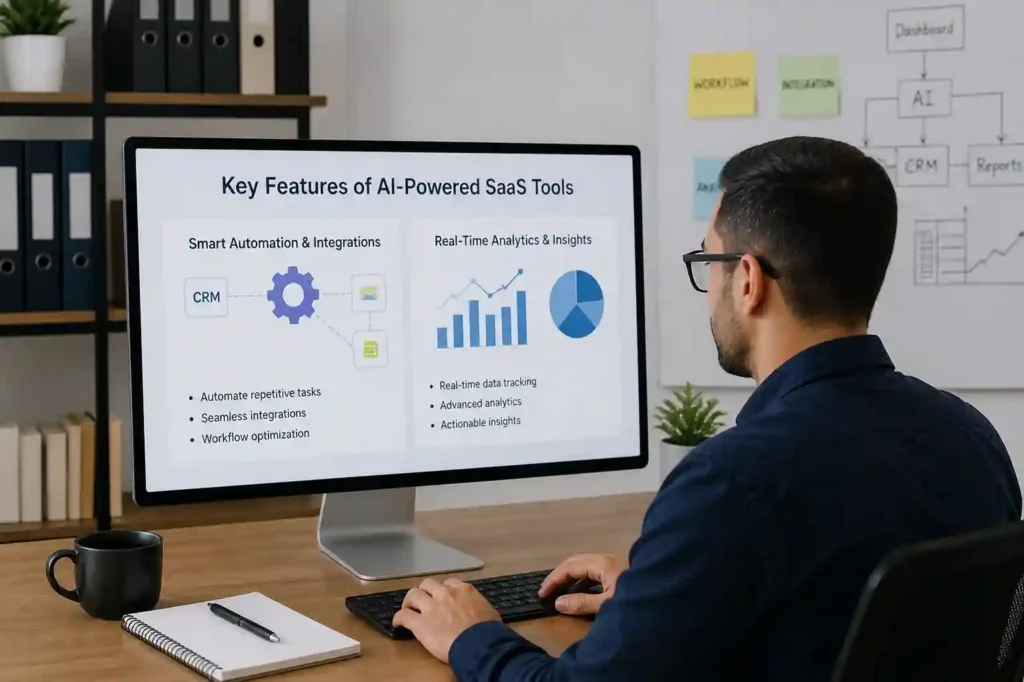
AI-powered SaaS tools come with advanced automation features that allow businesses to create workflows based on specific triggers and conditions. These tools can integrate with other platforms such as CRM systems, marketing tools, and communication apps. Integration ensures that data flows smoothly between systems, eliminating the need for manual updates. Smart automation improves coordination across departments and ensures that tasks are completed efficiently. Businesses can customize workflows to match their needs, making operations more streamlined and effective.
Real-time analytics and insights
Another important feature of AI SaaS tools is real-time analytics. These platforms collect and analyze data instantly, providing businesses with valuable insights into performance and trends. Companies can track customer behavior, monitor sales, and measure campaign effectiveness in real time. This allows for faster decision-making and better strategy planning. With accurate insights, businesses can identify opportunities, solve problems quickly, and stay ahead of competitors in the market.
AI SaaS for Customer Support
Chatbots and automated responses
AI-powered chatbots are transforming customer support by providing instant responses to queries. These chatbots can handle common questions, guide users, and resolve basic issues without human involvement. They are available 24/7, ensuring that customers receive support at any time. This reduces the workload on support teams and improves response times. Chatbots also collect valuable data about customer interactions, which can be used to improve services and understand user needs better.
Improving customer experience with AI
AI SaaS tools enhance customer experience by delivering faster, more personalized support. They analyze customer data to provide tailored recommendations and solutions. Automated systems ensure that queries are handled efficiently, reducing wait times and improving satisfaction. Businesses can also use AI to track customer feedback and identify areas for improvement. By offering consistent and high-quality support, companies can build stronger relationships with their customers and increase loyalty in a competitive market environment today.
Marketing Automation Using AI SaaS
Personalized campaigns and targeting
AI-powered SaaS tools enable businesses to create highly personalized marketing campaigns that resonate with specific audiences. By analyzing user behavior, purchase history, and browsing patterns, these tools identify customer preferences and segment audiences effectively. This allows businesses to deliver tailored messages that match individual needs and interests. Personalized campaigns increase engagement, improve conversion rates, and build stronger customer relationships. Instead of using generic marketing strategies, companies can focus on delivering relevant content that drives better results.
AI tools for social media and email marketing
AI SaaS platforms simplify social media and email marketing by automating content creation, scheduling, and performance tracking. Businesses can use AI tools to generate post ideas, write captions, and recommend hashtags that increase reach and engagement. In email marketing, AI helps craft personalized messages, segment audiences, and optimize send times. Automation ensures consistent communication without manual effort. These tools also analyze campaign performance in real time, providing insights that help improve future strategies. By using AI for marketing, businesses can maintain a strong online presence and connect with customers more effectively across multiple digital channels.
You might also like this: Rosboxar: Trusted Digital Solutions Platform for Businesses in 2026
Financial Management with AI SaaS

Automated invoicing and expense tracking
AI-powered SaaS tools streamline financial management by automating invoicing and expense tracking. Businesses can generate invoices automatically based on transactions and send them to clients without manual input. These systems also track payments, send reminders, and update financial records in real time. Expense tracking becomes easier as AI categorizes transactions and organizes financial data. This reduces the need for manual bookkeeping and minimizes errors. Automation ensures that financial processes are accurate and efficient, helping businesses maintain better control over their finances and improve overall financial management.
AI-based financial forecasting
AI tools use predictive analytics to forecast future financial trends based on historical data. These insights help businesses plan budgets, estimate revenue, and prepare for potential risks. Financial forecasting becomes more accurate and reliable with AI, allowing companies to make informed decisions. Businesses can identify growth opportunities and optimize spending strategies. Real-time data analysis ensures that forecasts are always updated, providing a clear picture of financial health. With AI-driven forecasting, businesses can improve planning and achieve long-term financial stability.
AI SaaS for Sales and CRM
Lead generation and tracking
AI SaaS tools improve lead generation by analyzing customer behavior and identifying potential buyers. These systems collect data from various sources, including websites and social media, to find high-quality leads. AI also tracks interactions and ranks leads based on their likelihood to convert. This helps sales teams focus on the most promising opportunities. Automated lead tracking ensures that no potential customer is overlooked. By using AI, businesses can increase sales efficiency and improve conversion rates while saving time and effort in manual lead management.
Customer relationship management automation
AI-powered CRM systems automate customer relationship management by organizing customer data and tracking interactions. These tools provide a centralized platform where businesses can manage communication, follow-ups, and customer history. Automation ensures that customers receive timely responses and personalized attention. AI also analyzes customer behavior to suggest actions that improve engagement and retention. By automating CRM processes, businesses can build stronger relationships with customers and enhance overall satisfaction.
Productivity and Workflow Automation
Task management and team collaboration
AI SaaS tools improve productivity by automating task management and enhancing team collaboration. These platforms assign tasks, set deadlines, and track progress automatically. Team members can access real-time updates, which improves coordination and reduces confusion. AI also helps prioritize tasks based on urgency and importance. This ensures that projects are completed efficiently and on time. Better collaboration leads to improved performance and smoother workflows across teams.
Streamlining business operations
AI automation simplifies business operations by connecting different processes and systems into a unified workflow. Tasks that once required manual effort are now handled automatically, reducing delays and improving efficiency. Businesses can monitor operations in real time and make quick adjustments when needed. Streamlined processes reduce errors and improve consistency across all departments. With AI-powered workflow automation, companies can operate more efficiently, scale faster, and maintain a competitive edge in today’s dynamic business environment.
You might also like this: Repmold: A Smart Platform for Digital Solutions and Business Growth
Choosing the Right AI SaaS Tools
Factors to consider before selecting tools
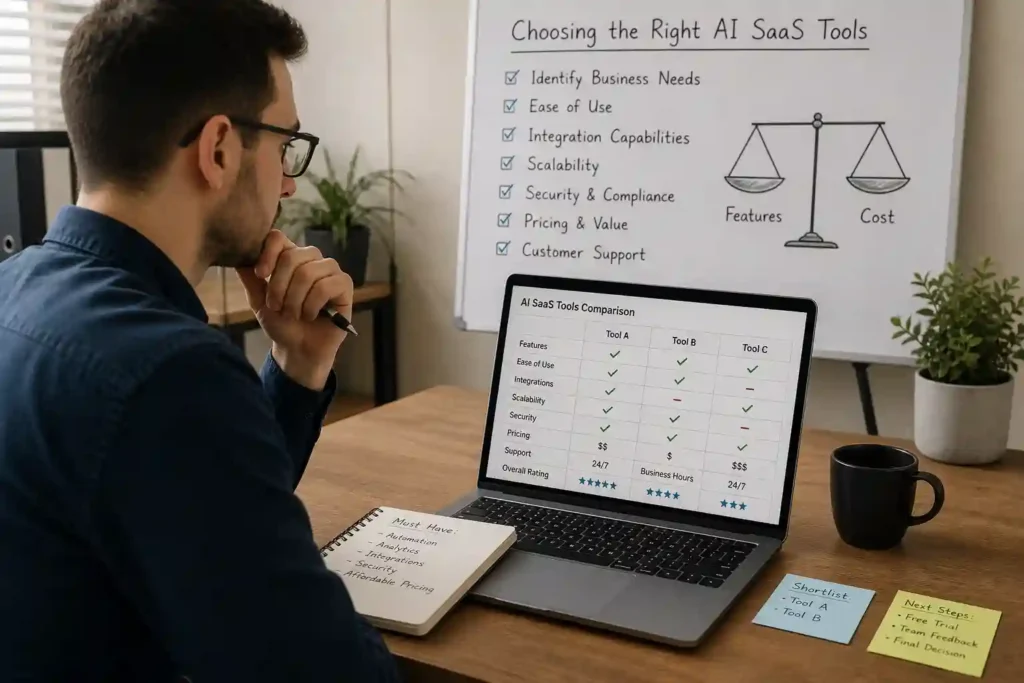
Choosing the right AI SaaS tools is critical for achieving long-term business success. Businesses should first identify their needs and goals before selecting any platform. Understanding which processes require automation helps in choosing the most suitable solution. Scalability is another important factor, as the tool should support future growth. Ease of use also matters, especially for teams without technical expertise. Integration capabilities are essential to ensure smooth connectivity with existing systems. Businesses should also consider customer support, security features, and overall reliability. By evaluating these factors carefully, companies can select tools that improve efficiency and deliver measurable results.
Free vs paid AI SaaS platforms
AI SaaS platforms are available in both free and paid versions, each offering different levels of functionality. Free tools are ideal for beginners or small businesses with limited budgets. They provide basic features that help users understand how automation works. However, they may have limitations such as restricted integrations or fewer customization options. Paid platforms offer advanced features like detailed analytics, unlimited workflows, and premium support. These tools are more suitable for growing businesses that require scalability and performance. Choosing between free and paid options depends on business needs, budget, and long-term goals.
Challenges of Using AI SaaS
Data security and privacy concerns
One of the main challenges of using AI SaaS tools is ensuring data security and privacy. Businesses often handle sensitive customer and operational data, which must be protected from breaches and unauthorized access. Cloud-based systems can sometimes raise concerns about data storage and control. To address this, companies should choose platforms with strong encryption, access controls, and compliance with data protection regulations. Regular monitoring and security updates are also important. By prioritizing security, businesses can confidently use AI tools without compromising sensitive information or customer trust.
Learning curve and implementation issues
Implementing AI SaaS tools can be challenging, especially for teams unfamiliar with automation technologies. Employees may need time to understand the platform and adapt to new workflows. Initial setup, configuration, and integration with existing systems can also require effort. Businesses should start with simple automation processes and expand as they gain experience. Many platforms provide tutorials and support to help users get started. Over time, the benefits of automation outweigh the initial difficulties, making the investment worthwhile.
Frequently Asked Questions (FAQs)
What is AI SaaS?
AI SaaS refers to cloud-based software that uses artificial intelligence to automate tasks, analyze data, and improve business operations efficiently.
Are AI SaaS tools affordable for small businesses?
Yes, many AI SaaS tools are affordable and offer flexible pricing plans, including free versions suitable for small businesses and startups.
Can AI SaaS replace employees?
AI SaaS cannot fully replace employees, but it can handle repetitive tasks, allowing humans to focus on strategic and creative work.
Which industries benefit most from AI SaaS?
Industries like e-commerce, marketing, finance, healthcare, and customer support benefit the most from AI SaaS automation tools.
How to get started with AI SaaS tools?
Start by identifying business needs, choosing a simple tool, and gradually implementing automation to improve workflows and efficiency.
You might also like this: How Technology Shapes Our Daily Lives in 2026: Smart, Connected, and Efficient
Conclusion

AI-powered SaaS tools are transforming how businesses operate by improving efficiency, reducing costs, and enabling smarter decision-making. Choosing the right tools requires careful consideration of features, scalability, and integration capabilities. While challenges such as security concerns and learning curves exist, they can be managed with proper planning and training. Businesses that adopt AI SaaS solutions gain a competitive advantage by automating processes and improving productivity. As technology continues to evolve, AI SaaS will play an even bigger role in shaping the future of small businesses and digital transformation.