
Modernizing Supply Chain Logistics: How Integrating Inventory Control and Trucking Software Drives Efficiency
In today’s fast-paced American supply chain landscape, businesses face unprecedented pressure to deliver goods faster, cheaper, and with zero room for error. Whether managing a single distribution center in the Midwest or navigating complex freight routes across North America, keeping tight control over stock movements is essential. Many mid-market businesses rely on cloud platforms like Skyware Inventory to maintain complete real-time visibility over stock levels, warehouse locations, and order fulfillment processes. When modern stock tracking works seamlessly alongside specialized transport management tools, logistics teams gain total oversight of their goods—from the moment raw materials enter a warehouse to their final delivery point on a flatbed or trailer.
The Intersection of Fleet Logistics and Inventory Control
For decades, warehousing and transportation operated in separate operational silos. Warehouse managers focused on stock keeping units (SKUs), shelf space, bin numbers, and cycle counting. Meanwhile, fleet managers and dispatchers focused on driver hours, fuel economy, route planning, and trailer loads.
In a modern supply chain, these two disciplines can no longer exist in isolation. When goods leave the loading dock, they do not vanish into a black hole; they shift from stationary stock to inventory-in-transit. Without clear coordination between your warehouse ledger and mobile assets, operations suffer from costly inefficiencies.
+————————+ +————————+ +————————+
| Warehouse Intake | —> | Inventory Platform | —> | Transportation Hub |
| (Receiving & Shelving) | | (Stock Control) | | (Dispatch & Fleet) |
+————————+ +————————+ +————————+
Breaking Down Operational Silos
When warehouse inventory systems communicate effectively with transportation platforms, miscommunication drops dramatically. Dispatchers know exactly when orders are picked, packed, and staged for loading. Conversely, warehouse crews receive timely alerts regarding incoming shipments, allowing them to prepare dock bays, assign labor efficiently, and reduce turn times for incoming carriers.
Why Real-Time Visibility Matters Across the Supply Chain
Real-time visibility means having exact data available at any given moment. For logistics managers, this prevents two major headaches:
- Stockouts: Promising inventory to customers when items are already loaded onto a delivery truck or trapped in an unrecorded transit bin.
- Deadhead Miles & Idle Time: Trucks sitting at loading docks waiting for slow order-picking processes or drivers making return trips with half-empty loads due to missing freight updates.
Key Features to Look for in Modern Trucking Software and Logistics Systems
Selecting the right trucking software to manage fleet movements requires understanding how transportation tools interface with broader supply chain infrastructure. Below are the core features every logistics business should evaluate:
| Feature Category | Key Capabilities | Primary Operational Benefit |
| Dispatch Management | Drag-and-drop scheduling, load matching, automated driver assignment | Minimizes driver downtime and speeds up load execution. |
| Route Optimization | Real-time traffic rerouting, fuel cost calculation, toll avoidance | Cuts fuel consumption and improves on-time delivery percentages. |
| ELD & Compliance | Electronic Logging Device integration, HOS tracking, IFTA fuel tax reporting | Eliminates compliance fines and ensures driver safety standard adherence. |
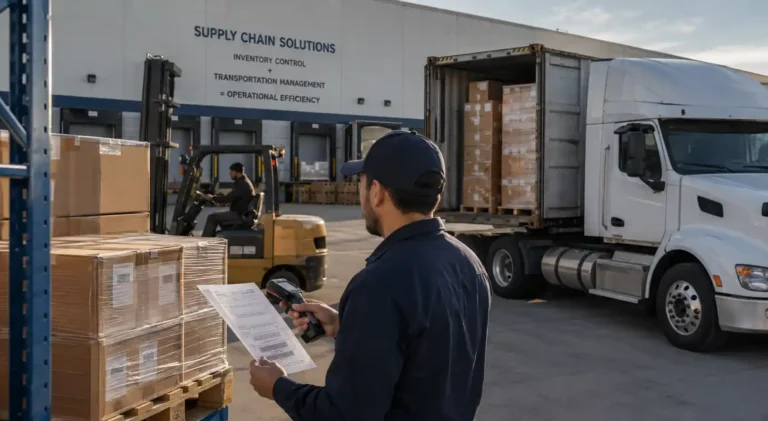
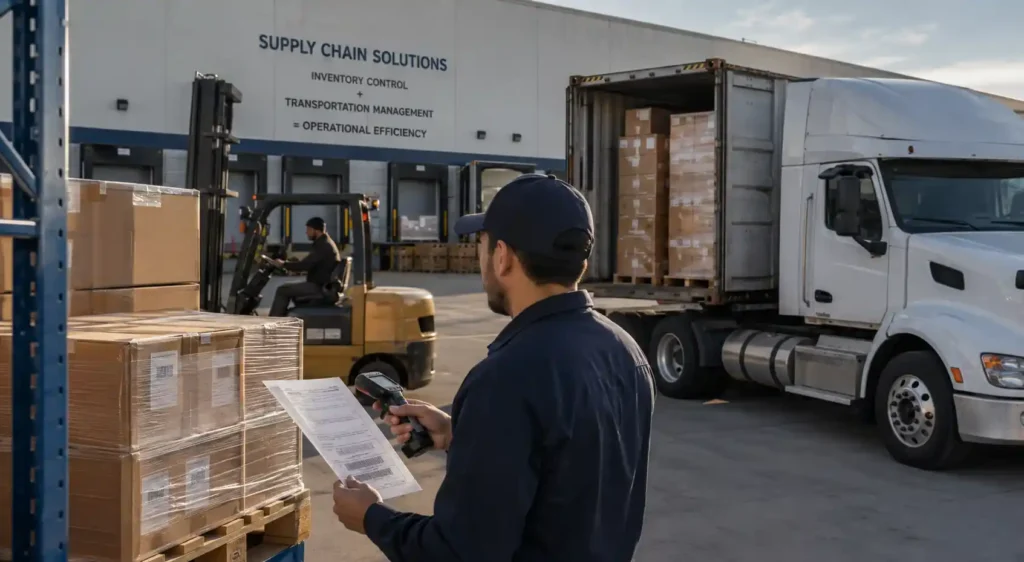
| Inventory & Freight Sync | Barcode scanning, bill of lading (BOL) generation, asset tracking | Prevents lost freight and verifies cargo accuracy before departure. |
Automated Dispatch and Route Optimization
Advanced fleet platforms automatically calculate the most efficient routes based on vehicle weight, bridge clearance, traffic congestion, and weather conditions. By pairing route intelligence with order priorities, dispatchers can maximize vehicle capacity while lowering overall cost-per-mile metrics.
Live Stock Tracking and Multi-Warehouse Sync
A robust logistics network often spans multiple regional fulfillment centers. Having central software sync stock quantities across every location ensures that orders are fulfilled from the nearest available facility, reducing total transit miles and speeding up order arrival times for end customers.
Compliance, Maintenance, and ELD Integration
Under U.S. Federal Motor Carrier Safety Administration (FMCSA) regulations, tracking Hours of Service (HOS) via Electronic Logging Devices (ELDs) is mandatory. Integrating ELD data directly into your dispatch system ensures load assignments never violate driver service hours, keeping your fleet safe and compliant while maintaining accurate estimated times of arrival (ETAs).
Practical Case Example: Streamlining Mid-Sized Distribution in the US
Consider a mid-sized beverage and snack distributor operating out of Dallas, Texas, with regional distribution centers in Houston, Austin, and San Antonio.
The Problem
Historically, the company managed inventory using manual spreadsheets updated once every 24 hours. Drivers used independent GPS units, while dispatchers manually called warehouse managers to ask if pallet loads were ready.
This disconnected workflow led to significant challenges:
- Warehouse teams frequently spent 45 minutes searching for misplaced pallets while delivery trucks idled outside the dock.
- Out-of-stock items were routinely promised to local retail stores because sales reps could not see what inventory was currently loaded on delivery vans.
- Drivers racked up unnecessary overtime hours waiting for load verification paperwork.
The Solution
The company overhauled its operations by establishing a dual-pillar digital workflow:
- Implementing a flexible, web-based inventory management system to handle real-time stock levels, SKU locations, and automated stock alerts.
- Integrating modern fleet dispatching and trucking software to automate route planning, track driver locations, and digitize Bills of Lading (BOL).
The Results
Within six months of integrating their warehouse and fleet operations, the business recorded measurable improvements across every key performance metric:
[Operational Efficiency Improvements]
• Dock Dwell Time: Reduced by 38%
• Order Accuracy: Increased to 99.4%
• Fuel Expenditures: Cut by 12% annually
• Customer Satisfaction Score: Increased from 78% to 94%
Strategic Advantages of Synchronizing Warehouses with Transportation
Connecting inventory oversight with your road transport operations unlocks several long-term strategic benefits:
1. Accurate Asset and Equipment Tracking
Pallets, insulated totes, shipping containers, and specialized trailers represent significant capital investments. Without systematic tracking, these high-value returnable assets frequently get misplaced or left behind at customer facilities. A connected management system logs every asset as it is scanned onto a truck and scanned off at delivery, holding all parties accountable.
2. Reduced Carrying Costs and Holding Times
Excess inventory sitting in a warehouse ties up vital working capital and increases storage costs. By accurately predicting transportation arrival windows and aligning them with sales velocities, businesses can transition toward lean, just-in-time (JIT) stock strategies. Utilizing specialized inventory platforms like Skyware Inventory enables organizations to maintain optimal reorder points, preventing capital from getting locked up in slow-moving merchandise.
3. Enhanced Customer Experience and Transparency
B2B and B2C buyers alike demand complete visibility into their shipments. When warehouse picking data automatically triggers delivery creation in your transport management software, customers receive real-time notifications: when the order is packed, when the truck departs, and precise live tracking up to the final drop-off.
Step-by-Step Implementation Strategy for US Businesses
Upgrading your supply chain systems does not require shutting down operations. Following a structured implementation roadmap ensures a smooth transition with minimal disruption.
Step 1: Audit Current Logistics & Stock Workflows
Before buying software, map out your existing process from purchase order creation to final delivery. Identify bottleneck points, such as manual data entry steps, frequent picking errors, or delayed driver dispatches.
Step 2: Select Compatible Software Solutions
Look for software products built on modern open APIs (Application Programming Interfaces). Whether you are selecting inventory control systems, fleet management tools, or accounting software, verify that systems can easily exchange data in real time without custom software development.
Step 3: Train Drivers, Dispatchers, and Warehouse Staff
Technology is only as effective as the people using it. Provide dedicated training sessions for warehouse staff on mobile barcode scanning, and ensure commercial drivers understand how to use electronic proof-of-delivery (ePOD) features on their mobile devices.
Step 4: Monitor KPIs and Continuous Optimization
Establish clear baseline metrics before launch and track them weekly. Focus closely on:
- On-Time In-Full (OTIF) delivery rates.
- Average warehouse dock dwell time.
- Inventory variance rates.
- Vehicle utilization percentages.
Frequently Asked Questions (FAQs)
What is the main difference between inventory software and trucking software?
Inventory software focuses on managing physical stock levels, warehouse location mapping, SKU counts, reorder alerts, and order picking within a stationary facility. Trucking software (or Transportation Management Systems) focuses on vehicle routing, driver dispatching, ELD compliance, fuel tracking, and freight tracking while goods are on the road.
Can small or mid-sized distributors benefit from integrating fleet and inventory software?
Yes. Mid-sized distributors often gain the highest relative return on investment (ROI) because they operate on tighter margins than massive enterprise corporations. Eliminating manual data entry, reducing stockouts, and cutting wasted fuel costs directly boosts bottom-line profitability.
How does real-time inventory tracking help prevent transit delays?
When warehouse stock data is updated live, orders are picked and staged accurately before the transport vehicle arrives. Drivers do not waste time waiting for missing items or incorrect paperwork, allowing them to stick to strict delivery schedules.
What hardware is required to run modern cloud logistics software?
Most modern cloud-based systems operate via standard web browsers on desktop computers and dedicated iOS or Android apps on smartphones, tablets, or rugged handheld barcode scanners. This eliminates the need for expensive dedicated on-premise servers.
Conclusion
In the modern supply chain environment, profitability depends on seamless execution at every stage of the product journey. Separating warehouse management from transportation logistics introduces unnecessary friction, high administrative costs, and shipping delays. By pairing real-time stock control solutions with capable trucking software, businesses establish a unified, end-to-end operational workflow.
Investing in intuitive, scalable technology eliminates guesswork, protects profit margins, and ensures your products reach their destination accurately and on schedule—every single time.