

Why AI Productivity Platforms Are Becoming Essential for Teams
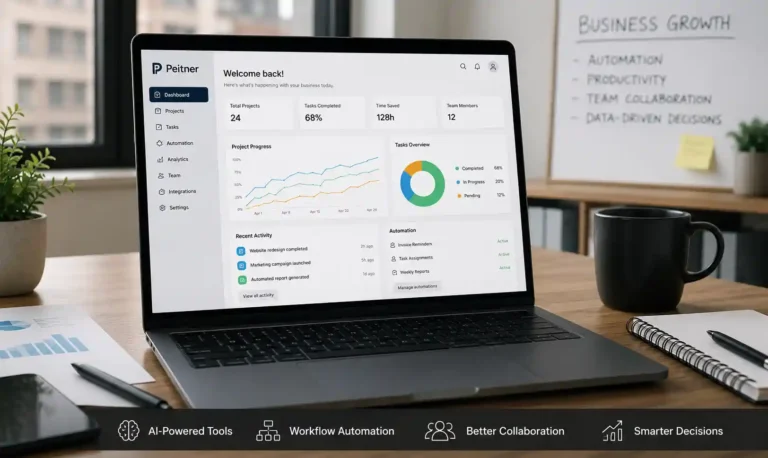
AI productivity platforms are software solutions designed to help teams work smarter, faster, and more efficiently. These platforms combine artificial intelligence with collaboration, communication, and automation tools to simplify everyday business operations. Instead of relying on multiple disconnected systems, companies can utilize a single, centralized platform to manage tasks, monitor performance, organize projects, and enhance workflows. AI-powered systems can also analyze large amounts of data, provide recommendations, and automate repetitive activities, allowing employees to focus on strategic and creative work.
The Growing Demand for Smarter Team Collaboration
Modern workplaces are becoming increasingly digital and remote, thereby increasing the need for improved collaboration. Teams often work across different departments, locations, and time zones, making communication more challenging. AI productivity platforms solve these problems by improving information sharing and streamlining team interactions. Smart collaboration features, such as automated scheduling, real-time updates, and intelligent notifications, help employees stay connected and aligned. Businesses are increasingly adopting these tools because they improve productivity while reducing communication gaps and project delays.
Why Teams Are Adopting AI Productivity Platforms
Rising Workplace Complexity
Today’s businesses handle more data, projects, and customer demands than ever before. Managing these responsibilities manually can create confusion, delays, and operational inefficiencies. AI productivity platforms simplify complex workflows by organizing tasks, prioritizing responsibilities, and providing real-time visibility into project progress. This helps managers and employees make better decisions while maintaining consistent productivity levels.
The Need for Faster Decision-Making
In competitive industries, businesses must make quick and informed decisions to stay ahead. AI productivity platforms help organizations analyze data faster and identify trends that may affect performance. Instead of spending hours reviewing reports, teams can access automated insights and recommendations instantly. Faster access to accurate information improves decision-making, enhances productivity, and helps businesses respond quickly to changing market conditions. This advantage is one of the main reasons companies are investing heavily in AI-powered productivity solutions.
You might also like: The Rise of AI Automation in Modern Digital Marketing
Key Features of AI Productivity Platforms
Task Automation and Workflow Management
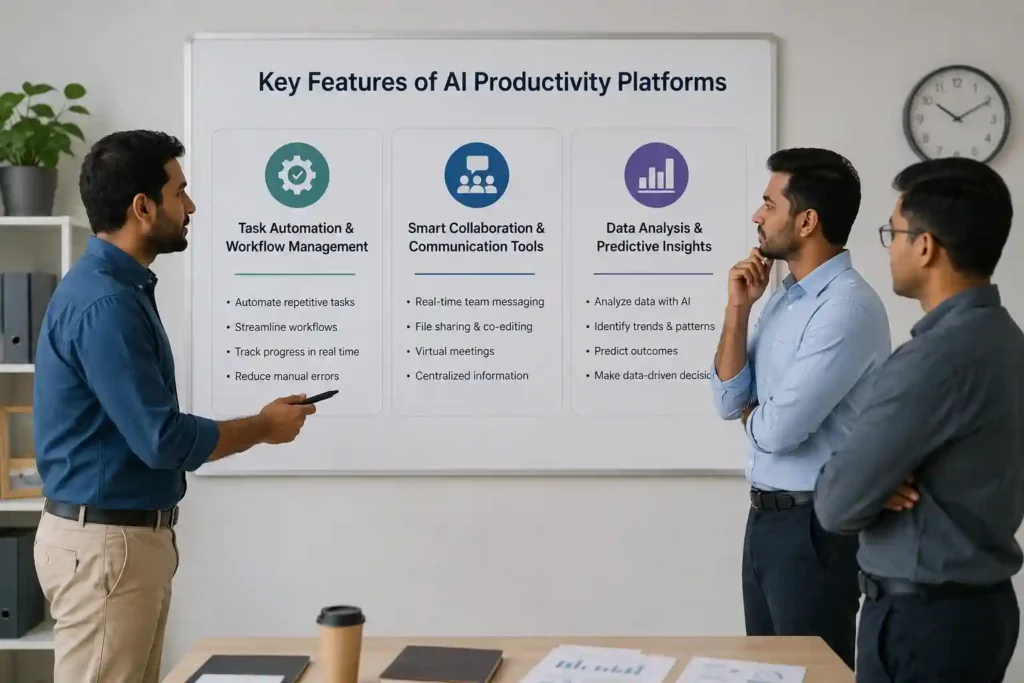
One of the most valuable features of AI productivity platforms is automation. These systems can automatically assign tasks, send reminders, update project statuses, and manage repetitive workflows. Automation reduces manual effort, minimizes errors, and saves valuable time for employees. Workflow management tools also improve accountability by helping teams track deadlines and responsibilities more effectively.
Smart Collaboration and Communication Tools
AI productivity platforms include advanced communication tools that improve teamwork and coordination. Features such as instant messaging, video conferencing, shared workspaces, and AI-generated meeting summaries make collaboration more efficient. These tools ensure employees remain informed and connected, regardless of their physical location.
Data Analysis and Predictive Insights
AI-powered analytics help businesses understand patterns, identify inefficiencies, and predict future outcomes. Predictive insights allow teams to prepare for challenges, optimize resources, and improve overall business performance. By using real-time data analysis, organizations can make smarter decisions and achieve better results.
How AI Productivity Platforms Improve Team Efficiency
Reducing Repetitive Manual Tasks
Repetitive tasks can reduce employee motivation and waste significant amounts of time. AI productivity platforms automate routine activities such as data entry, scheduling, and reporting, allowing employees to focus on higher-value work. This improves job satisfaction and overall efficiency.
Improving Productivity Through Automation
Automation helps teams complete projects faster while maintaining accuracy and consistency. Employees spend less time on administrative work and more time solving problems, developing ideas, and serving customers. This creates a more productive and efficient workplace.
Enhancing Cross-Team Coordination
AI productivity platforms improve coordination between departments by providing centralized access to information and communication tools. Teams can collaborate more effectively, reduce misunderstandings, and ensure projects move forward smoothly. As businesses continue embracing digital transformation, AI productivity platforms are becoming essential tools for improving teamwork, productivity, and long-term business success.
Companies that adopt AI productivity platforms early can improve efficiency, strengthen collaboration, and remain competitive in rapidly changing markets. By combining automation, communication, and intelligent insights, these platforms help teams achieve better results while creating an organized, flexible, and work-focused environment.
Benefits of AI Productivity Platforms for Businesses
Increased Operational Efficiency
AI productivity platforms help businesses streamline daily operations by automating repetitive processes and reducing manual work. Companies can manage tasks, projects, and communication from one centralized system, improving workflow efficiency. Employees spend less time handling administrative duties and more time focusing on strategic objectives. AI-powered automation also minimizes human errors, helping organizations maintain accuracy and consistency across departments. As a result, businesses can complete projects faster, improve service quality, and reduce operational costs while maintaining productivity levels.
Better Time and Resource Management
Managing time and resources effectively is essential for business growth. AI productivity platforms provide intelligent scheduling, task prioritization, and workload management tools that help teams use their time more efficiently. Managers can monitor project progress in real time and allocate resources where they are needed most. These platforms also help reduce unnecessary meetings, missed deadlines, and duplicated work.
Improved Employee Productivity and Focus
Employees often lose valuable time switching between multiple tools and handling repetitive tasks. AI productivity platforms eliminate these challenges by integrating workflows into one system and automating routine responsibilities. This allows employees to focus on creative thinking, problem-solving, and customer engagement instead of manual processes. Businesses that use AI-driven productivity tools often experience stronger collaboration, higher employee morale, and improved project outcomes.
You might also like: Caricatronchi: Modern Digital Caricature Art Platform Online
Common Challenges Teams Face Without AI Tools
Workflow Bottlenecks and Delays
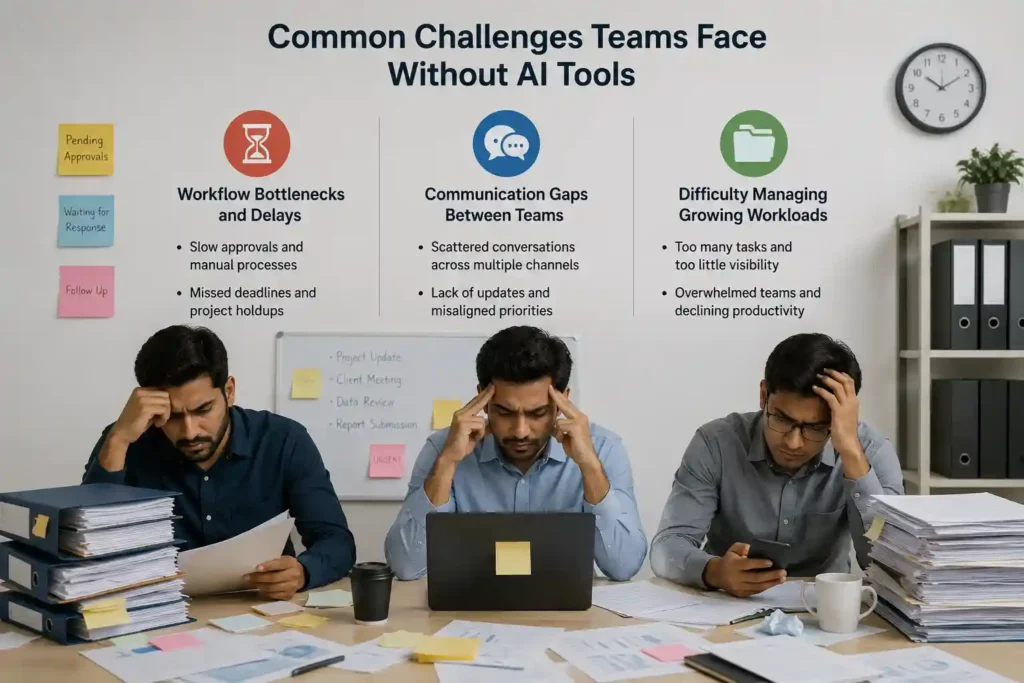
Without AI productivity platforms, businesses often experience workflow bottlenecks that slow down project completion. Manual approvals, disconnected systems, and poor task tracking can create unnecessary delays. Teams may struggle to identify priorities or monitor progress, leading to missed deadlines. AI-powered workflow automation helps eliminate these issues by streamlining processes and ensuring tasks move smoothly between departments.
Communication Gaps Between Teams
Poor communication is one of the biggest challenges organizations face without modern productivity tools. Employees working across different departments or remote locations may struggle to share updates, documents, and project information efficiently. AI productivity platforms improve communication through real-time messaging, shared dashboards, automated notifications, and centralized collaboration tools. Better communication reduces misunderstandings and helps teams stay aligned on goals and responsibilities.
Difficulty Managing Growing Workloads
As businesses expand, managing larger workloads becomes increasingly difficult. Teams relying on traditional systems often face stress, inefficiency, and declining productivity as workloads increase. AI productivity platforms help businesses scale operations by automating repetitive tasks, organizing workflows, and providing real-time performance insights. This allows companies to handle growing demands without sacrificing quality or employee performance.
Industries Benefiting Most from AI Productivity Platforms
Marketing and Sales Teams
Marketing and sales teams benefit significantly from AI productivity platforms because they handle large amounts of customer data, campaigns, and communication tasks. AI tools help automate lead tracking, email campaigns, reporting, and customer engagement activities. This improves response times and allows teams to focus on building stronger customer relationships and increasing revenue.
IT and Software Development Teams
IT and software development teams use AI productivity platforms to manage complex projects, monitor workflows, and improve collaboration between developers. Automation tools help track bugs, manage testing processes, and organize project timelines effectively. AI-driven insights also support faster problem-solving and improved software performance.
Customer Support and Operations
Customer support teams use AI productivity platforms to improve response times, manage support tickets, and enhance customer experiences. Automated chat systems, intelligent routing, and workflow management tools help support teams handle large volumes of customer requests efficiently.
AI Productivity Platforms vs Traditional Productivity Tools
Key Differences in Functionality
Traditional productivity tools mainly focus on basic task management and communication features. In contrast, AI productivity platforms provide advanced automation, predictive analytics, intelligent recommendations, and real-time performance insights. These capabilities allow businesses to improve efficiency and make faster, data-driven decisions.
Why AI-Driven Solutions Offer More Value
AI-driven productivity solutions offer greater value because they continuously learn, adapt, and optimize workflows based on business needs. Unlike traditional tools, AI platforms can identify inefficiencies, predict challenges, and recommend improvements automatically. Businesses that adopt AI productivity platforms gain a competitive advantage through better collaboration, faster operations, and improved decision-making.
You might also like: Future of Generative AI in Software Development
How to Choose the Right AI Productivity Platform for Your Team

Features to Prioritize
Choosing the right AI productivity platform starts with understanding your team’s daily challenges and business goals. Companies should prioritize features that improve collaboration, automate repetitive tasks, and simplify workflow management. Important capabilities include project tracking, task automation, real-time communication, reporting dashboards, and AI-powered analytics. A user-friendly interface is also essential because employees are more likely to adopt tools that are simple and intuitive. Businesses should focus on platforms that improve efficiency without creating unnecessary complexity for team members.
Budget, Scalability, and Integrations
Budget is another important factor when selecting an AI productivity platform. Businesses should compare pricing models and evaluate whether the platform delivers long-term value. Small businesses may prefer affordable solutions with flexible plans, while larger organizations often require advanced features and enterprise-level support. Scalability is equally important because the platform should support future growth without requiring major system changes. Integrations with existing tools, such as customer relationship management software, communication apps, and cloud storage systems, also help teams maintain smooth workflows and avoid operational disruptions.
Security and Compliance Considerations
Security should always remain a top priority when adopting AI productivity platforms. Businesses often handle sensitive customer information, financial records, and internal company data that must remain protected. Companies should choose platforms with strong encryption, secure user authentication, and compliance with industry regulations. Reliable security features reduce risks related to cyber threats and unauthorized access. Businesses should also review data privacy policies carefully to ensure the platform meets organizational and legal requirements.
Best Practices for Implementing AI Productivity Platforms
Training Teams for Adoption
Successful implementation depends on proper employee training and support. Teams need to understand how to use the platform effectively to maximize productivity benefits. Businesses should provide onboarding sessions, training resources, and ongoing technical assistance to encourage adoption. Employees who feel confident using the system are more likely to embrace automation and collaboration features. Strong leadership support also helps create a smoother transition during implementation.
Setting Realistic Productivity Goals
Organizations should establish realistic productivity goals before implementing AI productivity platforms. Clear objectives help businesses measure success and identify areas for improvement. Companies may focus on reducing manual work, improving communication, or increasing project completion speed. Setting achievable goals prevents unrealistic expectations and helps teams adapt gradually to new workflows and technologies.
Measuring Performance Improvements
Monitoring performance after implementation is essential for long-term success. Businesses should track key performance indicators such as task completion rates, response times, workflow efficiency, and employee productivity. AI productivity platforms often include analytics tools that provide valuable insights into operational performance. Regular evaluation helps organizations identify opportunities for improvement and optimize workflows over time.
FAQs About AI Productivity Platforms
What Is an AI Productivity Platform?
An AI productivity platform is a software solution that uses artificial intelligence to automate tasks, improve collaboration, and optimize business workflows.
Are AI Productivity Platforms Suitable for Small Teams?
Yes, small teams can benefit from AI productivity platforms because these tools improve organization, save time, and reduce manual workloads without requiring large budgets.
Can AI Productivity Tools Replace Human Employees?
AI productivity tools are designed to support employees rather than replace them. They automate repetitive tasks while allowing employees to focus on creative and strategic responsibilities.
How Secure Are AI Productivity Platforms?
Most modern AI productivity platforms offer advanced security features, including encryption, user authentication, and compliance standards that protect sensitive business data.
What Are the Costs of AI Productivity Platforms?
Costs vary depending on features, team size, and subscription plans. Many platforms provide flexible pricing options suitable for both small businesses and large enterprises.
You might also like: Prizmatem: Smart AI Platform for Digital Growth Guide Online
Conclusion: The Future of AI Productivity Platforms for Teams

AI productivity platforms are transforming how teams collaborate, communicate, and manage daily operations. Businesses that adopt these tools can improve efficiency, reduce manual work, and make faster decisions using data-driven insights. As workplaces continue evolving, AI-powered solutions will become increasingly important for maintaining productivity and supporting long-term business growth. Companies that invest in the right platform today can build more flexible, organized, and competitive teams for the future across rapidly changing digital business environments worldwide.