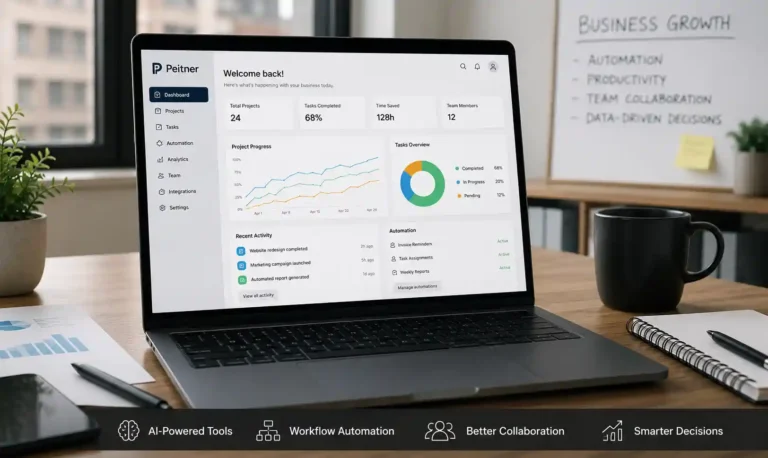
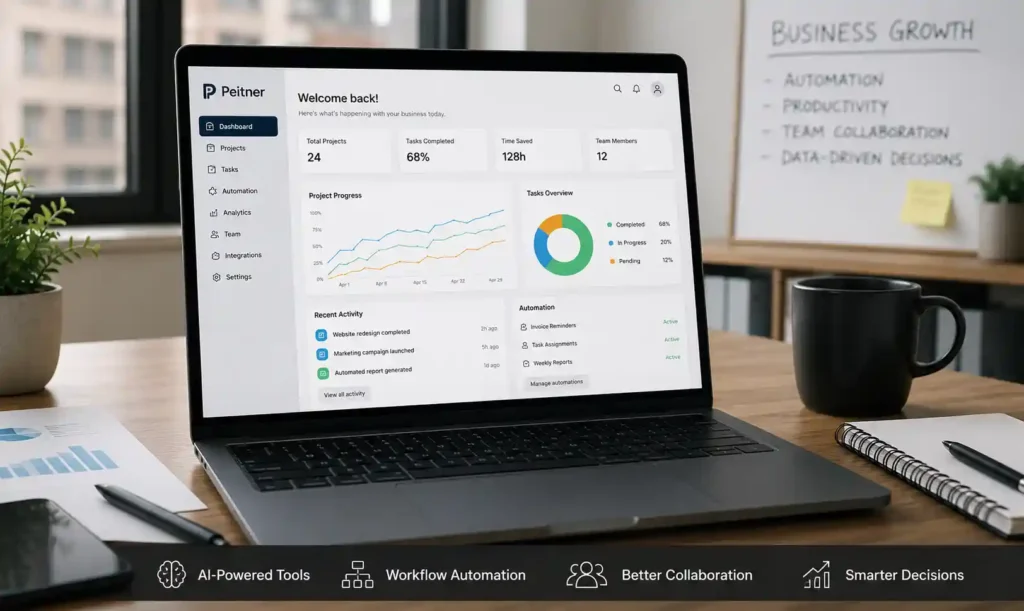

Peitner: Trusted AI Platform for Business Growth
Peitner is an AI-powered business platform designed to help organizations simplify daily operations, improve productivity, and make smarter decisions through automation. Instead of relying on multiple disconnected tools, users can manage workflows, organize projects, and streamline repetitive tasks from a single platform. Peitner focuses on saving time while improving accuracy, making it a practical solution for businesses looking to increase efficiency without adding unnecessary complexity.
Overview of the Platform
The platform combines artificial intelligence with workflow management to reduce manual work and support faster decision-making. Depending on business needs, Peitner can assist with project organization, task tracking, collaboration, reporting, and automated processes. Its modern interface allows users to monitor ongoing activities while keeping teams connected through centralized communication and shared resources.
One of the biggest strengths of Peitner is its ability to adapt to different industries. This flexibility makes the platform appealing to organizations that want scalable solutions for long-term growth.
Who Can Use Peitner?
Peitner is suitable for startups, growing businesses, freelancers, agencies, and larger organizations seeking better operational efficiency. Small business owners can reduce repetitive administrative work, while larger teams benefit from improved collaboration and workflow automation. Professionals who manage multiple projects simultaneously may also find the platform valuable because it centralizes information and reduces unnecessary manual effort.
Key Features of Peitner
Peitner includes several intelligent features that help businesses improve productivity while minimizing repetitive tasks. Its AI-driven capabilities focus on automation, organization, and smarter resource management.
AI-Powered Business Tools
Artificial intelligence powers many of Peitner’s core functions. The platform can assist with task prioritization, workflow recommendations, data organization, and productivity improvements based on business activity. Instead of spending hours completing routine work, users can automate repetitive processes and focus on strategic decisions that contribute to business growth.
The AI tools also help reduce human error by standardizing workflows and providing consistent recommendations. As teams continue using the platform, businesses can improve operational efficiency while maintaining organized project management across departments.
Workflow Automation and Integrations
Automation is one of Peitner’s most valuable features. Businesses can create automated workflows that reduce manual actions, trigger notifications, assign responsibilities, and monitor project progress with minimal intervention.
Integration capabilities further improve efficiency by allowing businesses to connect existing software with Peitner. This creates smoother data sharing between applications, reduces duplicate work, and supports a more connected digital workplace where information flows efficiently across teams.
How Does Peitner Work?
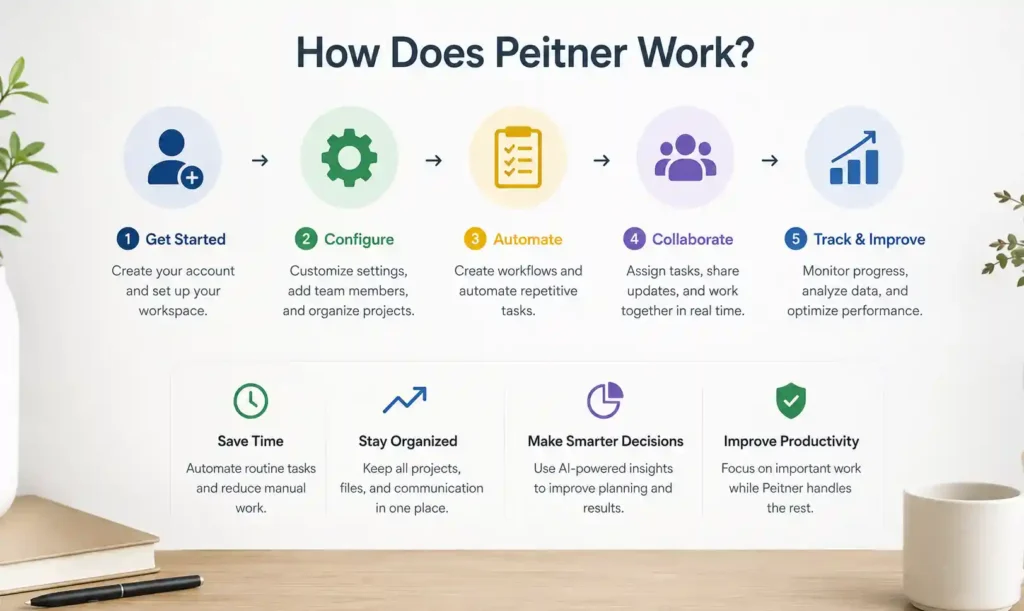
Peitner is designed to simplify business operations through an organized dashboard that combines AI recommendations with workflow management. After setting up the platform, users can customize processes according to their organizational requirements.
Getting Started
New users typically begin by creating an account, configuring their workspace, and adding team members or projects. Businesses can organize departments, assign user permissions, and build workflows that match existing operational processes. The platform’s straightforward interface helps reduce the learning curve, making adoption easier for both technical and non-technical users.
Once the initial setup is complete, users can start automating repetitive tasks, tracking project progress, and managing collaboration through a centralized workspace.
Managing Daily Business Tasks
Daily operations become more manageable because Peitner consolidates important activities into one platform. Teams can assign tasks, monitor deadlines, share updates, and review progress without switching between multiple applications. Automated reminders and intelligent recommendations help users stay organized while reducing missed deadlines and communication gaps.
Peitner Use Cases
Peitner supports various industries by adapting its AI-powered features to different business environments and operational needs.
Small Businesses
Small businesses can automate administrative work, organize projects, improve customer communication, and save valuable time. This allows owners to focus more on growth instead of repetitive daily management tasks.
Marketing Teams and Agencies
Marketing professionals can coordinate campaigns, manage client projects, monitor deadlines, and improve collaboration between creative and strategic teams. Centralized workflows help agencies deliver projects more efficiently while maintaining consistent communication.
Freelancers and Entrepreneurs
Freelancers and entrepreneurs often juggle multiple responsibilities. Peitner helps organize client work, automate recurring tasks, manage schedules, and track ongoing projects from one location. By reducing manual administration, independent professionals can dedicate more time to serving clients, expanding their businesses, and achieving sustainable long-term success.
Benefits of Using Peitner
Peitner offers several advantages for businesses seeking greater efficiency, improved collaboration, and smarter operations. By combining artificial intelligence with workflow management, the platform helps reduce manual effort while supporting consistent business growth. Whether used by a startup or an established company, Peitner aims to simplify everyday processes and create a more productive working environment.
Improved Productivity
One of the biggest benefits of Peitner is its ability to increase productivity. Employees often spend valuable hours completing repetitive administrative tasks that could be automated. Peitner reduces this workload by handling routine processes, organizing tasks, and sending automated reminders. As a result, teams can dedicate more time to strategic work instead of manual operations.
The centralized dashboard also improves collaboration because projects, files, and updates remain accessible in one place. Team members can quickly check progress, communicate efficiently, and avoid duplicate work. Better organization leads to faster project completion and fewer operational delays, making businesses more competitive.
Better Decision-Making with AI
Artificial intelligence plays an important role in helping businesses make informed decisions. Peitner analyzes workflows and provides recommendations that help users prioritize important tasks, identify bottlenecks, and improve efficiency. Instead of relying entirely on manual analysis, businesses can use AI-generated insights to optimize daily operations.
These intelligent recommendations support managers when allocating resources, tracking performance, and planning future projects. Better visibility into business activities allows organizations to react quickly to changing priorities while maintaining consistent productivity across departments.
You might also like: How AI Automation Tools Are Transforming Modern Businesses
Peitner Pricing
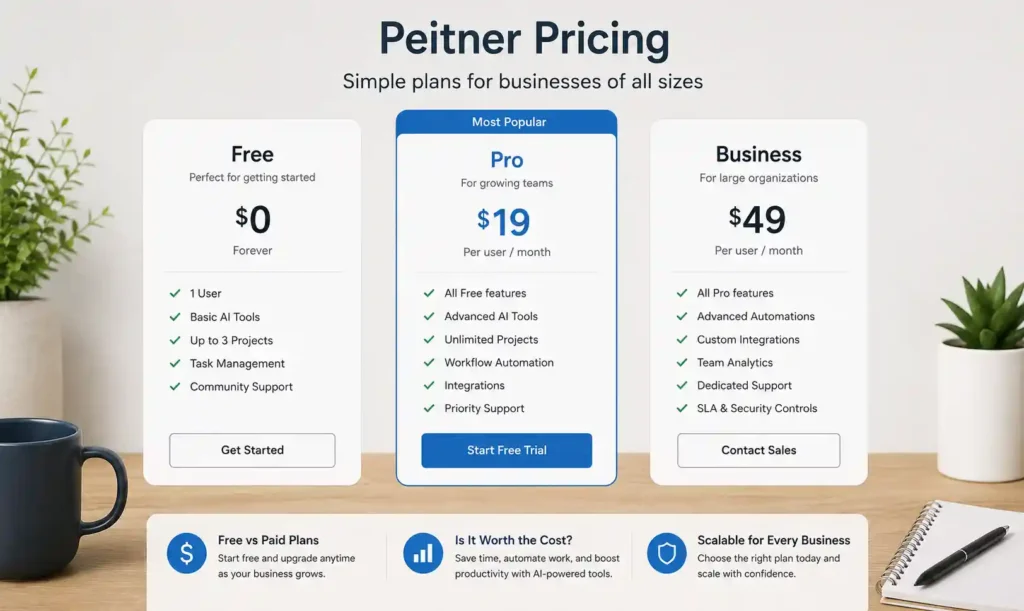
Pricing is often a deciding factor when businesses evaluate new software. Peitner aims to provide flexible options that can accommodate different business sizes and operational requirements. Available plans may vary depending on features, user limits, and support services.
Free vs Paid Plans
Many AI business platforms provide a free plan that allows users to explore essential features before upgrading. If Peitner offers a similar approach, new users can evaluate the platform without making an immediate financial commitment. Free plans generally include basic workflow management, limited automation, and essential collaboration tools.
Paid plans usually unlock additional features such as advanced automation, premium integrations, expanded storage, detailed analytics, higher usage limits, and priority customer support. Organizations with larger teams often benefit from premium plans because they require greater flexibility and scalability.
Is It Worth the Cost?
The value of Peitner depends on how effectively a business uses its automation and productivity tools. Companies that spend significant time managing repetitive processes may recover their subscription costs through improved efficiency and reduced manual work. Businesses should compare available features with their operational needs before selecting an appropriate pricing plan.
Pros and Cons of Peitner
Like any business platform, Peitner has strengths and limitations. Evaluating both helps organizations determine whether it matches their specific requirements.
Advantages
Peitner provides AI-powered automation that reduces repetitive work and improves overall productivity. Its centralized workspace supports better collaboration while helping teams organize projects more efficiently. Workflow automation minimizes human error, improves consistency, and allows businesses to focus on strategic objectives instead of routine administration. The platform’s flexibility also makes it suitable for businesses across multiple industries.
Limitations to Consider
Although Peitner offers valuable automation features, some organizations may experience a learning period while adapting existing workflows. Advanced capabilities may only be available in premium plans, which could increase costs for growing businesses. Integration availability may also depend on the software ecosystem already used by an organization, making compatibility an important consideration before implementation.
Is Peitner Safe and Legit?
Businesses considering AI platforms naturally want confidence that their information remains protected and that the provider operates responsibly. Evaluating security and reliability is an essential step before adopting any business software.
Security and Privacy
Peitner should provide appropriate security practices to protect business information and user accounts. Features such as secure authentication, encrypted data transmission, controlled user permissions, and responsible data management contribute to a safer working environment. Organizations should also review the platform’s privacy policy and security documentation before storing sensitive business information.
Customer Trust and Reliability
Customer trust depends on consistent performance, transparent policies, responsive support, and reliable service availability. Businesses should examine independent reviews, product updates, and official documentation to better understand the platform’s reputation before making long-term commitments. Conducting careful research and testing available features can help organizations determine whether Peitner aligns with their operational goals and long-term business expectations.
You might also like: Milyom: Trusted AI Platform for Smarter Business Growth
Peitner Alternatives
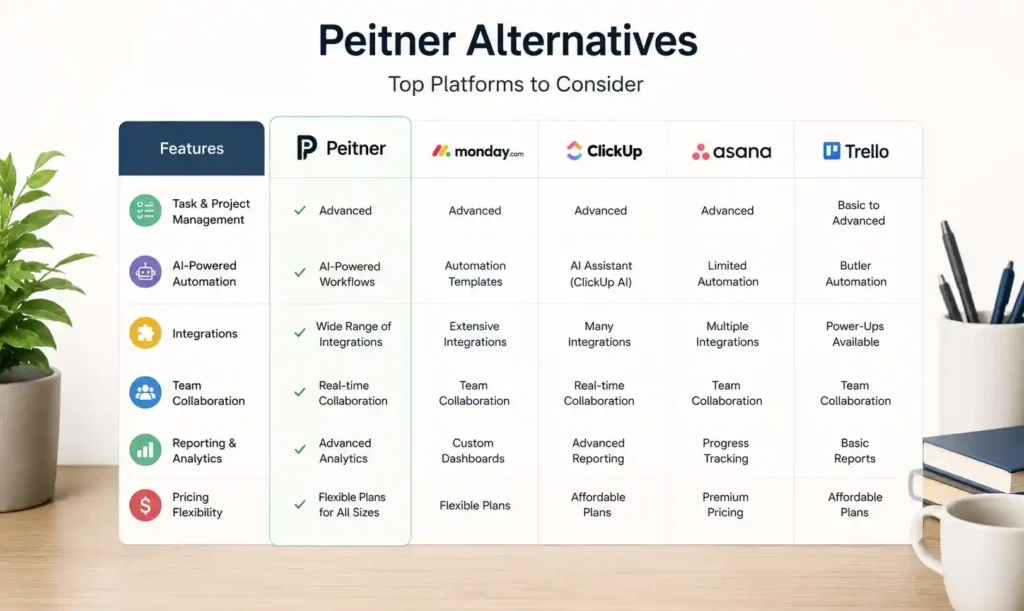
Although Peitner offers a comprehensive collection of AI-powered business tools, comparing similar platforms helps businesses choose the solution that best matches their operational needs. Every organization has unique workflows, budgets, and growth goals, making it important to evaluate multiple options before making a final decision.
Top Competitors
Several AI productivity platforms compete in the business automation market by offering workflow management, collaboration, and project organization features. Popular alternatives often include solutions focused on task management, customer relationship management, business intelligence, and automated workflows. Some platforms prioritize collaboration, while others specialize in advanced analytics or extensive software integrations.
When comparing competitors, businesses should examine automation capabilities, user experience, customization options, scalability, security, customer support, and pricing. Evaluating these factors helps organizations determine which platform delivers the greatest long-term value instead of simply selecting the most popular option.
Which Platform Is Best?
The best platform depends entirely on business objectives. Organizations seeking straightforward workflow automation and AI-assisted productivity may find Peitner suitable for their daily operations. Businesses requiring highly specialized features or industry-specific tools may prefer alternative platforms designed for their unique requirements. Conducting product trials, reviewing documentation, and testing important features before purchasing allows businesses to make informed software decisions.
Tips to Get the Most Out of Peitner
Using Peitner effectively involves more than simply creating an account. Businesses that implement structured workflows and encourage team adoption often experience better results from the platform’s automation capabilities.
Best Practices
Begin by identifying repetitive tasks that consume significant employee time. Automating these processes usually delivers the fastest productivity improvements. Organize projects using clear naming conventions, establish standardized workflows, and assign responsibilities consistently across teams.
Regularly review automated processes to ensure they continue supporting changing business requirements. Encourage employees to learn new features through available documentation and training resources. Keeping workflows organized and maintaining accurate project information allows AI recommendations to produce more meaningful insights.
Common Mistakes to Avoid
Many organizations attempt to automate every process immediately after implementation. Introducing automation gradually often produces better results because teams have time to adjust and identify areas for improvement. Ignoring user training can also reduce productivity since employees may overlook valuable platform features.
Another common mistake is failing to review workflows periodically. Business processes evolve over time, and outdated automation may become inefficient. Regular evaluation helps maintain consistent performance while supporting continuous operational improvement.
Frequently Asked Questions
Is Peitner suitable for beginners?
Yes. Peitner is designed with an intuitive interface that helps new users navigate essential features without extensive technical knowledge. Beginners can start with basic workflows and gradually explore more advanced automation capabilities as they become familiar with the platform.
Does Peitner offer a free trial?
Availability of a free trial depends on the platform’s current pricing structure. Prospective users should review the official website to confirm whether trial access or a free plan is available before selecting a subscription.
Can Peitner integrate with other tools?
Many modern AI business platforms support integrations with productivity, communication, and project management software. Businesses should verify the latest integration options to ensure compatibility with their existing technology stack and operational requirements.
What industries benefit most from Peitner?
Peitner can support businesses across multiple industries, including marketing, consulting, professional services, technology, education, retail, and small business operations. Any organization seeking greater efficiency through automation may benefit from its workflow management capabilities.
How secure is business data on Peitner?
Business data security depends on the platform’s implemented protection measures and responsible user practices. Organizations should review available security features, access controls, privacy policies, and compliance information before storing confidential information within the platform.
Conclusion
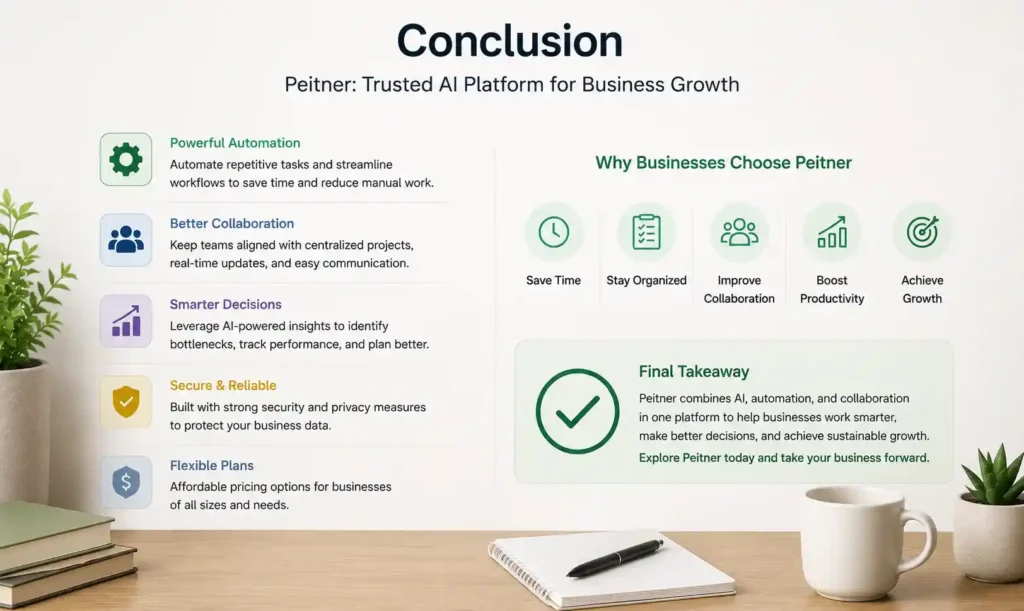
Peitner presents a practical solution for businesses looking to improve productivity through artificial intelligence and workflow automation. Its combination of centralized project management, automation tools, collaboration features, and AI-powered insights can help organizations reduce repetitive work while improving operational efficiency. Although every business should evaluate its own requirements before selecting software, Peitner offers valuable capabilities for startups, agencies, freelancers, and established companies seeking smarter business management. Comparing alternatives, testing available features, and implementing best practices will help organizations maximize the platform’s benefits and support sustainable long-term growth.
You might also like: The Rise of AI Automation in Modern Work Environments