
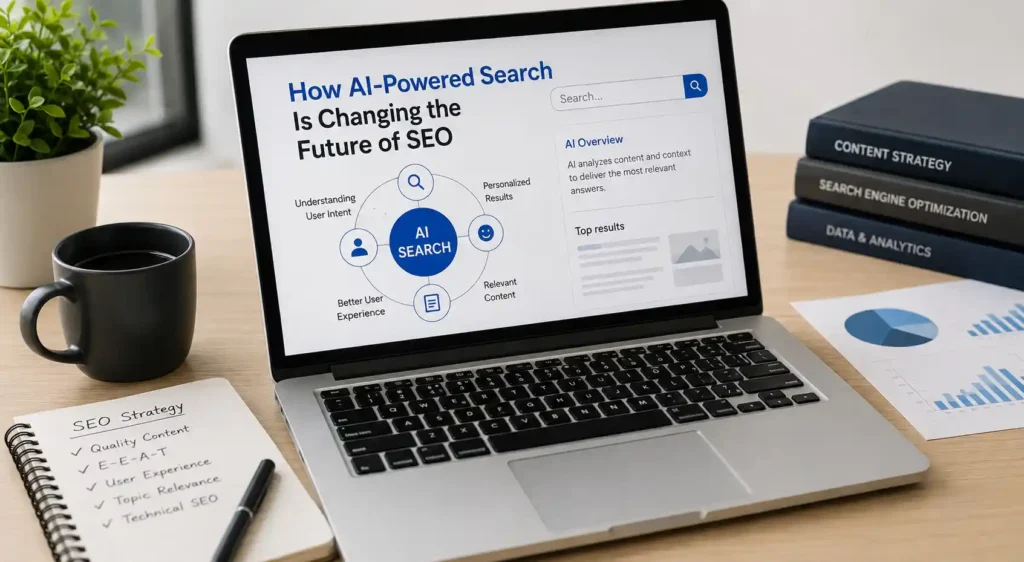

How AI-Powered Search Is Changing the Future of SEO
AI-powered search uses artificial intelligence to understand, process, and deliver search results that closely match user intent. Unlike traditional search systems that primarily rely on keyword matching, AI analyzes context, behavior, and language patterns to provide more relevant answers. This technology enables search engines to understand natural language queries and generate accurate responses that improve the user experience.
How AI Differs from Traditional Search Engines
Traditional search engines focus heavily on exact keywords and backlinks when ranking content. AI-powered search goes beyond these factors by interpreting meaning, context, and user intent. It can understand conversational queries, recognize synonyms, and identify relationships between concepts. As a result, users receive more personalized and accurate results, even when their searches are vague or complex.
The Evolution of Search Technology
Search technology has evolved significantly over the years. Early search engines depended on basic keyword matching and simple ranking factors. As user expectations increased, search engines introduced algorithms that considered content quality, relevance, and authority. Today, AI and machine learning drive search innovation, enabling systems to understand language more naturally and provide intelligent recommendations that align with user needs.
The Rise of AI in Modern Search Engines
Google’s AI Search Experience
Google has integrated AI into its search ecosystem to enhance result accuracy and user satisfaction. AI-powered features analyze search intent, summarize information, and provide direct answers within search results. This approach helps users find relevant information faster while encouraging content creators to focus on quality, expertise, and value rather than keyword density alone.
Bing AI and Conversational Search
Microsoft’s Bing has embraced AI by introducing conversational search capabilities. Users can interact with the search engine in a more natural way, asking detailed questions and receiving contextual responses. This shift reflects the growing demand for search experiences that resemble human conversations rather than traditional keyword-based searches.
The Impact of Generative AI on Search
Generative AI is transforming how search engines deliver information. Instead of simply listing web pages, AI can generate summaries, insights, and direct answers based on multiple sources. While this improves convenience for users, it also challenges businesses to create unique, authoritative content that stands out in an increasingly competitive digital landscape.
You might also like: Smart Ways to Automate Daily Business Tasks with AI
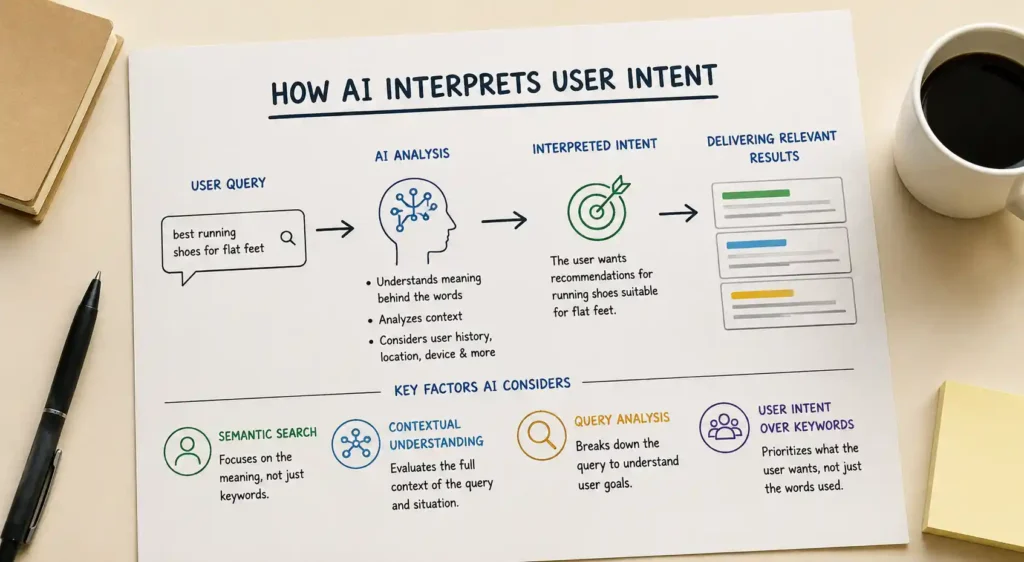
How AI Interprets User Intent
Semantic Search Explained
Semantic search focuses on understanding the meaning behind a query rather than matching exact words. AI examines relationships between terms, topics, and concepts to determine what users are truly seeking. This allows search engines to deliver results that are more relevant and useful, even when the search phrase does not contain precise keywords.
Contextual Understanding and Query Analysis
AI-powered search engines analyze context to interpret user intent accurately. Factors such as search history, location, device type, and query structure help determine the most appropriate results. By considering these elements, search engines can provide personalized experiences that better address individual needs and preferences.
Why Search Intent Matters More Than Keywords
Modern SEO success depends on understanding search intent. AI prioritizes content that satisfies user goals, whether they are seeking information, making a purchase, or comparing solutions. While keywords remain important, they are no longer the sole ranking factor. Content that directly answers questions and solves problems is more likely to perform well in AI-driven search environments.
The Shift from Keywords to Topics
Topic Clusters and Content Relevance
Search engines increasingly evaluate content based on topical authority rather than isolated keywords. Topic clusters help websites organize related content around a central subject, demonstrating expertise and improving relevance. This strategy enables search engines to understand content relationships and reward comprehensive coverage of important topics.
Natural Language Processing in SEO
In SEO, NLP helps search engines interpret sentence structure, context, and meaning. As a result, content written naturally for readers often performs better than content created solely for keyword optimization.
Creating Content for User Needs
The future of SEO revolves around meeting user needs. Businesses should focus on creating valuable, informative, and engaging content that addresses real questions and concerns. By prioritizing audience satisfaction, brands can build trust, improve visibility, and remain competitive as AI-powered search continues to evolve and reshape the digital marketing landscape.
AI Search and the Future of Content Creation
What AI Looks for in High-Quality Content
AI-powered search engines are changing how content is evaluated and ranked. Rather than focusing solely on keywords, AI analyzes content quality, relevance, accuracy, and user satisfaction. Search algorithms aim to identify content that provides clear answers, valuable insights, and a positive user experience. Well-structured articles, comprehensive information, and original perspectives are increasingly important for achieving strong search visibility. Content creators must focus on solving user problems while delivering information in a way that is easy to understand and navigate.
The Importance of E-E-A-T
E-E-A-T, which stands for Experience, Expertise, Authoritativeness, and Trustworthiness, has become a critical component of modern SEO. AI systems use these signals to determine whether content deserves visibility in search results. Demonstrating firsthand experience, showcasing industry expertise, and providing accurate information help establish credibility. Trustworthy websites that cite reliable sources and maintain transparency are more likely to gain recognition from search engines. As AI search evolves, building authority and trust will remain essential for long-term SEO success.
Balancing Human Expertise with AI Assistance
AI tools can help streamline content creation by generating ideas, improving structure, and assisting with research. However, human expertise remains vital. Readers value unique insights, practical experiences, and authentic perspectives that AI alone cannot fully replicate. The most effective content strategies combine AI efficiency with human creativity and subject matter knowledge. Businesses that strike this balance can create engaging content that satisfies both users and search algorithms while maintaining originality and brand authenticity.
You might also like: Ovppyo: A Smart Automation & Productivity Platform
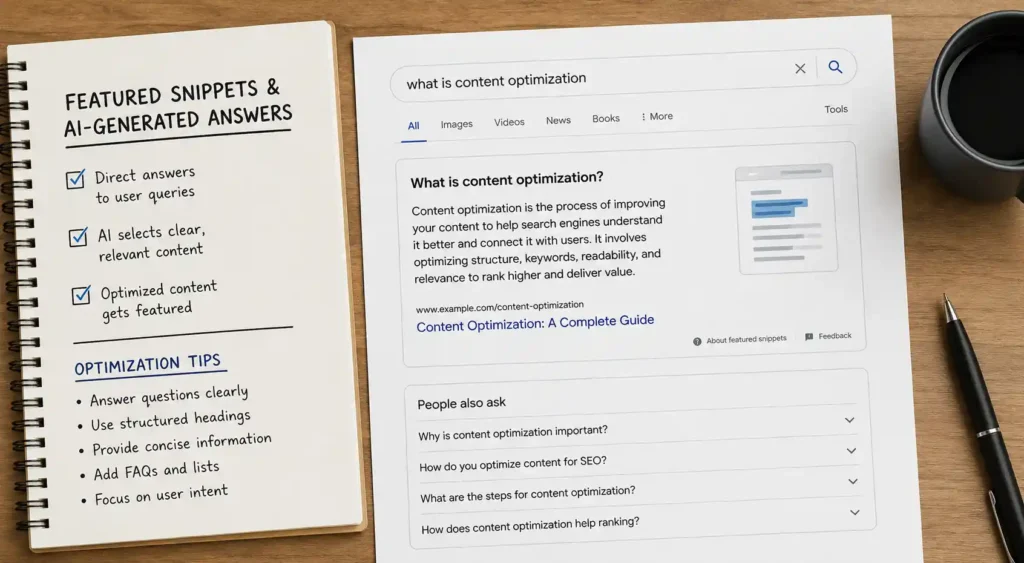
Featured Snippets and AI-Generated Answers
How AI Selects Content for Instant Answers
Featured snippets and AI-generated answers provide users with quick information directly within search results. AI identifies content that clearly addresses specific questions and presents it in a concise, organized format. Pages that use straightforward language, structured headings, and direct responses are more likely to be selected. Search engines prioritize content that demonstrates authority while delivering accurate and relevant information. Understanding how AI evaluates content can help businesses improve their chances of appearing in these highly visible search features.
Optimizing for Zero-Click Searches
Zero-click searches occur when users find the information they need without visiting a website. While this trend may reduce direct traffic, it also creates opportunities for increased brand visibility. Content creators can optimize for zero-click searches by answering common questions, using structured formatting, and targeting informational queries. Providing concise explanations near the beginning of content can increase the likelihood of appearing in featured snippets and AI-generated summaries, helping brands maintain visibility even when clicks are not generated.
Strategies to Increase Visibility
To improve visibility in AI-driven search results, businesses should focus on creating comprehensive and user-focused content. Clear headings, well-organized sections, and direct answers help search engines understand page relevance. Adding frequently asked questions, improving content depth, and maintaining accuracy can further strengthen performance. Consistent updates and ongoing optimization ensure content remains relevant as search technologies continue to evolve and user expectations change over time.
The Growing Importance of User Experience
Core Web Vitals and AI Rankings
User experience has become a major ranking factor in modern SEO. Core Web Vitals measure aspects such as loading speed, visual stability, and interactivity. AI-powered search engines use these signals to evaluate whether a website provides a positive experience. Faster pages and smoother interactions contribute to higher user satisfaction, which can improve search performance. Businesses that prioritize technical optimization create stronger foundations for long-term visibility and engagement.
Mobile-First Optimization
With most searches occurring on mobile devices, mobile-first optimization is essential. Search engines primarily evaluate the mobile version of a website when determining rankings. Responsive design, fast loading times, and intuitive navigation help ensure a seamless experience across devices. Websites that perform well on mobile are better positioned to meet user expectations and benefit from improved search visibility.
Engagement Metrics That Matter
AI search systems analyze user engagement signals to understand content effectiveness. Metrics such as time on page, bounce rate, and interaction levels provide insights into user satisfaction. Content that keeps visitors engaged demonstrates value and relevance. By creating informative, easy-to-read content and improving site usability, businesses can encourage stronger engagement and improve overall SEO performance.
Voice Search and Conversational Queries
The Connection Between AI and Voice Search
Voice search relies heavily on AI technologies to understand spoken language and deliver accurate responses. As voice assistants become more popular, search behavior is shifting toward natural, conversational queries. This trend requires businesses to adapt their content strategies to align with how people speak rather than how they type.
Optimizing for Long-Tail Questions
Voice searches often include longer and more specific questions. Optimizing for long-tail keywords and conversational phrases helps content match these queries. Creating content that directly answers common questions can improve visibility in voice search results while enhancing overall relevance.
Local SEO Opportunities
Voice search frequently supports local intent, with users seeking nearby businesses, services, and locations. Optimizing business profiles, maintaining accurate contact information, and targeting location-based keywords can improve local visibility.
You might also like: Schedow: The Ultimate Platform for Smart Scheduling
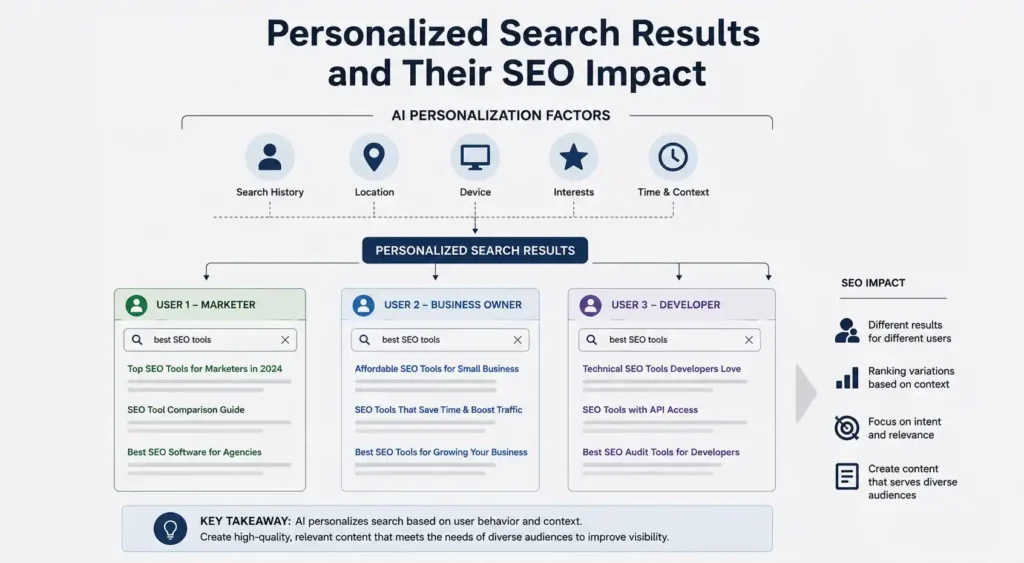
Personalized Search Results and Their SEO Impact
How AI Customizes Search Experiences
AI-powered search engines personalize results based on user behavior, preferences, location, and previous interactions. Instead of showing identical results to every user, AI evaluates individual signals to deliver content that is most relevant to a specific searcher. This approach improves user satisfaction by presenting information that aligns with personal interests and needs. As personalization becomes more advanced, businesses must understand how audience behavior influences search visibility and content performance across different user segments.
Challenges for SEO Professionals
Personalized search creates new challenges for SEO professionals. Ranking positions may vary between users, making it more difficult to measure performance using traditional methods. Search results can change based on location, device type, and browsing history. As a result, SEO strategies must focus less on fixed rankings and more on overall visibility, engagement, and audience satisfaction. Understanding user intent and analyzing behavioral data have become essential skills in an increasingly personalized search environment.
Building Content for Diverse Audiences
Since users receive customized search experiences, businesses should create content that appeals to diverse audience groups. Addressing different levels of knowledge, interests, and search intents helps improve relevance across a broader range of users. Comprehensive content that answers multiple questions and provides practical value can perform well regardless of personalization factors. This approach strengthens audience engagement while increasing opportunities for organic visibility.
AI-Powered SEO Tools and Automation
Content Optimization Tools
AI-powered content optimization tools help marketers improve readability, structure, keyword placement, and overall content quality. These platforms analyze search trends and competitor performance to provide actionable recommendations. By identifying gaps and optimization opportunities, businesses can create content that aligns more effectively with search engine expectations and user needs. Such tools can significantly improve efficiency while supporting better SEO outcomes.
AI for Keyword and Topic Research
AI has transformed keyword and topic research by uncovering patterns that would be difficult to identify manually. Advanced tools analyze search behavior, emerging trends, and related topics to help marketers discover valuable content opportunities. Instead of focusing only on individual keywords, businesses can identify broader topic clusters that demonstrate authority and relevance. This approach supports stronger content strategies and improved search visibility.
Benefits and Limitations of SEO Automation
SEO automation offers significant advantages, including faster analysis, improved productivity, and streamlined workflows. Routine tasks such as reporting, audits, and keyword tracking can be completed more efficiently. However, automation also has limitations. AI tools may lack creativity, industry expertise, and strategic judgment. Successful SEO requires a balance between automation and human oversight to ensure content remains accurate, engaging, and aligned with business objectives.
Challenges and Risks of AI-Driven Search
Reduced Organic Click-Through Rates
AI-generated summaries and instant answers often provide information directly within search results. While convenient for users, this trend can reduce organic click-through rates for websites. Businesses may find it more difficult to attract visitors when users receive answers without leaving the search page. To remain competitive, content creators must focus on offering unique insights and deeper value beyond what AI-generated summaries can provide.
AI Hallucinations and Misinformation
Although AI systems are highly advanced, they are not always accurate. AI-generated responses can occasionally contain incorrect information or misleading interpretations. This challenge highlights the importance of creating trustworthy content supported by credible sources and expert knowledge. Businesses that prioritize accuracy and transparency can strengthen their reputation and maintain visibility in AI-driven search environments.
Adapting to Constant Algorithm Changes
Search algorithms continue to evolve as AI technology advances. Frequent updates can impact rankings, visibility, and content performance. SEO professionals must remain informed about industry developments and adapt their strategies accordingly. Continuous monitoring, testing, and optimization are necessary to maintain long-term success in a rapidly changing search landscape.
You might also like: Rosboxar: Trusted Digital Solutions Platform for Businesses
Preparing Your SEO Strategy for the AI Era
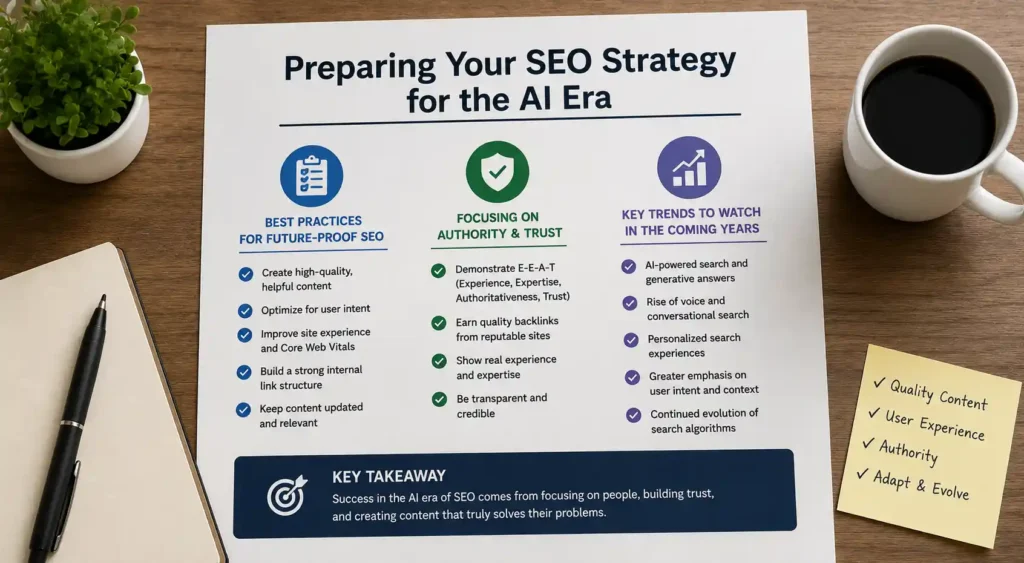
Best Practices for Future-Proof SEO
Future-proof SEO focuses on delivering value to users while maintaining technical excellence. Businesses should create high-quality content, optimize website performance, and prioritize user experience. Staying adaptable and responding to search trends can help maintain visibility as AI-powered search continues to evolve.
Focusing on Authority and Trust
Authority and trust are becoming increasingly important ranking signals. Demonstrating expertise, publishing accurate information, and maintaining transparency help build credibility with both users and search engines. A strong brand reputation can provide a competitive advantage in AI-driven search results.
Key Trends to Watch in the Coming Years
Emerging trends include conversational search, personalized experiences, voice search growth, and greater reliance on AI-generated responses. Businesses that monitor these developments and adjust their strategies proactively will be better positioned for future success.
Frequently Asked Questions (FAQs)
What is AI-powered search in SEO?
AI-powered search uses artificial intelligence to understand user intent and deliver more relevant search results.
Will AI replace traditional SEO?
No. AI changes SEO practices, but optimization remains essential for visibility and user engagement.
How can businesses optimize for AI search results?
By creating valuable content, improving user experience, and demonstrating expertise and trustworthiness.
What role does E-E-A-T play in AI-driven search?
E-E-A-T helps search engines evaluate content quality, credibility, and reliability.
Is keyword research still important in the age of AI?
Yes. Keywords remain useful, but topic relevance and user intent are increasingly important.
Conclusion
AI-powered search is transforming SEO by prioritizing user intent, personalization, and content quality. Businesses that embrace authority, trust, and user-focused strategies will be better prepared for the future. By combining human expertise with AI-driven insights, organizations can adapt to evolving search technologies and maintain sustainable organic growth in an increasingly competitive digital landscape.