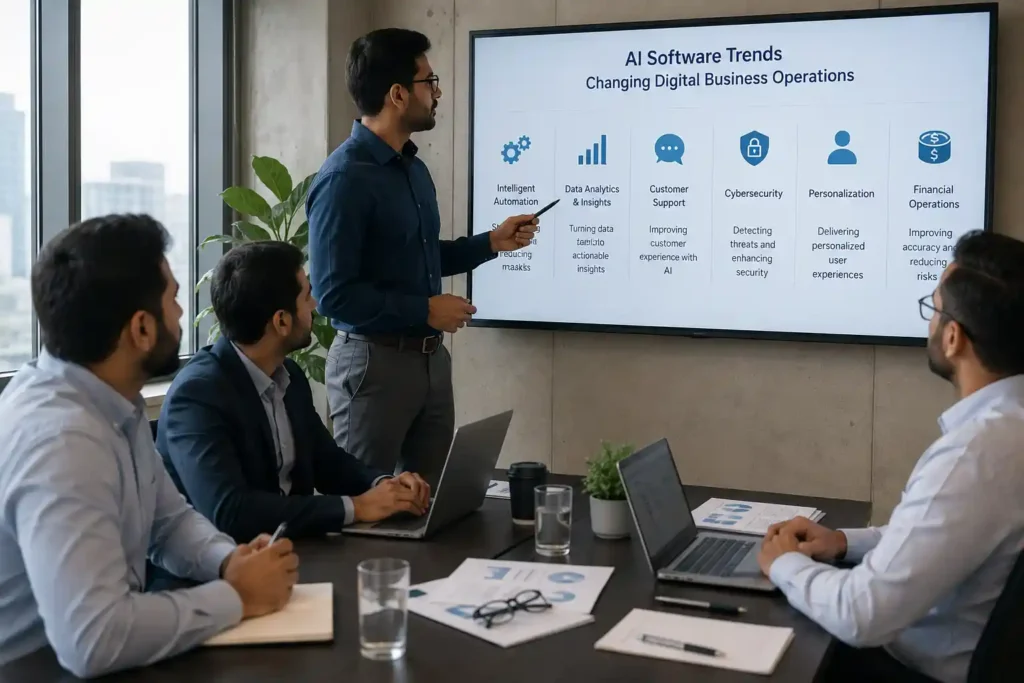

AI Software Trends Changing Digital Business Operations
Artificial intelligence has become a major force behind business innovation. Companies of all sizes are using AI software to improve productivity, enhance customer experiences, and make smarter decisions. As technology evolves, AI tools are becoming more accessible and practical, allowing organizations to automate processes and gain valuable insights from data.
Why AI Adoption Is Accelerating
The rapid growth of AI adoption is driven by increased data availability, cloud computing, and advanced machine learning technologies. Businesses recognize that AI can reduce costs, improve accuracy, and support faster decision-making. Competitive pressure also encourages organizations to invest in AI solutions to stay ahead in changing markets. As a result, AI software is no longer limited to large enterprises and is becoming a standard business resource.
The Impact of AI on Digital Transformation
AI plays a critical role in digital transformation by helping organizations modernize operations and improve efficiency. It enables businesses to automate routine tasks, analyze large datasets, and deliver personalized customer experiences. By integrating AI into digital strategies, companies can streamline workflows, improve responsiveness, and create more agile business environments capable of adapting to market changes.
You might also like: Increditools: Honest Reviews for Social Media Growth Tools
Intelligent Automation Streamlining Workflows
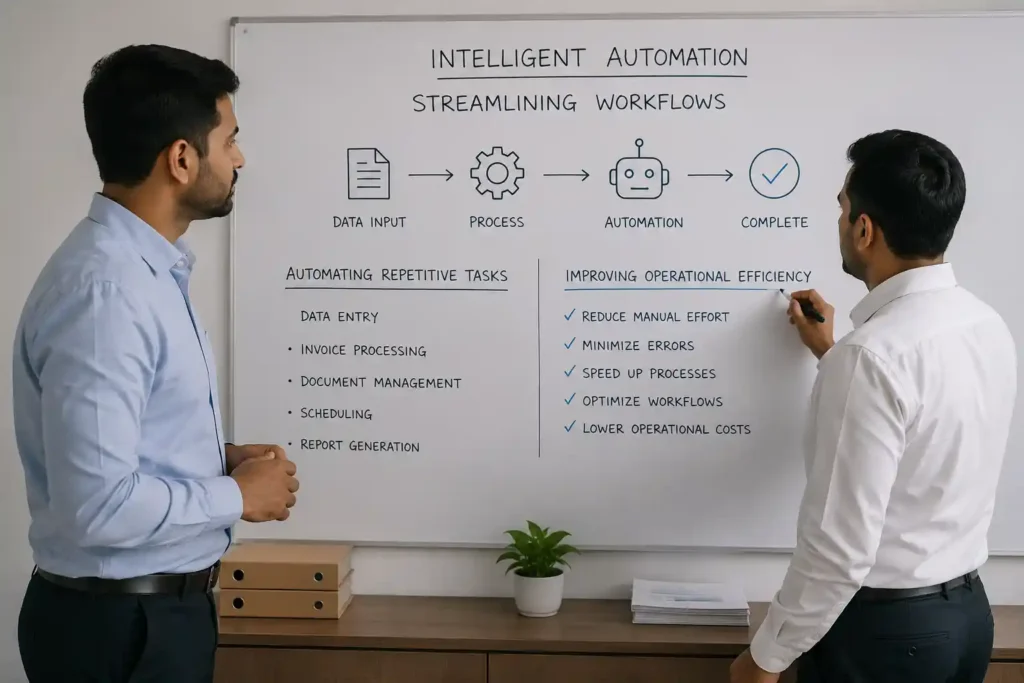
Intelligent automation combines AI technologies with automated processes to reduce manual effort and increase operational effectiveness. Organizations are using automation tools to handle repetitive work, allowing employees to focus on more strategic activities.
Automating Repetitive Administrative Tasks
Many administrative tasks consume valuable time and resources. AI software can automate activities such as data entry, scheduling, invoice processing, and document management. These tools reduce human errors while increasing consistency and speed. By automating repetitive functions, businesses can improve productivity and allocate resources more effectively across departments.
Improving Operational Efficiency with AI
AI-powered automation helps businesses optimize workflows and eliminate inefficiencies. Intelligent systems can identify process bottlenecks, monitor performance, and recommend improvements. This enables organizations to complete tasks faster while maintaining high levels of accuracy. Improved efficiency often leads to reduced operating costs, better customer service, and stronger overall business performance.
AI-Powered Data Analytics and Business Intelligence
Data has become one of the most valuable assets in modern business. AI-powered analytics tools help organizations process large amounts of information and uncover meaningful insights that support strategic decision-making.
Turning Data into Actionable Insights
Traditional data analysis methods can be time-consuming and limited in scope. AI software can quickly analyze complex datasets and identify trends, patterns, and opportunities that might otherwise remain hidden. Businesses use these insights to improve marketing campaigns, optimize operations, and better understand customer behavior. Access to actionable information enables leaders to make informed decisions with greater confidence.
Predictive Analytics for Better Decision-Making
Predictive analytics uses AI algorithms to forecast future outcomes based on historical data. Businesses apply predictive models to areas such as sales forecasting, inventory management, customer retention, and risk assessment. By anticipating future trends, organizations can develop proactive strategies and reduce uncertainty. This capability helps companies respond more effectively to market changes and business challenges.
Generative AI Transforming Content Creation
Generative AI has introduced new possibilities for creating written, visual, and multimedia content. Businesses are increasingly using AI-powered tools to support marketing, communication, and creative projects.
AI Tools for Marketing and Communication
AI content generation tools help businesses produce blog posts, social media updates, email campaigns, and customer communications more efficiently. These platforms can generate ideas, create drafts, and personalize content for specific audiences. Marketing teams benefit from increased productivity while maintaining consistent messaging across multiple channels. AI also supports faster content production, allowing organizations to respond quickly to emerging trends.
Benefits and Challenges of AI-Generated Content
AI-generated content offers several advantages, including faster production, lower costs, and improved scalability. Businesses can create large volumes of content while reducing manual workload. However, challenges remain. AI-generated material may occasionally lack originality, context, or emotional depth. Organizations must review and refine AI-created content to ensure accuracy, quality, and brand consistency. Balancing automation with human oversight is essential for achieving the best results and maintaining audience trust while supporting long-term content marketing success.
You might also like: AI Video Creation Tools Revolutionizing Social Media Marketing
Enhanced Customer Support Through AI
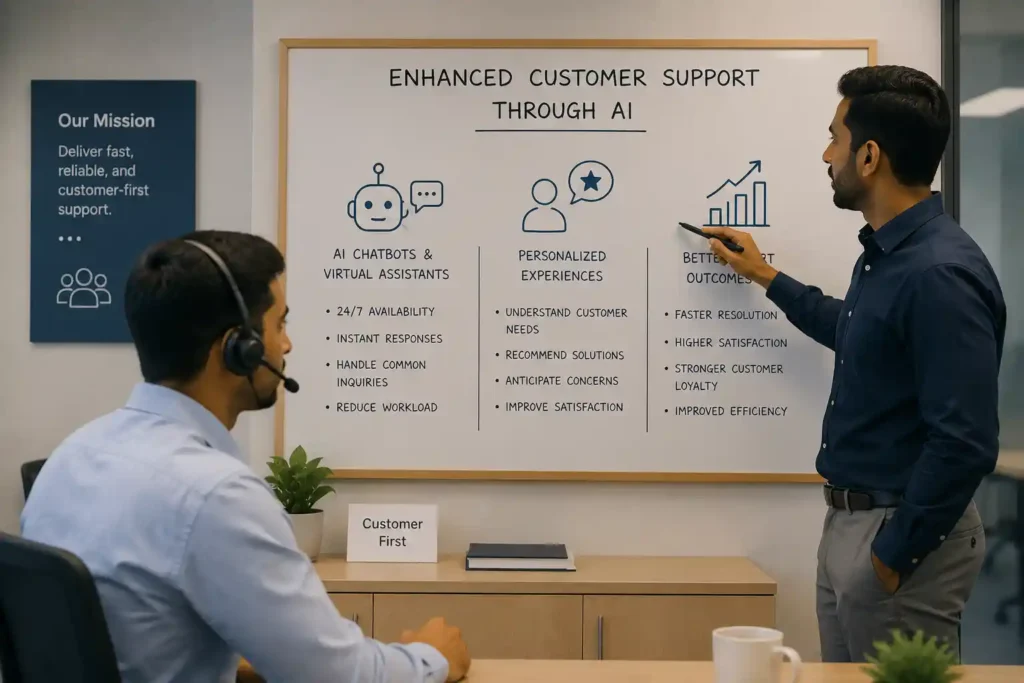
Artificial intelligence is reshaping customer support by helping businesses deliver faster, more efficient, and more personalized service. Modern AI solutions can handle customer inquiries around the clock, reduce response times, and improve satisfaction levels. As customer expectations continue to rise, organizations are increasingly relying on AI-powered support tools to provide seamless assistance across multiple communication channels.
AI Chatbots and Virtual Assistants
AI chatbots and virtual assistants have become essential components of modern customer service strategies. These tools can answer common questions, resolve basic issues, and guide customers through various processes without requiring human intervention. By handling routine inquiries, chatbots reduce the workload on support teams and allow employees to focus on more complex cases.
Advanced AI assistants use natural language processing to understand customer intent and provide relevant responses. They can operate continuously, ensuring support is available at any time. This capability improves customer convenience while helping businesses maintain consistent service quality and reduce operational costs.
Personalized Customer Experiences
AI enables businesses to create highly personalized customer experiences by analyzing user behavior, preferences, and interaction history. Support systems can recommend relevant solutions, products, or services based on individual customer needs. Personalized interactions make customers feel valued and understood, leading to stronger relationships and higher satisfaction rates.
Businesses can also use AI to anticipate customer concerns before they become significant issues. By providing proactive support and tailored recommendations, organizations can improve customer loyalty and encourage long-term engagement. Personalization has become a key competitive advantage in customer service strategies.
AI Software Improving Cybersecurity Measures
As cyber threats become increasingly sophisticated, businesses require advanced security solutions to safeguard sensitive data and digital assets. AI software plays a crucial role in enhancing cybersecurity by identifying risks, detecting unusual activity, and responding to threats more effectively than traditional methods.
Real-Time Threat Detection
One of the most valuable benefits of AI in cybersecurity is its ability to detect threats in real time. AI systems continuously analyze network activity, user behavior, and system performance to identify suspicious patterns. This allows organizations to recognize potential attacks before significant damage occurs.
Traditional security systems often rely on predefined rules, which may not identify new or evolving threats. AI-driven tools can adapt to changing attack methods and recognize anomalies that indicate malicious activity. Faster detection helps businesses minimize security breaches and reduce potential financial losses.
Automated Security Monitoring and Response
AI software can automate many cybersecurity tasks, including monitoring systems, analyzing alerts, and responding to incidents. Automated security tools help organizations manage large volumes of data and identify critical threats more efficiently. This reduces the burden on security teams while improving overall protection.
When suspicious activity is detected, AI systems can trigger immediate responses such as isolating compromised devices, blocking unauthorized access, or notifying security personnel. Automated response capabilities help contain threats quickly and reduce the risk of widespread damage. As cyber risks continue to increase, AI-powered security solutions are becoming essential for modern businesses.
AI-Driven Personalization in Digital Services
Personalization has become a major factor in improving customer engagement and satisfaction. AI-driven technologies enable businesses to tailor digital services to individual users, creating more relevant and meaningful experiences.
Customized User Experiences
AI analyzes customer data to understand preferences, behaviors, and interests. Personalized interfaces can display relevant content, suggest useful features, and improve overall user experiences.
Customized experiences increase customer satisfaction because users receive information and services that align with their expectations. Businesses benefit from higher engagement rates, stronger customer relationships, and improved conversion opportunities. AI-driven personalization helps organizations stand out in increasingly competitive digital markets.
Recommendation Engines and Consumer Engagement
Recommendation engines are among the most widely used AI personalization technologies. Personalized recommendations improve the user experience while increasing opportunities for sales and engagement.
Businesses use recommendation engines across e-commerce platforms, streaming services, and digital applications. By presenting relevant options, organizations can encourage customers to spend more time interacting with their platforms and strengthen long-term loyalty.
You might also like: TransDS: Trusted Data Solutions for Smarter Business Growth
The Rise of AI in Human Resource Management
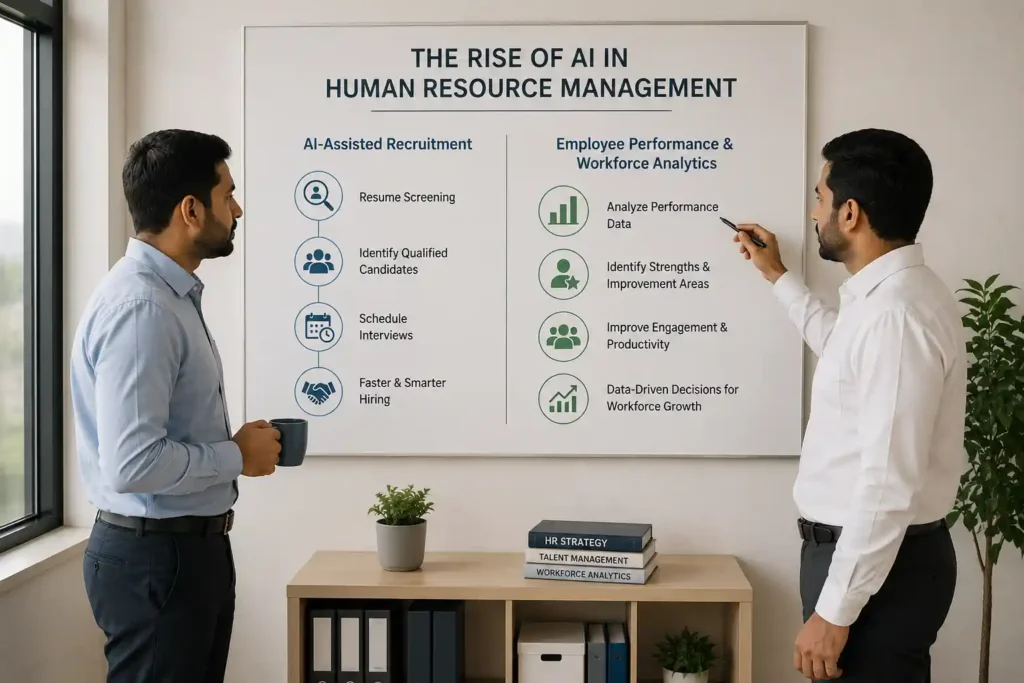
Human resource departments are adopting AI software to improve workforce management, streamline recruitment, and enhance employee performance analysis. These technologies help organizations make data-driven decisions while reducing administrative workloads.
AI-Assisted Recruitment and Hiring
AI recruitment tools simplify the hiring process by screening resumes, identifying qualified candidates, and scheduling interviews. These systems can quickly analyze large applicant pools, helping recruiters find suitable candidates more efficiently. Faster hiring processes reduce recruitment costs and improve workforce planning.
Employee Performance and Workforce Analytics
AI-powered workforce analytics provide valuable insights into employee performance, productivity, and engagement. Organizations can use this information to identify strengths, address challenges, and support professional development. Data-driven workforce management helps businesses build stronger teams while improving overall organizational performance and sustainable growth.
AI Software Supporting Financial Operations
Artificial intelligence is transforming financial operations by helping businesses improve accuracy, reduce costs, and strengthen decision-making. Financial departments generate large amounts of data that require careful analysis and management. AI software simplifies these responsibilities by automating routine processes and identifying potential risks more effectively. As organizations continue to embrace digital transformation, AI is becoming a valuable tool for improving financial performance and maintaining operational stability in competitive business environments.
Fraud Detection and Risk Management
Fraud detection is one of the most important applications of AI in financial operations. Traditional fraud prevention methods often struggle to identify complex or rapidly evolving threats. AI systems can analyze large volumes of transactions in real time and detect unusual patterns that may indicate fraudulent activity. These tools continuously learn from new data, improving their ability to identify suspicious behavior.
AI also strengthens risk management by evaluating financial trends, customer behavior, and market conditions. Businesses can use predictive models to assess potential risks before they become serious problems. Early identification of threats allows organizations to take preventive measures, reduce losses, and improve financial security. By enhancing both fraud detection and risk assessment, AI supports more reliable financial management.
Automating Accounting and Financial Reporting
Accounting tasks often require significant time and attention to detail. AI software can automate activities such as invoice processing, expense tracking, data entry, and account reconciliation. Automation reduces manual errors and enables finance teams to focus on higher-value strategic work.
Financial reporting also benefits from AI-driven automation. Advanced systems can collect information from multiple sources, organize data, and generate accurate reports quickly. This improves transparency and supports faster decision-making. Businesses can access real-time financial insights that help leaders monitor performance and respond effectively to changing market conditions.
Emerging AI Trends Shaping Future Business Operations
AI technology continues to evolve, introducing new capabilities that are reshaping how businesses operate. Emerging trends are expanding the role of AI beyond automation and analytics, creating opportunities for greater innovation and efficiency across industries.
Autonomous AI Agents and Digital Workers
Autonomous AI agents are becoming increasingly capable of performing complex tasks with minimal human supervision. These digital workers can manage workflows, process information, schedule activities, and support customer interactions. Unlike traditional automation systems, autonomous AI agents can adapt to changing conditions and make decisions based on available data.
Businesses are exploring ways to integrate digital workers into daily operations to improve productivity and reduce operational costs. As these technologies advance, organizations may rely on AI agents to handle a wider range of responsibilities. This trend has the potential to transform workforce structures and create new opportunities for operational efficiency.
Industry-Specific AI Solutions
Many AI providers are developing specialized solutions designed for specific industries. Healthcare organizations use AI for patient care and diagnostics, while retailers apply AI to inventory management and customer engagement.
Industry-specific AI solutions address unique challenges and provide targeted benefits. These customized technologies help organizations achieve better results because they are designed to meet particular operational requirements. As AI adoption grows, specialized applications are expected to become increasingly important across diverse business sectors.
You might also like: AI Solutions for Smarter Marketing and Customer Support
Frequently Asked Questions
How Is AI Software Changing Business Operations?
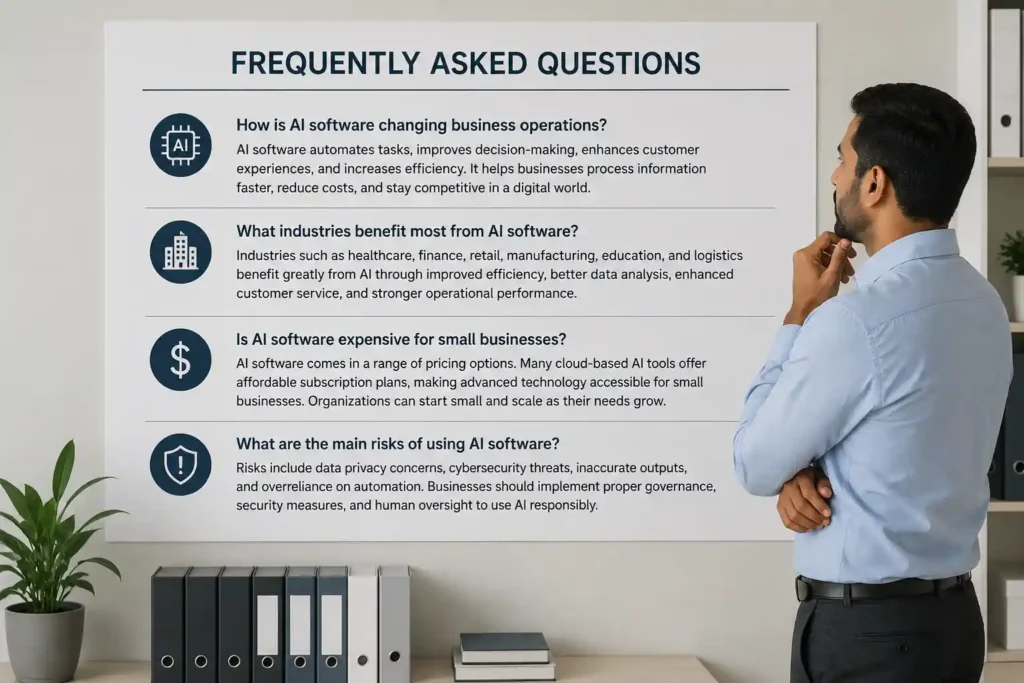
AI software is changing business operations by automating repetitive tasks, improving decision-making, enhancing customer experiences, and increasing efficiency. Organizations can process information more quickly, reduce operational costs, and respond to market changes with greater agility. AI also supports innovation by enabling businesses to develop new products, services, and strategies.
What Industries Benefit Most from AI Software?
Many industries benefit from AI software, including healthcare, finance, retail, manufacturing, education, and logistics. Each sector uses AI differently, but common advantages include improved efficiency, better data analysis, enhanced customer service, and stronger operational performance.
Is AI Software Expensive for Small Businesses?
The cost of AI software varies depending on the solution and business requirements. Many cloud-based AI tools offer affordable subscription models that make advanced technology accessible to small businesses. Organizations can start with basic solutions and expand their AI capabilities as their needs grow.
What Are the Main Risks of Using AI Software?
Common risks include data privacy concerns, cybersecurity challenges, inaccurate outputs, and overreliance on automated systems. Businesses should implement proper governance, security measures, and human oversight to ensure AI is used responsibly and effectively.
Conclusion
AI software is fundamentally changing digital business operations by improving efficiency, strengthening decision-making, enhancing customer experiences, and supporting innovation. From financial management and fraud detection to autonomous digital workers and industry-specific solutions, AI continues to create new opportunities for growth. Organizations that strategically adopt AI technologies can improve competitiveness, streamline operations, and prepare for future business challenges in an increasingly digital world.