
AI Solutions for Smarter Marketing and Customer Support
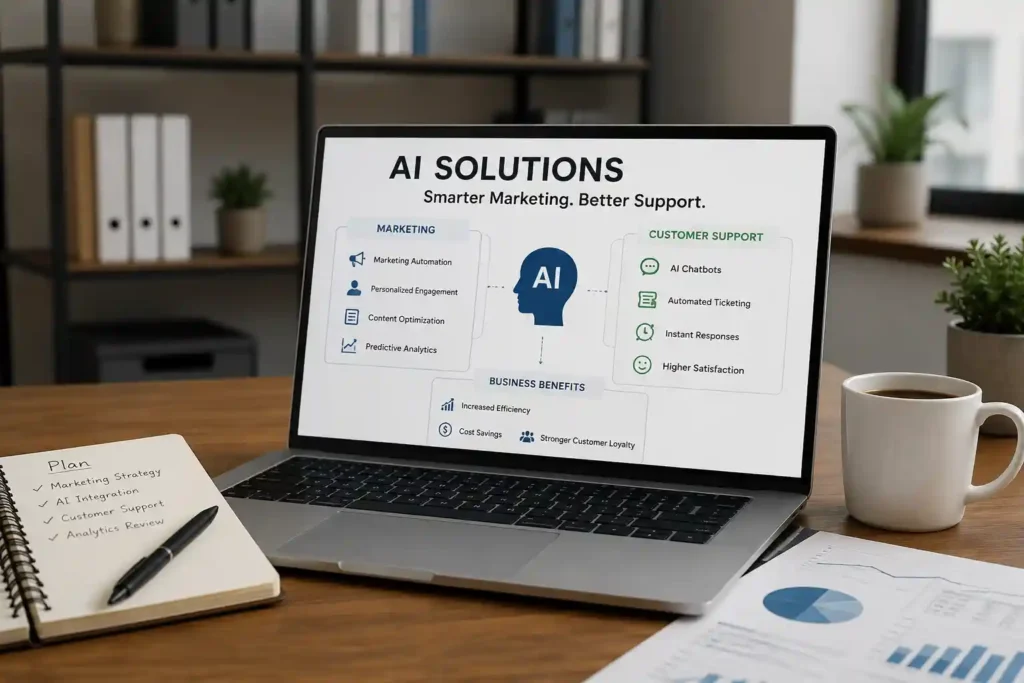
Artificial intelligence is transforming how companies market products and support their customers. Businesses are adopting AI solutions because they reduce manual work, improve accuracy, and deliver faster results. From analyzing large data sets to automating routine processes, AI enables organizations to operate efficiently. Companies use AI to strengthen customer relationships, streamline workflows, and gain a competitive advantage. As technology evolves, AI is becoming a key component of modern business strategies.
The Impact of AI on Customer Experience
Customer experience is a major differentiator for brands, and AI plays an important role in improving it. AI-powered systems provide instant responses, recommend relevant products, and offer support around the clock. These capabilities help customers receive faster and more personalized interactions. By reducing wait times and increasing service quality, businesses can enhance satisfaction and build loyalty.
AI-Powered Marketing Automation
Automating Repetitive Marketing Tasks
Marketing teams often spend valuable time on repetitive activities such as email scheduling, audience segmentation, and campaign monitoring. AI-powered marketing automation tools handle these tasks with speed and consistency. Automation reduces human error while freeing marketers to focus on strategy, creativity, and customer engagement. As a result, businesses can manage larger campaigns without significantly increasing resources.
Improving Campaign Efficiency with AI
AI improves campaign efficiency by analyzing performance data in real time and identifying opportunities for optimization. Marketers can use AI insights to adjust targeting, messaging, and timing for better outcomes. Machine learning algorithms evaluate campaign performance and recommend improvements based on customer behavior. This approach helps businesses allocate budgets effectively and achieve stronger returns on investment.
AI for Personalized Customer Engagement
Creating Tailored Customer Experiences
Modern consumers expect personalized interactions, and AI makes this possible at scale. Businesses can use AI to deliver customized recommendations, content, and offers based on individual preferences. Personalized experiences help customers feel understood and valued, increasing engagement and satisfaction. Through websites, mobile apps, and email campaigns, AI helps brands create meaningful interactions that encourage repeat business.
Using Behavioral Data for Personalization
Behavioral data provides insights into customer interests, actions, and purchasing patterns. AI analyzes this information to identify trends and predict future behavior. Businesses can tailor communications to match specific customer needs and preferences. By using behavioral data effectively, organizations can deliver more relevant experiences and improve conversion rates.
AI-Driven Content Creation and Optimization
Generating Marketing Content with AI
Creating high-quality content consistently can be challenging for growing businesses. AI content tools assist with generating blog ideas, social media posts, email copy, and product descriptions. These tools help marketers produce content efficiently while maintaining relevance and consistency. Although human oversight remains important, AI can accelerate content production and support broader marketing efforts.
Optimizing Content for Better Performance
AI also helps optimize content by analyzing engagement metrics and audience behavior. Marketers can identify which topics, formats, and keywords perform best and adjust strategies accordingly. AI-powered optimization tools provide recommendations that improve visibility, engagement, and conversions. This process helps businesses maximize content impact while ensuring it reaches the right audience.
Predictive Analytics for Smarter Marketing Decisions
Understanding Customer Behavior Trends
Predictive analytics uses historical and real-time data to uncover patterns in customer behavior. AI can identify trends that may be difficult to detect through manual analysis. These insights help businesses understand customer preferences, anticipate needs, and refine marketing strategies. By recognizing emerging trends early, organizations can make informed decisions and respond to changing market conditions.
Forecasting Campaign Results with AI
AI-powered predictive models help marketers forecast campaign outcomes before significant resources are invested. Businesses can estimate engagement levels, conversion rates, and potential revenue based on historical performance and market data. With better predictions, companies can optimize strategies, allocate budgets effectively, and improve marketing performance.
AI Solutions for Social Media Marketing
Automating Social Media Management
AI simplifies social media management by automating scheduling, content distribution, and performance tracking.
Enhancing Audience Targeting and Engagement
AI enhances audience targeting by analyzing demographics, interests, and online behavior. Businesses can use these insights to reach relevant audiences with personalized messages. AI also supports engagement by identifying optimal posting times and recommending content that resonates with users. By improving targeting and interaction, organizations can strengthen brand awareness, increase engagement, and achieve better results from social media marketing efforts. These advantages make AI an essential investment for organizations seeking growth, efficiency, stronger relationships,s and long-term success today.
AI-Powered Chatbots and Virtual Assistants
Providing Instant Customer Support
AI-powered chatbots and virtual assistants have transformed customer service by providing immediate responses to customer inquiries. Unlike traditional support channels that depend on agent availability, AI systems operate around the clock and handle multiple conversations simultaneously. Customers can receive answers to common questions, product information, and troubleshooting guidance within seconds. This instant support improves convenience and ensures that businesses remain accessible at all times.
Reducing Response Times and Support Costs
One of the biggest advantages of AI chatbots is their ability to reduce response times while lowering operational costs. Automated systems manage routine inquiries that would otherwise require human agents. By handling repetitive tasks, chatbots allow support teams to focus on complex issues that need personal attention. This balance improves efficiency, reduces staffing pressure, and helps businesses maintain high service standards while controlling expenses.
AI in Customer Service Automation
Automating Ticket Routing and Resolution
Customer service automation extends beyond chatbots. AI can automatically categorize support requests, prioritize urgent cases, and route tickets to the appropriate departments. Intelligent systems analyze customer messages and determine the best course of action without manual intervention. This process reduces delays and ensures that issues reach the right specialists quickly. Automated workflows also accelerate problem resolution and improve overall service performance.
Improving Customer Satisfaction Through AI
AI contributes to customer satisfaction by delivering faster, more accurate, and more consistent support experiences. Automated systems can track customer history, understand preferences, and provide relevant recommendations. When customers receive timely assistance and personalized solutions, they are more likely to trust the brand. Consistent service quality strengthens relationships and encourages long-term engagement.
AI for Lead Generation and Sales Support
Identifying High-Quality Leads
AI helps businesses identify high-quality leads by analyzing customer behavior, demographics, and engagement patterns. Instead of relying solely on manual research, organizations can use predictive algorithms to determine which prospects are most likely to convert.
Enhancing Sales Team Productivity
Sales professionals benefit from AI tools that automate administrative tasks, track customer interactions, and provide actionable insights. By reducing time spent on repetitive activities, sales teams can focus more on building relationships and closing deals. Increased productivity often leads to higher revenue and improved business performance.
Benefits of Implementing AI Solutions
Increasing Operational Efficiency
AI solutions streamline business operations by automating repetitive processes and reducing manual workloads. Tasks that once required significant time and resources can be completed quickly and accurately through intelligent automation. Improved efficiency helps organizations save costs, reduce errors, and allocate resources more effectively.
Boosting Customer Retention and Loyalty
Customer retention is essential for long-term success, and AI plays a valuable role in strengthening loyalty. Personalized experiences, proactive support, and relevant recommendations help customers feel valued. AI enables businesses to anticipate customer needs and address concerns before they escalate. Stronger relationships lead to higher satisfaction, increased retention, and greater lifetime value.
Challenges and Considerations of AI Adoption
Data Privacy and Security Concerns
Despite its benefits, AI adoption requires careful attention to data privacy and security. Businesses often collect large amounts of customer information to train and operate AI systems. Protecting this data is critical for maintaining trust and meeting regulatory requirements. Organizations should implement strong security measures, transparent policies, and responsible data management practices.
Ensuring Ethical AI Usage
Ethical considerations are equally important when implementing AI technologies. Businesses must ensure that AI systems operate fairly, avoid bias, and provide transparent decision-making processes. Responsible AI practices support sustainable innovation and reduce potential risks.
Frequently Asked Questions
What Are the Best AI Tools for Marketing?
Popular AI tools support automation, analytics, content creation, customer engagement, and campaign optimization. The best option depends on business goals.
How Can AI Improve Customer Support?
AI improves support through instant responses, automated inquiries, shorter wait times, and personalized assistance, increasing efficiency and satisfaction.
Is AI Suitable for Small Businesses?
Yes. Many AI solutions are scalable and affordable, helping small businesses improve productivity, marketing, and customer service.
Conclusion
AI solutions are reshaping marketing, sales, and customer support through automation, personalization, and data-driven decisions. From chatbots and service automation to lead generation and predictive insights, AI helps organizations improve efficiency and customer experiences. While businesses must address privacy, security, and ethical considerations, strategic adoption can strengthen relationships, increase productivity, and support long-term growth in competitive digital markets.