
How AI Agents Are Automating Entire Business Workflows
AI agents are advanced software systems designed to perform tasks independently by using artificial intelligence. In business automation, these agents can analyze data, make decisions, and execute actions without constant human input. Unlike basic automation tools, AI agents are capable of understanding context and improving their performance over time. They are utilized in various areas, including customer support, marketing, operations, and data management. By handling repetitive and complex tasks, AI agents enable businesses to save time, reduce costs, and enhance overall operational efficiency.
How AI agents differ from traditional automation
It can only perform tasks based on specific instructions and cannot adapt to changes. AI agents, on the other hand, are more flexible and intelligent. They can learn from data, adjust their behavior, and make decisions based on real-time information. This makes them more effective in handling complex and dynamic business processes. While traditional automation is useful for simple tasks, AI agents provide a more advanced solution that can evolve with business needs and deliver better results over time.
Why Businesses Are Adopting AI Agents
Growing need for intelligent automation
Manual operations are time-consuming and prone to errors, while basic automation often falls short in handling complex tasks. This has created a strong demand for intelligent automation solutions like AI agents. These systems can process large amounts of data quickly and provide accurate insights. Businesses are adopting AI agents to stay competitive, improve efficiency, and respond faster to market changes. Intelligent automation allows companies to handle more work with fewer resources, making it an essential part of modern business strategies.
Benefits over manual and rule-based systems
AI agents offer several advantages compared to manual work and traditional rule-based systems. They reduce human effort by automating repetitive tasks and minimizing errors caused by manual input. AI agents also provide faster and more accurate results by analyzing data in real time. Unlike rule-based systems, they can adapt to new situations and improve their performance over time. This flexibility makes them suitable for dynamic business environments. By using AI agents, businesses can increase productivity, enhance decision-making, and achieve better outcomes in their operations.
You might also like: Future of Generative AI in Software Development
Key Features of AI Agents
Autonomous decision-making capabilities
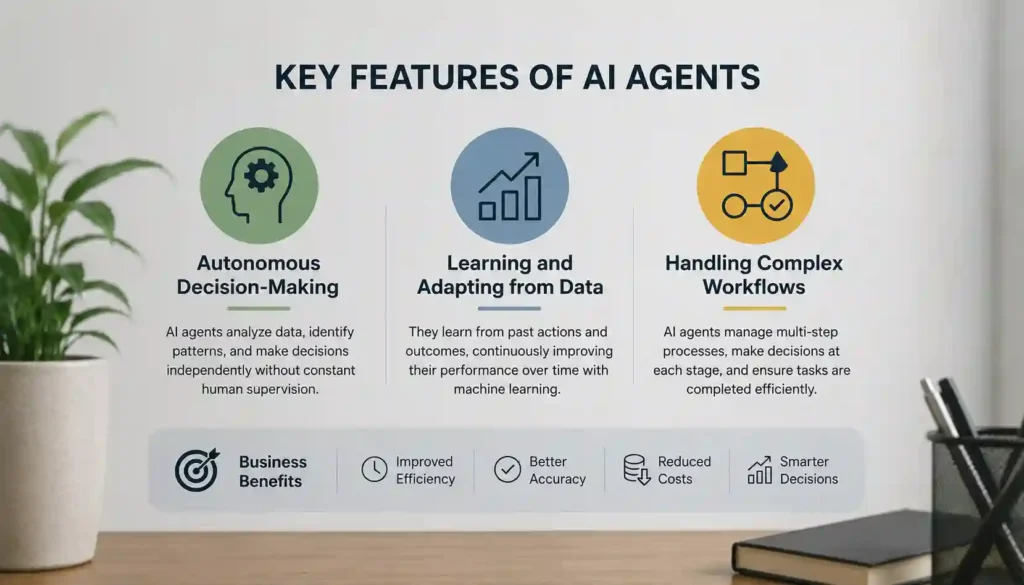
They analyze data, identify patterns, and choose the best course of action without requiring constant supervision. This allows businesses to automate complex processes that involve multiple variables and conditions. Autonomous decision-making improves efficiency and ensures that tasks are completed quickly and accurately. It also reduces the need for human intervention, allowing employees to focus on strategic activities rather than routine work.
Learning and adapting from data
AI agents are designed to learn from data and improve their performance over time. They use machine learning techniques to analyze past actions and outcomes, which helps them make better decisions in the future. This ability to adapt makes them highly effective in changing business environments. As more data becomes available, AI agents become smarter and more efficient. This continuous improvement ensures that businesses can rely on them for long-term automation and optimization of processes.
AI Agents in Workflow Automation
Automating end-to-end business processes
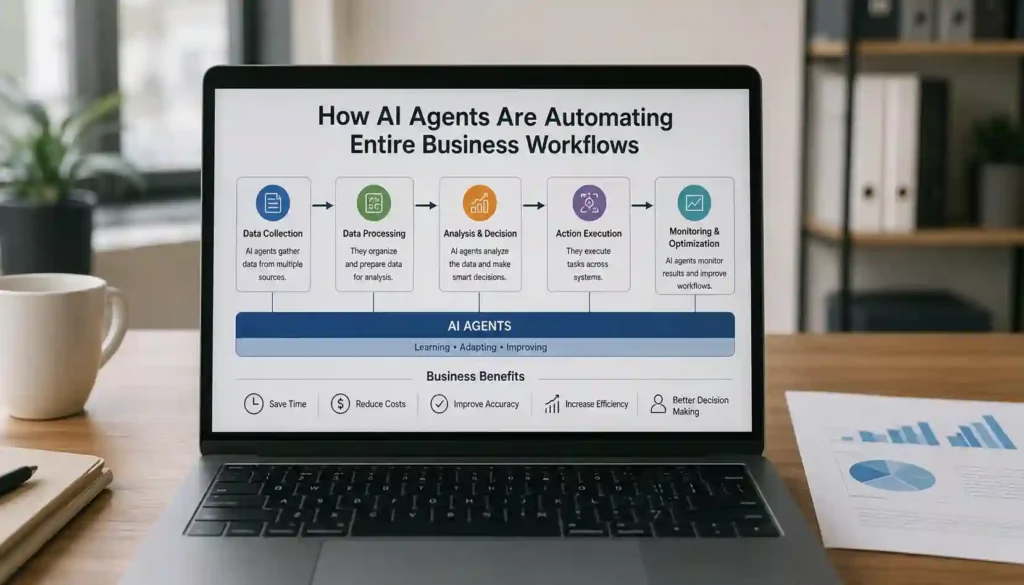
AI agents play a crucial role in automating entire business workflows from start to finish. They can handle tasks such as data collection, processing, analysis, and execution without human involvement. This end-to-end automation ensures that processes run smoothly and efficiently. Businesses can reduce delays, improve accuracy, and maintain consistency across operations. By automating complete workflows, AI agents help organizations achieve higher productivity and better performance.
Managing complex multi-step workflows
Many business processes involve multiple steps and require coordination between different systems. AI agents are capable of managing these complex workflows effectively. They can monitor progress, make decisions at each stage, and ensure that tasks are completed in the correct sequence. This reduces the risk of errors and improves overall efficiency. By handling complex workflows, AI agents enable businesses to streamline operations and focus on growth and innovation in a competitive market.
AI Agents for Customer Support
Intelligent chatbots and virtual assistants
AI agents are transforming customer support through intelligent chatbots and virtual assistants. These systems can handle customer queries instantly, providing accurate responses without human intervention. Unlike basic chatbots, AI agents understand context, learn from interactions, and improve over time. They can resolve common issues, guide users, and even perform actions such as processing requests or updating information. This reduces the workload on support teams and ensures customers receive quick assistance. With 24/7 availability, businesses can offer continuous support, improving service quality and customer satisfaction across different platforms and communication channels effectively.
Personalized customer interactions
AI agents enhance customer experience by delivering personalized interactions based on user data and behavior. They analyze customer preferences, past interactions, and purchase history to provide tailored responses and recommendations. Instead of generic replies, AI agents can address specific needs and offer relevant solutions. Personalized interactions increase engagement, boost customer loyalty, and improve overall satisfaction. By understanding individual user needs, businesses can create a more meaningful and effective communication strategy that drives long-term growth and success.
You might also like: Prizmatem: Smart AI Platform for Digital Growth Guide Online
AI Agents in Marketing and Sales
Automated campaigns and targeting
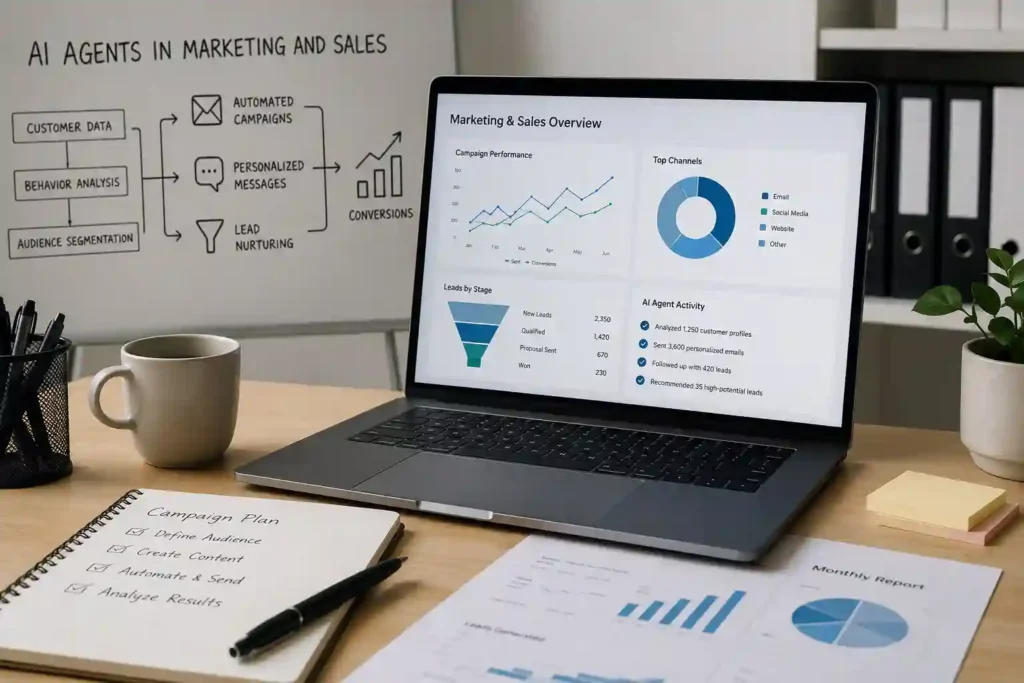
AI agents play a significant role in automating marketing campaigns and improving targeting strategies. They analyze customer data to identify the right audience and deliver personalized marketing messages. Campaigns can be automatically scheduled, optimized, and adjusted based on performance metrics. This ensures that marketing efforts are more effective and efficient. AI agents also help businesses test different strategies and choose the best approach. By automating campaigns, companies can save time, reduce costs, and achieve better results in reaching their target audience across multiple channels.
Lead nurturing and conversion optimization.
In sales, AI agents help businesses manage and nurture leads more effectively. They track customer interactions, analyze behavior, and identify potential buyers. AI agents can send follow-up messages, recommend products, and guide leads through the sales funnel. This improves the chances of conversion by delivering the right message at the right time. Automated lead nurturing ensures that no opportunity is missed. By optimizing the conversion process, businesses can increase sales and improve revenue without requiring extensive manual effort from sales teams.
AI Agents for Operations and Management
Task automation and process optimization
AI agents are highly effective in automating routine tasks and optimizing business processes. They can handle activities such as data entry, scheduling, and reporting without human involvement. This reduces manual workload and minimizes errors. AI agents also analyze workflows to identify inefficiencies and suggest improvements. By optimizing processes, businesses can operate more smoothly and reduce operational costs. Automation ensures that tasks are completed faster and with greater accuracy, allowing teams to focus on more strategic responsibilities that contribute to business growth.
Improving internal business efficiency
AI agents improve internal efficiency by streamlining communication and coordination between teams. They ensure that tasks are assigned correctly, deadlines are met, and progress is tracked in real time. This reduces delays and improves collaboration across departments. AI agents also provide insights into performance, helping managers make informed decisions. With better organization and workflow management, businesses can achieve higher productivity. Improved internal efficiency leads to faster project completion and better use of resources, giving companies a competitive advantage in the market.
Integration with Business Tools
Connecting AI agents with existing systems
AI agents can be integrated with various business tools such as CRM systems, marketing platforms, and project management software. This integration allows seamless data exchange between systems, eliminating the need for manual updates. By connecting with existing tools, AI agents enhance their functionality and provide a unified solution for managing business operations. Integration ensures that all processes are aligned and information is consistent across platforms. This makes it easier for businesses to manage workflows and maintain accuracy in their operations.
Benefits of seamless integrations
Seamless integration offers several benefits, including improved efficiency and better data management. When systems are connected, businesses can automate complex workflows that involve multiple tools. This reduces duplication of work and ensures that information is always up to date. Integration also improves decision-making by providing a complete view of business data. With all systems working together, companies can operate more effectively and respond quickly to changes. Seamless integration with AI agents enables businesses to maximize the value of their tools and achieve better overall performance in daily operations.
You might also like: AI-Powered SaaS Tools Are Transforming Small Businesses
Challenges of Using AI Agents
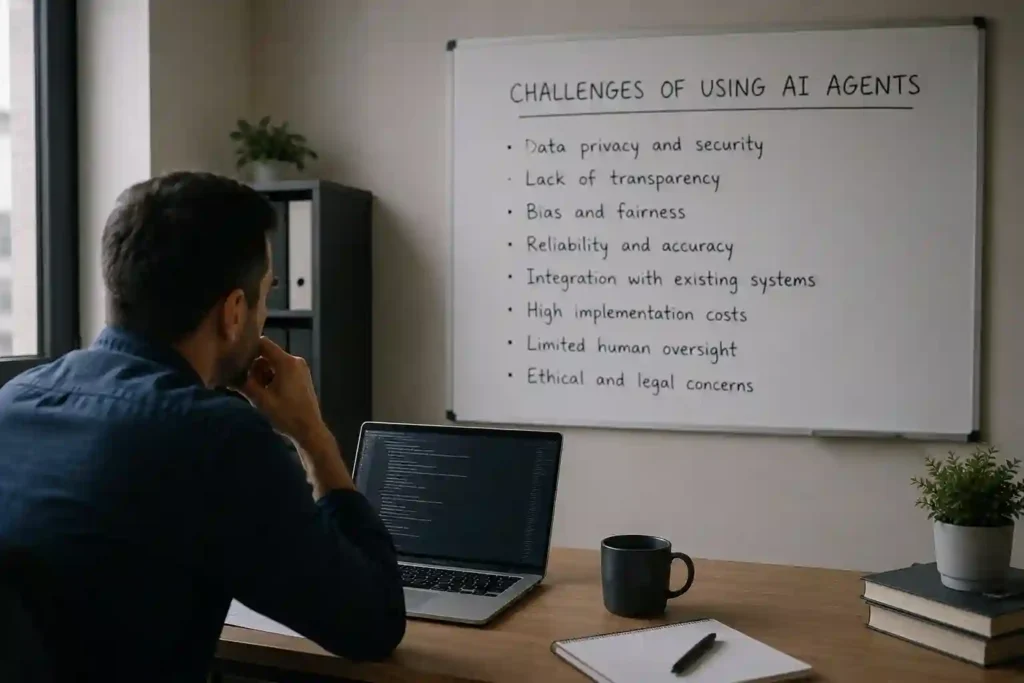
Data privacy and ethical concerns
AI agents rely heavily on data to function effectively, which raises important privacy and ethical concerns. Businesses often collect large volumes of customer and operational data, and improper handling can lead to security risks or misuse. Protecting sensitive information is essential to maintain customer trust and comply with regulations. Ethical issues also arise when AI systems make decisions that impact users, such as automated responses or recommendations. Businesses must ensure transparency and fairness in how AI agents operate. Implementing strong data protection measures, access controls, and regular audits can help reduce risks. Responsible use of AI is critical for maintaining credibility and avoiding potential legal or reputational issues.
Implementation and scalability issues
Implementing AI agents can be challenging, especially for businesses with limited technical expertise. Setting up systems, integrating tools, and configuring workflows require time and planning. Initial costs and resource allocation can also be concerns for small businesses. Scalability is another challenge, as businesses need solutions that can grow with their operations. Poorly implemented systems may struggle to handle increased workloads or complex processes. To overcome these issues, companies should start with clear goals and choose flexible platforms. Gradual implementation and proper training can make the transition smoother. With the right approach, businesses can successfully scale their AI solutions over time.
Future of AI Agents in Business
Emerging trends in AI automation
AI agents are evolving rapidly, and several trends are shaping their future in business automation. One key trend is the rise of more intelligent and autonomous systems that can handle complex decision-making tasks. Integration with advanced technologies such as machine learning and natural language processing is improving the capabilities of AI agents. Another trend is the increasing use of AI in personalized customer experiences, where systems deliver tailored solutions based on user behavior. Businesses are also adopting AI agents for predictive analytics, enabling them to anticipate market changes and customer needs. These trends indicate that AI will continue to play a major role in transforming business operations.
What to expect in the coming years
In the coming years, AI agents are expected to become more advanced, accessible, and widely adopted. Businesses of all sizes will rely on AI to automate processes and improve efficiency. AI systems will become more user-friendly, allowing non-technical users to create and manage workflows. Increased automation will lead to faster decision-making and improved productivity across industries. However, there will also be a greater focus on ethical AI use and data security. Companies will need to balance innovation with responsibility. As technology continues to evolve, AI agents will become an essential part of business strategies, driving growth and innovation.
Frequently Asked Questions (FAQs)
What are AI agents used for?
AI agents are used to automate tasks, manage workflows, analyze data, and improve decision-making in various business operations.
Are AI agents suitable for small businesses?
Yes, AI agents are suitable for small businesses as they help reduce workload, save time, and improve efficiency with limited resources.
Can AI agents replace human employees?
AI agents cannot fully replace humans, but can handle repetitive tasks, allowing employees to focus on creative and strategic work.
How secure are AI agents in business use?
AI agents are secure when proper measures like encryption, access control, and regular monitoring are implemented by businesses.
How to start using AI agents?
Start by identifying tasks to automate, choosing a suitable tool, and gradually implementing AI agents to improve workflows and efficiency.
You might also like: Smart Ways to Automate Daily Business Tasks with AI
Conclusion
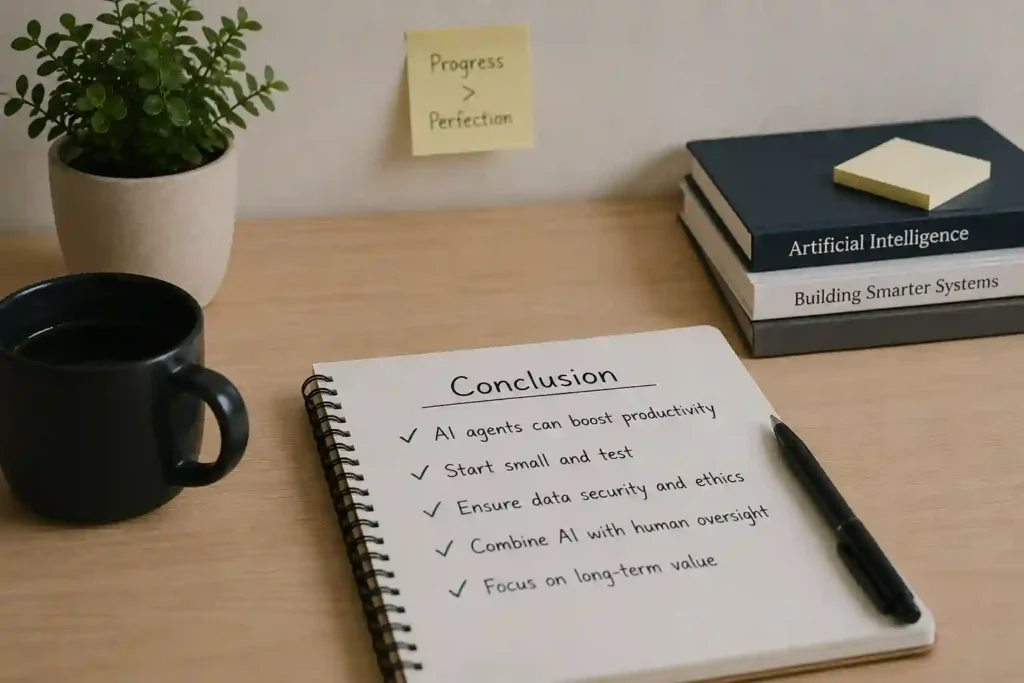
AI agents are transforming the way businesses operate by offering advanced automation and intelligent decision-making capabilities. While challenges such as data privacy and implementation exist, they can be managed with proper planning and strategy. The future of AI agents looks promising, with continuous advancements making them more powerful and accessible. Businesses that adopt AI agents early can gain a competitive advantage by improving efficiency and productivity. By balancing automation with human input, companies can create a sustainable and effective approach to business growth in an increasingly digital world.