
How AI Technology Is Changing the Future of Digital Workspaces
Digital workspaces are online environments where employees communicate, manage projects, store files, and complete daily tasks using cloud-based technologies. These platforms combine communication tools, productivity software, and data-sharing systems into one connected space. Businesses now rely on digital workspaces to support remote teams and improve workflow efficiency. Popular platforms like Slack, Microsoft Teams, and Google Workspace have transformed how companies operate.
The Growing Role of AI in Modern Businesses
Artificial intelligence is rapidly becoming a key part of modern business operations. Companies use AI-powered tools to automate tasks, analyze data, improve customer support, and increase operational efficiency. AI technology helps businesses reduce manual workloads while improving accuracy. From predictive analytics to virtual assistants, AI solutions allow organizations to make smarter decisions. Many companies also use AI to personalize customer experiences and identify future market trends. Businesses are investing heavily in AI technologies to improve performance, reduce costs, and stay ahead of competitors.
How AI Improves Workplace Productivity
Automating Repetitive Tasks
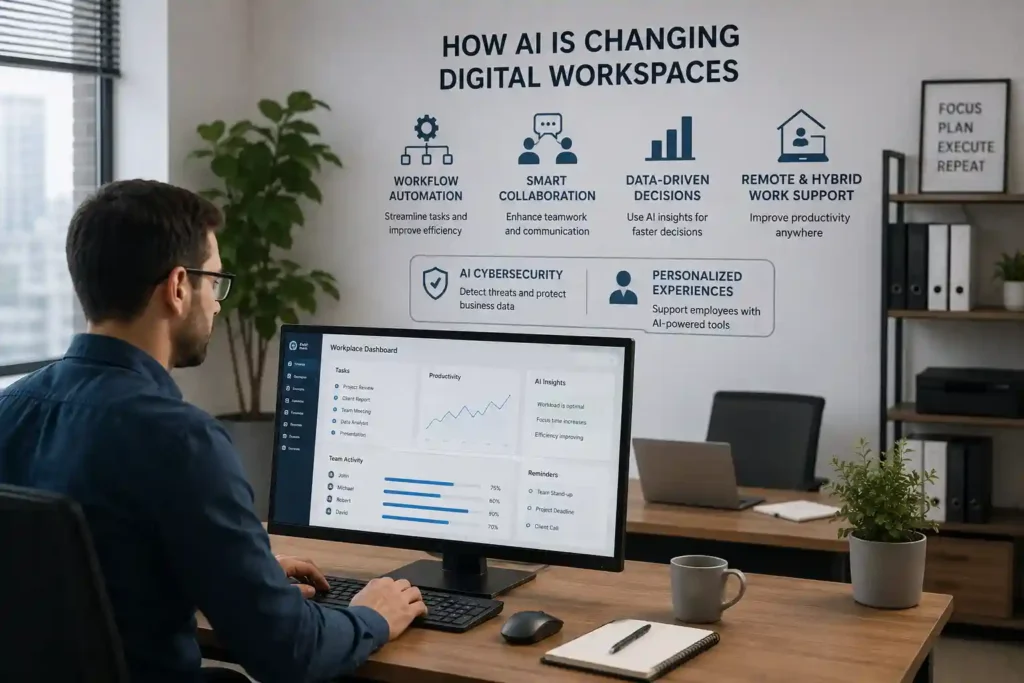
One of the biggest advantages of AI in digital workspaces is task automation. Employees often spend hours performing repetitive activities like data entry, scheduling meetings, organizing files, and responding to emails. AI-powered automation tools can handle these tasks quickly and accurately, allowing employees to focus on strategic responsibilities. Automation not only saves time but also reduces human error and improves consistency in daily operations. Businesses that implement AI automation often experience higher productivity, faster workflows, and better employee satisfaction. This efficiency helps companies achieve goals while reducing unnecessary operational delays.
Faster Decision-Making With AI Tools
AI technology also improves decision-making by processing large amounts of data. Traditional data analysis methods can be slow and time-consuming, but AI tools quickly identify patterns, trends, and insights. Managers and business leaders use these insights to make informed decisions that improve productivity and business performance. AI-driven dashboards and reporting systems provide accurate information that supports faster planning and problem-solving. In competitive industries, quick decision-making is essential for success. By using AI-powered analytics tools, businesses can respond rapidly to market changes, customer demands, and operational challenges without wasting time.
You might also like: Seekde: A Smart AI Platform for SEO, Automation & Digital Growth
AI-Powered Collaboration and Communication

Smart Virtual Meetings and Assistants
AI is transforming workplace communication through smart virtual meetings and digital assistants. Many companies use AI-powered meeting platforms that provide automatic transcription, real-time translations, and meeting summaries. These features help teams save time and improve communication accuracy. Virtual AI assistants can schedule appointments, send reminders, and answer common questions, reducing administrative workloads. AI tools also improve meeting productivity by analyzing conversations and highlighting action points. AI-powered communication systems help teams stay organized, connected, and efficient in daily operations.
Real-Time Team Collaboration Tools
Modern collaboration tools powered by AI allow employees to work together efficiently. These platforms support instant messaging, shared document editing, task management, and real-time project updates. AI features can prioritize tasks, recommend workflow improvements, and organize important files automatically. This improves teamwork and reduces confusion. Real-time collaboration tools are especially valuable for global organizations where employees work from different locations. AI-driven communication systems ensure information is shared quickly among team members. By improving coordination and transparency, these tools help businesses maintain productivity and achieve better project outcomes.
The Role of AI in Remote and Hybrid Work
Supporting Remote Employees Efficiently
AI technology plays an important role in supporting remote employees. Businesses use AI tools to monitor workflow performance, manage schedules, and provide technical support. Virtual assistants help remote workers stay organized and complete tasks more efficiently. AI-driven cybersecurity systems also protect company data by detecting suspicious activities and preventing security threats. These technologies create a safer and more productive remote working environment for employees.
AI Solutions for Hybrid Teams
Hybrid work models require communication and flexibility, and AI helps organizations manage both effectively. AI-powered scheduling systems coordinate office attendance, meeting times, and project deadlines for hybrid teams. Smart collaboration platforms ensure that remote and office employees have equal access to information and communication. By improving coordination and workflow management, AI solutions help hybrid teams maintain productivity, strengthen collaboration, and support success.
AI and Workflow Automation
Streamlining Daily Operations
Artificial intelligence is transforming workflow automation in modern digital workspaces. Businesses use AI-powered systems to simplify repetitive processes, improve efficiency, and reduce operational delays. Daily activities such as scheduling meetings, organizing files, processing invoices, and responding to customer inquiries can now be completed automatically through intelligent software. This allows employees to focus on creative and strategic tasks that require human expertise. AI workflow automation also improves communication between departments by ensuring information moves quickly across systems. Companies that adopt AI technologies often experience faster project completion, lower operating costs, and stronger productivity. As organizations continue embracing digital transformation, AI-driven automation is becoming essential for maintaining competitiveness in rapidly changing industries worldwide today.
Reducing Human Errors Through Automation
Human mistakes can create costly problems in business operations, especially when employees manage repetitive tasks for long periods. AI automation tools reduce these risks by performing tasks with greater speed and accuracy. Automated systems can process data, generate reports, monitor inventory, and handle transactions without common manual errors. This improves reliability and consistency across business operations. AI technology also helps companies maintain compliance with industry regulations by reducing reporting mistakes and improving record management. Businesses benefit from improved customer satisfaction because automated systems deliver more accurate services and responses. By reducing errors and increasing operational stability, AI-powered automation supports long-term business growth while helping employees work more confidently and efficiently in digital environments.
You might also like: Kompama: A Powerful Digital Marketing & Link Building Solution
Personalized Employee Experiences With AI
AI-Based Employee Support Systems
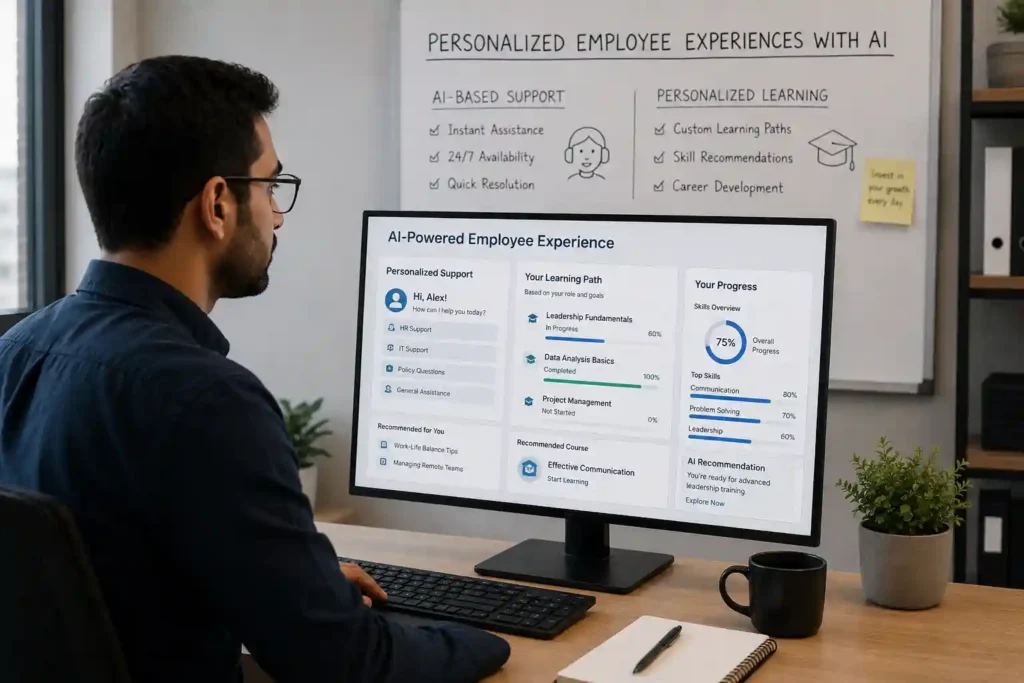
AI technology is improving employee experiences by providing personalized support systems in digital workplaces. Many organizations use AI chatbots and virtual assistants to answer employee questions, provide technical guidance, and simplify administrative tasks. These systems are available around the clock, allowing employees to receive support whenever needed. AI-powered platforms can also help workers manage schedules, request leave, and access important company information quickly. Personalized support tools improve employee satisfaction because they reduce frustration and save valuable time. Businesses benefit as well because AI systems lower the workload for human resource departments and support teams. As workplace expectations continue evolving, AI-based support systems are becoming increasingly important for maintaining efficient and positive work environments.
Personalized Learning and Development
AI is also transforming employee training and professional development. Traditional learning programs often provide the same content to every employee, regardless of skill level or job role. AI-powered learning platforms personalize training experiences by analyzing employee performance, strengths, and learning preferences. These systems recommend specific courses, workshops, and development plans that match individual needs. Personalized learning improves employee engagement because workers receive training relevant to their responsibilities and career goals. AI can also track progress and identify areas where additional support is required. Businesses that invest in AI-driven learning programs often develop stronger teams with updated skills and improved productivity. Personalized development opportunities help companies retain talent while preparing employees for future workplace challenges.
AI Cybersecurity in Digital Workspaces
Detecting and Preventing Cyber Threats
Cybersecurity is a major concern for businesses operating in digital workspaces, and AI technology plays an important role in protecting sensitive information. AI-powered security systems can detect unusual activities, identify potential threats, and respond to attacks much faster than traditional security methods. These systems continuously monitor networks, analyze user behavior, and recognize suspicious patterns before serious damage occurs. AI cybersecurity tools also help businesses prevent phishing attacks, malware infections, and unauthorized access to company data. Faster threat detection reduces downtime and protects business operations from costly disruptions. As cyber threats become more advanced, companies increasingly depend on AI solutions to strengthen security measures and maintain safe digital working environments for employees and customers.
Data Privacy and Security Challenges
Although AI improves cybersecurity, businesses also face challenges related to data privacy and security. AI systems often require large amounts of data to operate effectively, creating concerns about how sensitive information is collected, stored, and used. Companies must follow strict privacy regulations to protect employee and customer data from misuse or unauthorized access. Businesses also need transparent AI policies to maintain trust and accountability. Addressing these concerns is essential for safe and responsible AI adoption globally. These innovations will continue reshaping future business operations across industries.
Challenges of AI Adoption in Workplaces
High Implementation Costs
Many businesses want to adopt artificial intelligence in digital workspaces, but high implementation costs remain a major challenge. Companies often need advanced software, cloud infrastructure, cybersecurity systems, and employee training programs before AI solutions can operate effectively. Small and medium-sized businesses may struggle to afford these investments, especially during the early stages of digital transformation. In addition, organizations must hire skilled professionals to manage AI systems and maintain performance. These expenses can slow AI adoption and create hesitation among business leaders. Despite the financial challenges, many companies still invest in AI because long-term benefits such as increased productivity, automation, and improved decision-making often outweigh initial costs over time.
Ethical and Workforce Concerns
AI adoption also raises ethical and workforce concerns in modern workplaces. Many employees worry that automation and intelligent systems could replace human jobs, especially in administrative and repetitive roles. Ethical concerns related to AI decision-making are also growing. Some AI systems may produce biased outcomes if training data is inaccurate or incomplete. Companies must ensure transparency, fairness, and accountability when using AI technologies in workplace operations. Strong ethical policies and responsible AI practices help organizations build employee trust while reducing risks associated with discrimination, privacy issues, and unfair workplace decisions in digital environments.
You might also like: Miuzo Explained: Meaning, Branding, Uses & Digital Concept
Future Trends of AI in Digital Workspaces
Predictive Analytics and Smart Offices
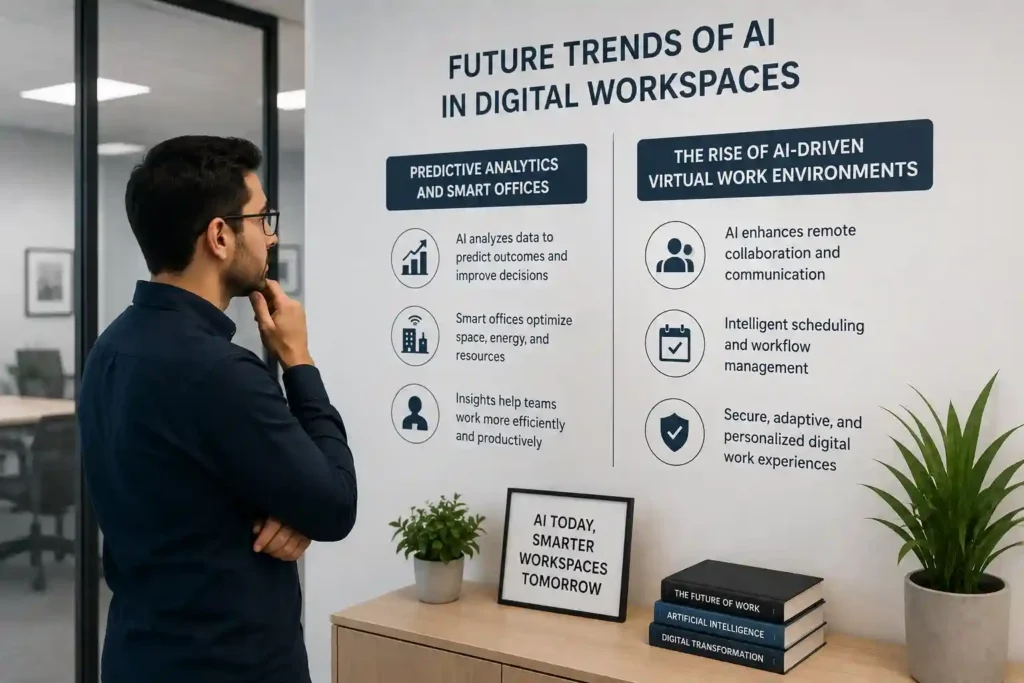
Predictive analytics is becoming one of the most important future trends in AI-powered digital workspaces. Businesses use predictive AI systems to analyze historical data, identify patterns, and forecast future outcomes. These insights help organizations improve planning, reduce operational risks, and make faster decisions. Smart office technologies are also transforming workplaces by using AI to manage lighting, energy consumption, security systems, and workspace utilization automatically. AI-powered sensors and connected devices improve efficiency while creating comfortable work environments for employees. As businesses continue embracing smart office solutions, AI technologies will play an increasingly important role in improving productivity, reducing operational costs, and supporting sustainable workplace practices across industries.
The Rise of AI-Driven Virtual Work Environments
AI-driven virtual work environments are becoming more common as remote and hybrid work models continue growing worldwide. Businesses now use virtual collaboration platforms powered by artificial intelligence to improve communication, project management, and employee engagement. AI tools can organize meetings, summarize discussions, translate conversations, and provide workflow recommendations in real time. Virtual reality and augmented reality technologies integrated with AI may also create immersive digital workspaces where employees collaborate from different locations. These innovations support flexibility while helping organizations maintain productivity. As technology advances, AI-driven virtual work environments are expected to become more interactive, efficient, and accessible for businesses operating in increasingly digital economies globally.
Frequently Asked Questions (FAQs)
How Is AI Changing the Future of Work?
AI is changing the future of work by automating repetitive tasks, improving productivity, supporting remote collaboration, and helping businesses make faster decisions through advanced data analysis.
What Are the Benefits of AI in Digital Workspaces?
AI improves efficiency, reduces operational costs, strengthens communication, supports workflow automation, enhances cybersecurity, and creates personalized employee experiences in digital workspaces.
Is AI Safe for Workplace Data Security?
AI cybersecurity systems can improve workplace security by detecting threats quickly, but businesses must also follow strong privacy policies and responsible data management practices.
You might also like: Snaptroid: Features, Pricing, Accuracy & Is It Legit?
Conclusion
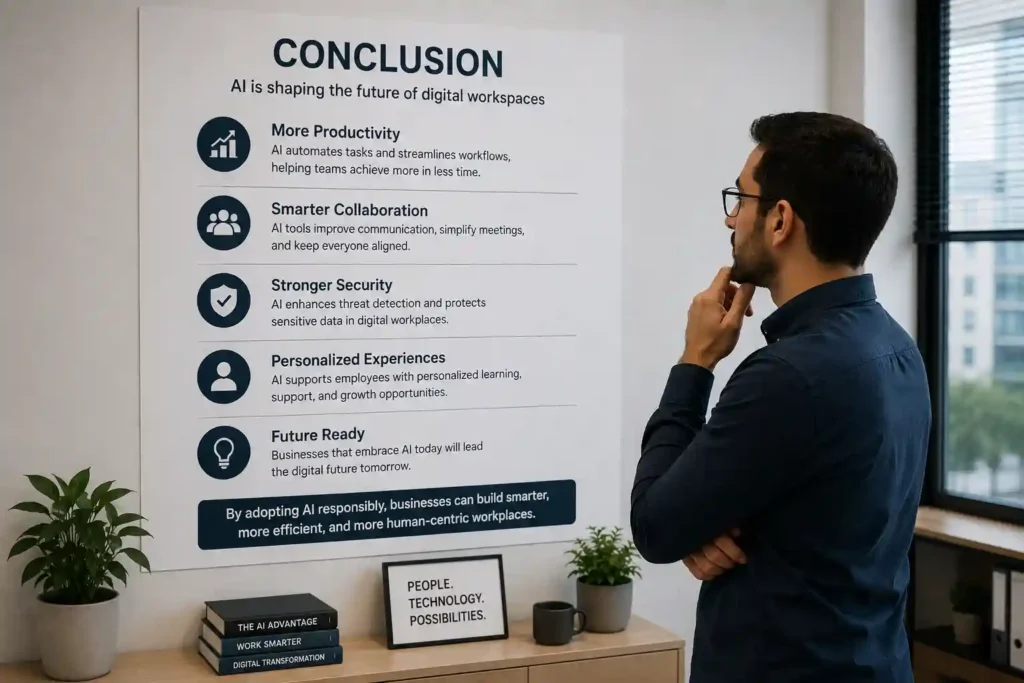
Artificial intelligence is reshaping digital workspaces by improving automation, collaboration, productivity, and decision-making across industries. Although businesses face challenges such as implementation costs, ethical concerns, and workforce adaptation, AI technologies continue to create valuable opportunities for growth and innovation. Future advancements in predictive analytics, smart offices, and virtual work environments will further transform how employees communicate and complete tasks. Companies that invest in responsible AI adoption and employee development will remain competitive in evolving digital markets. As AI technology continues advancing, businesses worldwide will increasingly depend on intelligent systems to improve efficiency, strengthen security, and support long-term success in modern work environments globally.