
AI-Powered Workflow Automation for Growing Companies
Workflow automation is the process of using technology to perform repetitive tasks and business processes with minimal human involvement. Instead of manually handling routine activities, businesses can create automated workflows that complete tasks based on predefined rules and triggers. From sending emails to processing invoices, workflow automation helps organizations save time and maintain consistency across operations.
How AI Enhances Traditional Automation
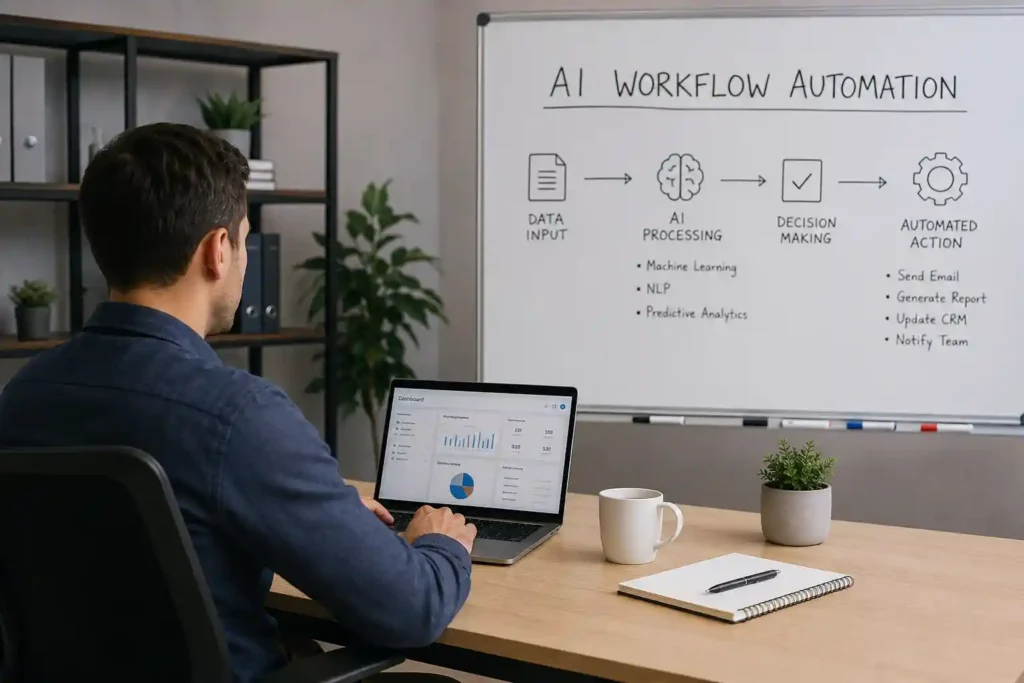
Traditional automation follows fixed instructions and performs tasks exactly as programmed. Artificial intelligence takes automation a step further by enabling systems to learn from data, recognize patterns, and make intelligent decisions. AI-powered workflow automation can adapt to changing conditions, handle complex scenarios, and continuously improve performance. This advanced capability allows businesses to automate not only simple tasks but also decision-driven processes that previously required human intervention.
Why Growing Companies Need It
As companies expand, managing increasing workloads becomes more challenging. Hiring additional staff for every operational need can be expensive and inefficient. AI-powered workflow automation helps growing businesses scale their operations without significantly increasing costs. By automating routine processes, teams can focus on strategic initiatives, innovation, and customer engagement. This makes automation an essential tool for sustainable growth and long-term competitiveness.
Key Benefits of AI Workflow Automation
Increased Operational Efficiency
One of the biggest advantages of AI workflow automation is improved efficiency. Automated systems can perform tasks faster than humans and operate around the clock without interruptions. This reduces delays, accelerates process completion, and improves overall productivity. Businesses can handle larger volumes of work while maintaining high performance standards.
Reduced Human Errors
Manual processes often lead to mistakes caused by fatigue, oversight, or inconsistent execution. AI-powered automation minimizes these risks by following standardized procedures with precision. Whether processing data, generating reports, or managing transactions, automated workflows improve accuracy and reliability. As a result, businesses experience fewer costly errors and better operational outcomes.
Faster Decision-Making
AI systems can analyze large amounts of data in real time and provide actionable insights. This capability supports faster and more informed decision-making across departments. Managers can quickly identify trends, monitor performance, and respond to challenges before they escalate. Faster decisions enable organizations to remain agile in competitive markets and capitalize on emerging opportunities.
You might also like: How Generative AI Is Reshaping Content Creation Online
Common Business Processes Suitable for Automation
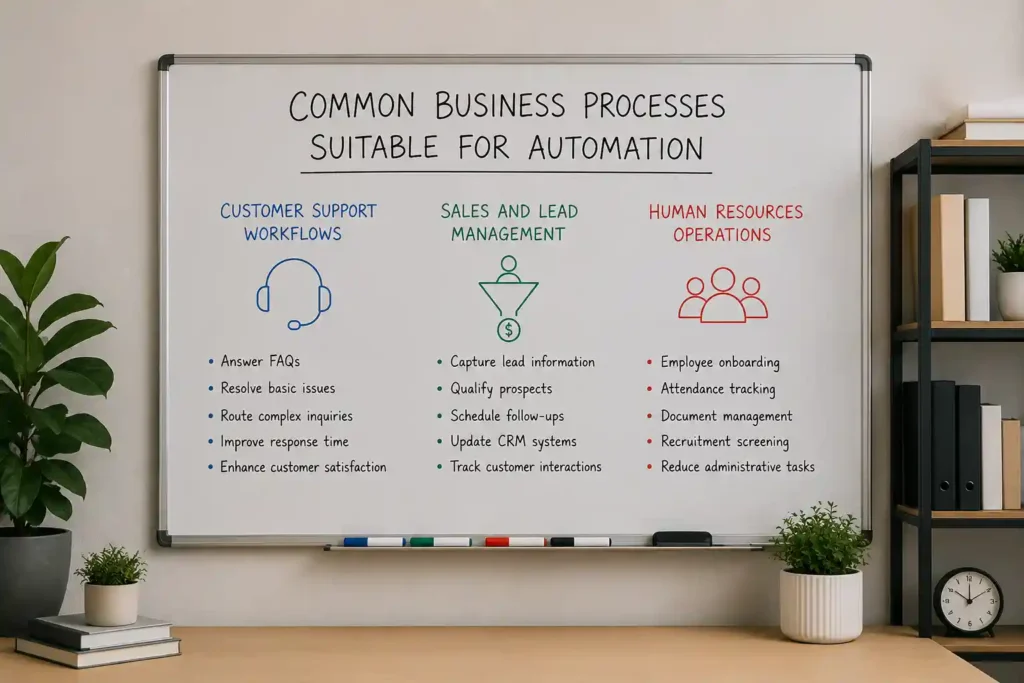
Customer Support Workflows
Customer support is one of the most common areas for workflow automation. AI-powered chatbots and virtual assistants can answer frequently asked questions, resolve basic issues, and route complex inquiries to the appropriate team members.
Sales and Lead Management
Sales teams often spend significant time managing leads, updating records, and tracking customer interactions. AI workflow automation streamlines these activities by automatically capturing lead information, qualifying prospects, scheduling follow-ups, and updating customer relationship management systems.
Human Resources Operations
Human resources departments handle numerous repetitive tasks, including employee onboarding, attendance tracking, document management, and recruitment screening. AI-powered automation simplifies these processes by reducing administrative burdens and improving efficiency. HR teams can dedicate more attention to employee development, engagement, and organizational culture.
AI Technologies Behind Workflow Automation
Machine Learning
Machine learning is a core technology that enables AI systems to learn from data and improve over time. By analyzing historical information, machine learning models can identify patterns, predict outcomes, and optimize workflows. This helps businesses automate complex tasks while continuously enhancing performance and accuracy.
Natural Language Processing (NLP)
Natural Language Processing, commonly known as NLP, allows computers to understand and interpret human language. NLP powers chatbots, virtual assistants, and automated communication tools that interact naturally with customers and employees. By processing text and speech efficiently, NLP improves user experiences and strengthens automated customer engagement.
Predictive Analytics
Predictive analytics uses historical and real-time data to forecast future events and trends. In workflow automation, predictive analytics helps organizations anticipate customer behavior, identify operational risks, and allocate resources effectively. These insights support proactive decision-making and enable businesses to optimize processes before issues arise.
AI-powered workflow automation is transforming how growing companies operate. By combining intelligent technologies with automated processes, businesses can improve efficiency, reduce errors, and make smarter decisions. Organizations that embrace AI-driven automation today are better positioned to scale operations, enhance customer experiences, and achieve sustainable growth in an increasingly competitive marketplace.
How AI Workflow Automation Improves Team Productivity
As businesses grow, maintaining productivity becomes increasingly challenging. Teams often spend valuable hours on repetitive administrative tasks instead of focusing on strategic objectives. AI workflow automation addresses this issue by streamlining operations, reducing manual effort, and improving collaboration. By automating routine processes and providing intelligent insights, organizations can increase efficiency while empowering employees to concentrate on higher-value work.
Eliminating Repetitive Tasks
Repetitive tasks consume a significant portion of employees’ time and can reduce overall job satisfaction. Activities such as data entry, document routing, appointment scheduling, and report generation often require consistent attention but add limited strategic value. AI workflow automation handles these tasks automatically, ensuring they are completed accurately and on time.
By removing repetitive responsibilities, businesses allow employees to focus on problem-solving, innovation, and customer engagement. This shift not only improves productivity but also enhances employee morale. Teams become more motivated when they can dedicate their efforts to meaningful projects rather than routine administrative work.
Enhancing Cross-Department Collaboration
Effective collaboration is essential for organizational success, especially in growing companies where multiple departments work together to achieve common goals. AI workflow automation improves communication by ensuring information flows seamlessly between teams.
Automated workflows can instantly share updates, assign tasks, and notify stakeholders when actions are required. This reduces delays caused by manual handoffs and minimizes misunderstandings. Marketing, sales, finance, and operations teams can access accurate information in real time, leading to better coordination and faster project completion. Improved collaboration ultimately strengthens productivity and helps organizations operate more efficiently.
Improving Resource Allocation
Resource allocation is a critical factor in business performance. AI-powered systems analyze workloads, identify bottlenecks, and recommend optimal resource distribution. Managers can use these insights to assign tasks effectively and balance workloads across teams.
By allocating resources more strategically, organizations can maximize productivity while avoiding employee burnout. AI workflow automation also helps businesses identify opportunities to improve efficiency and reduce unnecessary expenses. As a result, companies can achieve better outcomes with the resources they already have available.
You might also like: Novafork: The Future of Decentralized Development
Essential Features to Look for in AI Automation Tools
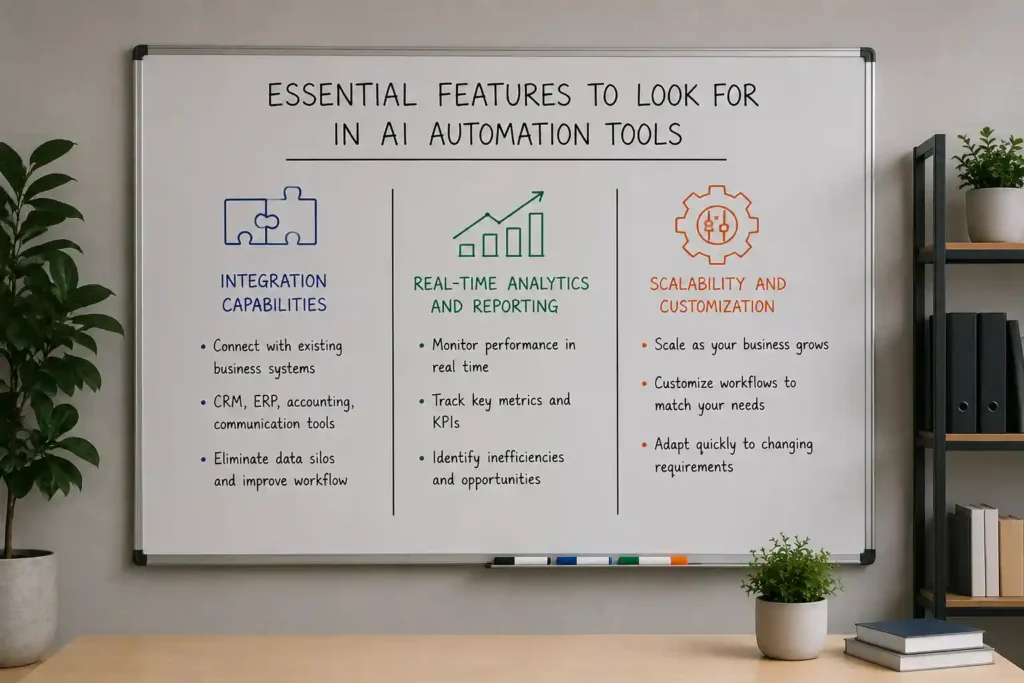
Selecting the right AI automation tool is crucial for achieving long-term success. Businesses should evaluate solutions based on their functionality, flexibility, and ability to support organizational goals.
Integration Capabilities
An effective AI automation platform should integrate seamlessly with existing systems, including customer relationship management software, accounting platforms, communication tools, and enterprise resource planning solutions.
Strong integration capabilities eliminate data silos and ensure information moves smoothly between applications. This creates a unified workflow environment where employees can access accurate data without switching between multiple systems. Seamless integration also accelerates implementation and reduces operational disruptions.
Real-Time Analytics and Reporting
Data-driven decision-making is essential in today’s competitive business environment. AI automation tools should provide real-time analytics and reporting features that offer visibility into workflow performance.
Organizations can monitor key performance indicators, identify inefficiencies, and track progress toward business objectives. Real-time insights allow managers to respond quickly to changing conditions and make informed decisions. Comprehensive reporting also supports continuous improvement by highlighting areas where workflows can be optimized further.
Scalability and Customization
Growing companies require solutions that can adapt to changing needs. Scalability ensures an AI automation platform can handle increased workloads as the business expands. Customization capabilities allow organizations to tailor workflows according to their unique requirements.
Flexible platforms support long-term growth by enabling businesses to modify processes, add new features, and integrate additional systems without major disruptions. Investing in scalable and customizable tools helps organizations maintain efficiency as operational demands evolve.
Steps to Implement AI Workflow Automation Successfully
Successful implementation requires careful planning and a structured approach. Businesses that follow a clear strategy are more likely to achieve positive results from automation initiatives.
Identify High-Impact Processes
The first step is identifying processes that will deliver the greatest benefits when automated. Businesses should evaluate repetitive, time-consuming, and error-prone tasks across departments.
Prioritizing high-impact processes allows organizations to achieve quick wins and demonstrate the value of automation. Early successes also help build support for future automation projects and encourage wider adoption across the company.
Choose the Right Automation Platform
Selecting the right platform is essential for implementation success. Businesses should assess available solutions based on functionality, integration options, scalability, security, and ease of use.
A platform that aligns with organizational goals and technical requirements will provide a stronger foundation for long-term success. Careful evaluation helps prevent costly mistakes and ensures the chosen solution can support future growth.
Train Teams and Monitor Performance
Employee training plays a vital role in successful adoption. Teams should understand how automated workflows operate and how to use new tools effectively. Proper training reduces resistance to change and increases user confidence.
Continuous monitoring is equally important. Businesses should track performance metrics, gather feedback, and make adjustments as needed. Regular evaluation ensures workflows remain efficient and continue delivering measurable business value.
Industry-Specific Use Cases for Growing Companies
E-commerce and Retail
AI workflow automation helps retailers manage inventory, process orders, personalize customer experiences, and streamline support services efficiently.
Healthcare and Professional Services
Healthcare providers and service firms use automation to manage scheduling, documentation, client communications, and administrative workflows effectively.
Manufacturing and Logistics
Manufacturers and logistics companies leverage AI automation to optimize production planning, inventory control, shipment tracking, and supply chain efficiency.
You might also like: AI Cybersecurity Tools Helping Companies Prevent Data Breaches
Measuring the ROI of AI Workflow Automation
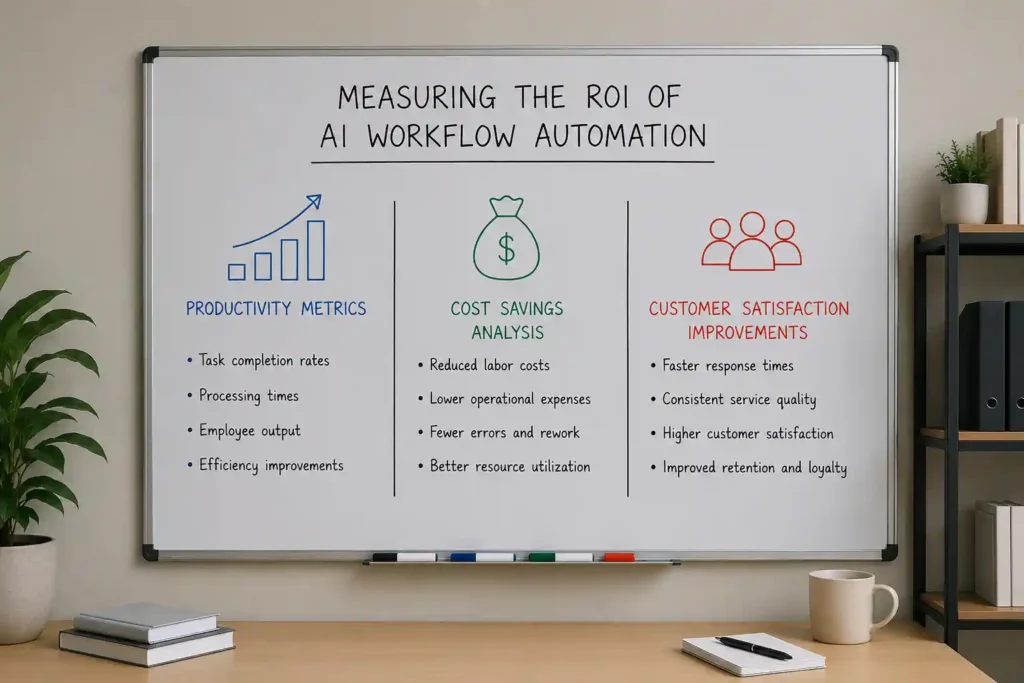
Measuring return on investment is essential for determining whether AI workflow automation is delivering value. Businesses should evaluate performance using both financial and operational metrics.
Productivity Metrics
Productivity improvements are among the most visible benefits of automation. Organizations can measure factors such as task completion rates, processing times, and employee output to assess performance gains.
Tracking these metrics before and after implementation provides a clear picture of automation’s impact. Faster workflows and increased efficiency often indicate that AI-powered systems are helping teams achieve more with fewer resources.
Cost Savings Analysis
Cost reduction is another important indicator of automation success. Businesses can evaluate savings by comparing labor expenses, operational costs, and error-related losses before and after implementation.
Automated workflows reduce the need for manual intervention, lower administrative expenses, and minimize costly mistakes. A detailed cost savings analysis helps organizations understand the financial benefits of their automation investments and justify future expansion efforts.
Customer Satisfaction Improvements
Customer experience is a valuable measure of automation effectiveness. Faster response times, consistent service quality, and personalized interactions can significantly improve customer satisfaction.
Businesses can monitor customer feedback, retention rates, and support performance metrics to evaluate results. Higher satisfaction levels often lead to stronger customer loyalty and increased revenue, making automation a powerful driver of long-term growth.
Future Trends in AI-Powered Workflow Automation
The future of AI workflow automation continues to evolve rapidly as new technologies emerge and business demands change.
Hyperautomation
Hyperautomation combines multiple technologies, including AI, machine learning, robotic process automation, and analytics, to automate complex business processes. This trend enables organizations to achieve greater efficiency by connecting and optimizing workflows across entire operations.
As hyperautomation becomes more accessible, businesses will be able to automate larger portions of their operations while reducing manual effort and improving productivity.
Autonomous AI Agents
Autonomous AI agents represent the next stage of intelligent automation. These systems can make decisions, execute tasks, and adapt to changing circumstances with minimal human intervention.
Businesses are increasingly exploring autonomous agents to handle customer interactions, process management, and operational decision-making. Their ability to work independently can significantly enhance efficiency and responsiveness.
Intelligent Process Discovery
Intelligent process discovery uses AI to analyze organizational workflows and identify automation opportunities automatically. Instead of relying solely on manual assessments, businesses can use AI to uncover inefficiencies and recommend improvements.
This technology accelerates automation initiatives by helping organizations prioritize high-impact processes and optimize operations more effectively.
Frequently Asked Questions (FAQs)
What Is AI-Powered Workflow Automation?
AI-powered workflow automation uses artificial intelligence to automate tasks, streamline processes, and improve operational efficiency.
How Much Does AI Workflow Automation Cost?
Costs vary depending on business size, implementation scope, and software requirements.
Which Departments Benefit Most from AI Automation?
Customer service, sales, marketing, human resources, finance, and operations commonly benefit from automation.
Is AI Workflow Automation Suitable for Small Businesses?
Yes, scalable solutions make automation accessible and beneficial for businesses of all sizes.
You might also like: Auztron Bot: Smart Automation Solution for Modern Teams
Conclusion
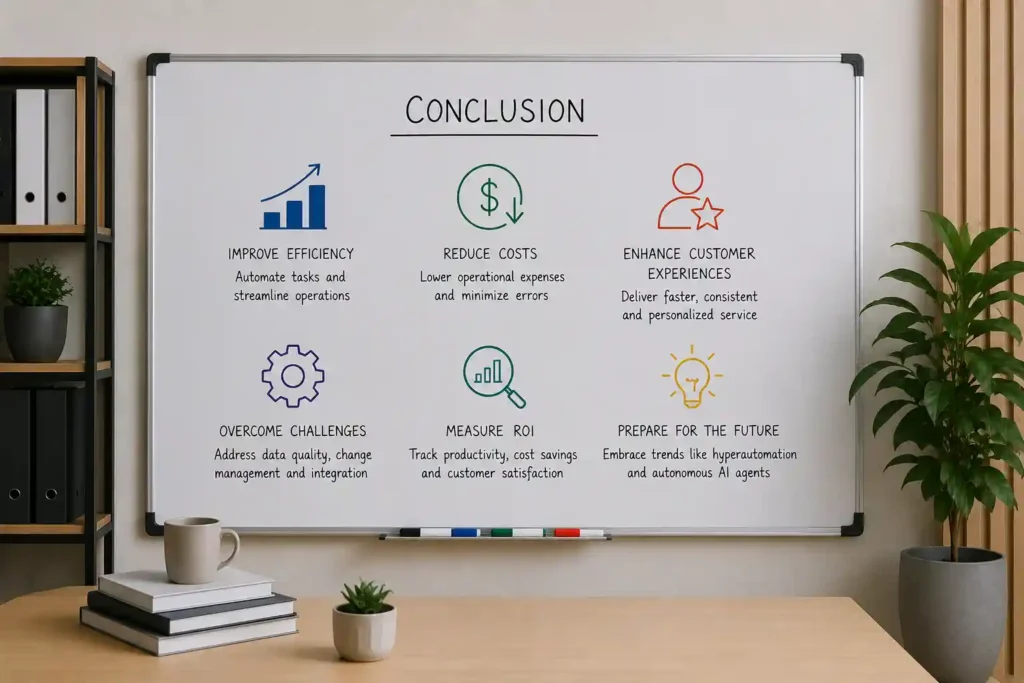
AI workflow automation helps growing companies improve efficiency, reduce costs, and enhance customer experiences. Although challenges such as data quality, employee resistance, and integration complexities may arise, businesses can overcome them with proper planning and execution. By measuring ROI and embracing future trends like hyperautomation and autonomous AI agents, organizations can unlock long-term value. Companies that invest in AI-powered workflow automation today will be better prepared to scale operations, adapt to market changes, and maintain a competitive advantage in an increasingly digital business environment.