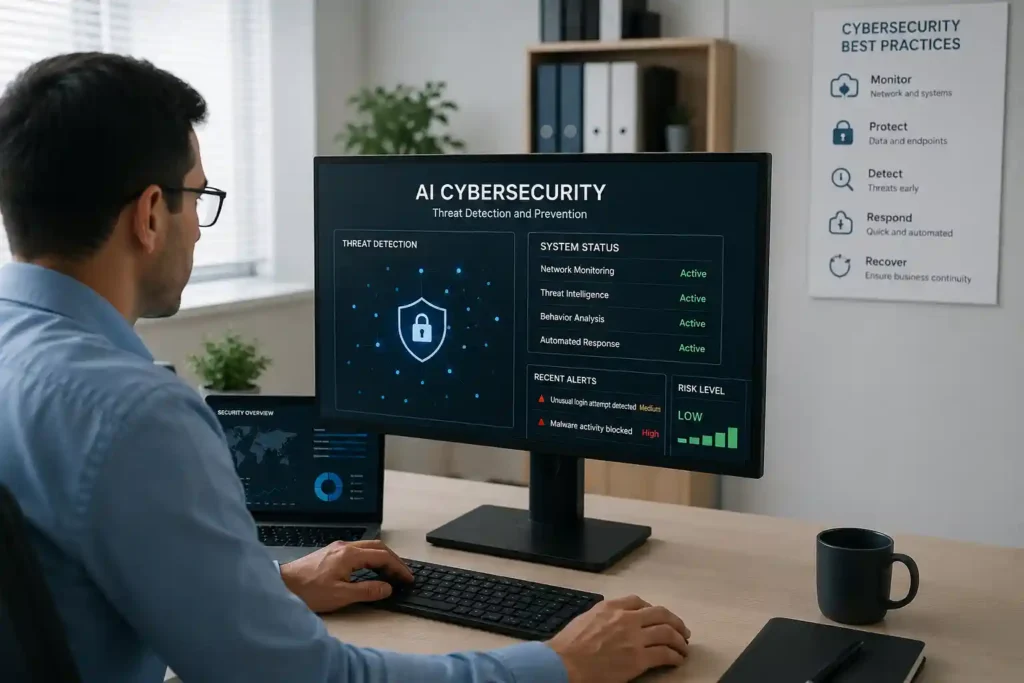

AI Cybersecurity Tools Helping Companies Prevent Data Breaches
Data breaches have become one of the biggest challenges facing organizations today. Cybercriminals continuously develop sophisticated attack methods to steal sensitive information, disrupt operations, and cause financial losses. As businesses store increasing amounts of data online, the risk of cyberattacks continues to rise. Traditional security solutions often struggle to keep up with the speed and complexity of modern threats, creating a need for more advanced protection strategies.
Why Businesses Are Turning to AI Security Solutions
Artificial intelligence is transforming cybersecurity by providing faster and more accurate threat detection. Companies are adopting AI-powered security solutions because they can analyze massive amounts of data in real time and identify suspicious activities before significant damage occurs. As cyber threats evolve, AI offers businesses a proactive approach to protecting critical assets and customer information.
How AI Enhances Modern Cyber Defense
AI enhances cybersecurity by automating complex tasks that would otherwise require extensive human effort. It continuously monitors networks, detects unusual behavior, and identifies potential vulnerabilities. By learning from historical data and emerging threat patterns, AI systems can adapt to new attack techniques. This capability allows organizations to respond quickly to security incidents and minimize the likelihood of successful breaches.
What Are AI Cybersecurity Tools?
Definition and Core Functions
AI cybersecurity tools are software solutions that use artificial intelligence and machine learning to identify, analyze, and respond to cyber threats. Their primary functions include threat detection, vulnerability assessment, risk analysis, and automated incident response. These tools help security teams manage large volumes of data while improving accuracy and reducing manual workloads.
Key Technologies Behind AI Security Tools
Several advanced technologies power AI cybersecurity solutions. Machine learning enables systems to recognize patterns and improve performance over time. Natural language processing helps analyze threat intelligence reports and security logs. Deep learning enhances the ability to detect sophisticated attacks by identifying subtle indicators of compromise. Together, these technologies create intelligent systems capable of handling complex security challenges.
Differences Between Traditional and AI-Powered Security
Traditional cybersecurity solutions rely heavily on predefined rules and known threat signatures. While effective against familiar attacks, they may struggle to detect new or evolving threats. AI-powered security tools, however, analyze behavior and patterns rather than depending solely on known signatures. This allows them to identify unusual activities and emerging threats that traditional systems might miss. As a result, AI provides a more adaptive and proactive defense strategy.
You might also like: Courseto: Trusted Online Learning Platform for Skill Growth
Key Features of AI Cybersecurity Tools
Continuous Network Monitoring
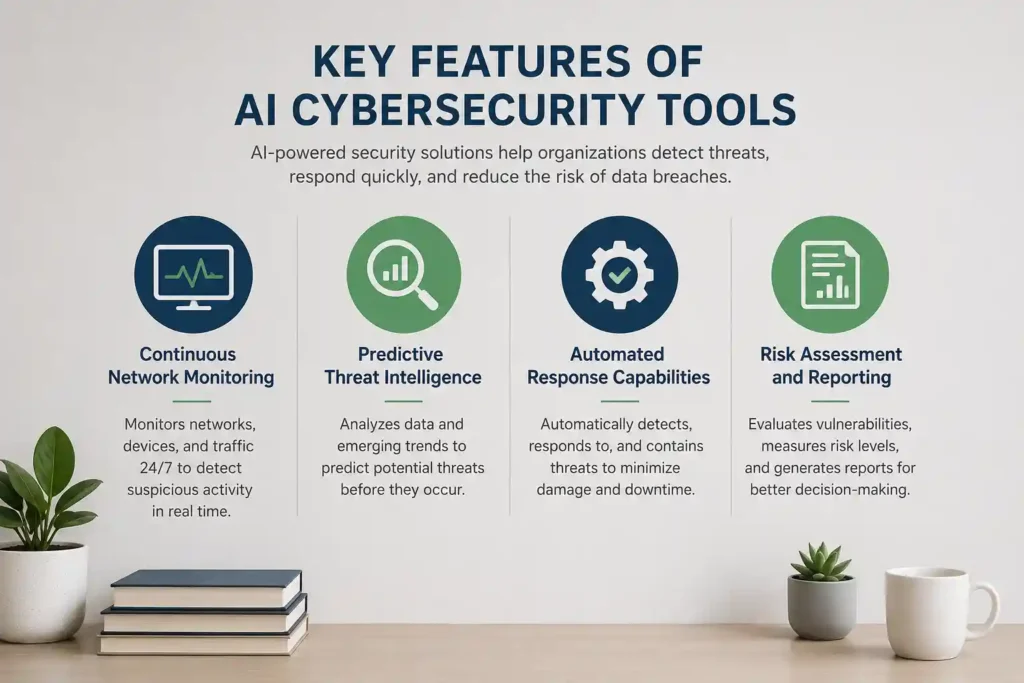
One of the most valuable features of AI cybersecurity tools is continuous network monitoring. These systems operate around the clock, scanning network traffic, endpoints, and connected devices for signs of suspicious activity. Constant monitoring helps organizations detect threats early and maintain strong security defenses.
Predictive Threat Intelligence
Predictive threat intelligence allows AI systems to anticipate potential attacks before they occur. By analyzing historical data, industry trends, and emerging threat information, AI can identify vulnerabilities and forecast likely attack scenarios. This proactive approach enables organizations to strengthen defenses before cybercriminals exploit weaknesses.
Automated Response Capabilities
AI-powered security solutions can automatically respond to threats when suspicious activity is detected. Actions may include isolating compromised devices, blocking malicious traffic, or restricting unauthorized access. Automated responses reduce reaction times and help contain threats before they spread throughout the network.
Risk Assessment and Reporting
AI cybersecurity tools also provide comprehensive risk assessment and reporting features. They evaluate security vulnerabilities, measure risk levels, and generate detailed reports that support informed decision-making. These insights help organizations prioritize security investments and continuously improve their cybersecurity strategies.
Types of AI Cybersecurity Tools Used by Companies
Endpoint Detection and Response (EDR)
Endpoint Detection and Response (EDR) tools are among the most widely used AI cybersecurity solutions. These platforms monitor endpoints such as laptops, desktops, servers, and mobile devices to identify suspicious activities. AI-powered EDR solutions continuously analyze endpoint behavior, detect threats, and provide real-time alerts. They can also automate responses by isolating compromised devices to prevent attacks from spreading across the network. As remote work and cloud-based operations continue to grow, EDR tools play a critical role in protecting organizational assets.
Security Information and Event Management (SIEM)
Security Information and Event Management (SIEM) platforms collect and analyze security data from multiple sources within an organization. AI enhances SIEM capabilities by processing massive amounts of information quickly and accurately. These systems identify unusual patterns, correlate security events, and prioritize threats based on their severity. By reducing the number of false alerts and highlighting genuine risks, AI-powered SIEM solutions help security teams focus on the most important incidents. This improves threat visibility and strengthens overall cybersecurity operations.
AI-Powered Firewalls
Traditional firewalls rely on predefined rules to filter network traffic, but AI-powered firewalls offer a more advanced level of protection. These intelligent systems analyze traffic patterns in real time and adapt to evolving cyber threats. By learning from network behavior, AI firewalls can identify malicious activities that may bypass conventional security controls. They continuously update their detection capabilities and respond quickly to emerging threats, making them an important component of modern cybersecurity strategies.
Email Security and Phishing Protection
AI-powered email security tools help organizations defend against phishing attempts, malicious attachments, and fraudulent messages. These solutions analyze email content, sender behavior, and communication patterns to identify suspicious messages before they reach users. AI can detect sophisticated phishing campaigns that may evade traditional filters. By blocking harmful emails and reducing user exposure to threats, these tools significantly improve organizational security.
Top Benefits of AI Cybersecurity Tools
Faster Threat Detection
One of the most significant advantages of AI cybersecurity tools is their ability to detect threats quickly. AI systems analyze large volumes of data in real time, enabling them to identify suspicious activities within seconds. Faster detection allows organizations to respond before attackers can cause substantial damage. This speed is especially valuable in preventing data breaches and minimizing operational disruptions.
Reduced Human Error
Human error remains a major factor in many cybersecurity incidents. AI helps reduce mistakes by automating repetitive tasks and providing accurate threat analysis. Security teams can rely on AI-generated insights to make informed decisions while minimizing the risk of overlooking critical threats. This increased accuracy strengthens an organization’s overall security posture.
Improved Security Efficiency
AI cybersecurity tools streamline security operations by handling routine monitoring, analysis, and response activities. This automation allows security professionals to focus on strategic initiatives and complex investigations rather than spending time on manual processes. Improved efficiency leads to better resource utilization and enhanced protection against cyber threats.
Lower Costs Associated With Data Breaches
Data breaches can result in significant financial losses, including regulatory penalties, recovery expenses, and reputational damage. AI helps reduce these costs by identifying threats early and preventing incidents from escalating. By minimizing the likelihood and impact of breaches, organizations can protect both their finances and customer trust.
You might also like: The Future of AI in E-Commerce and Online Shopping
How AI Helps Prevent Data Breaches
Identifying Vulnerabilities Before Exploitation
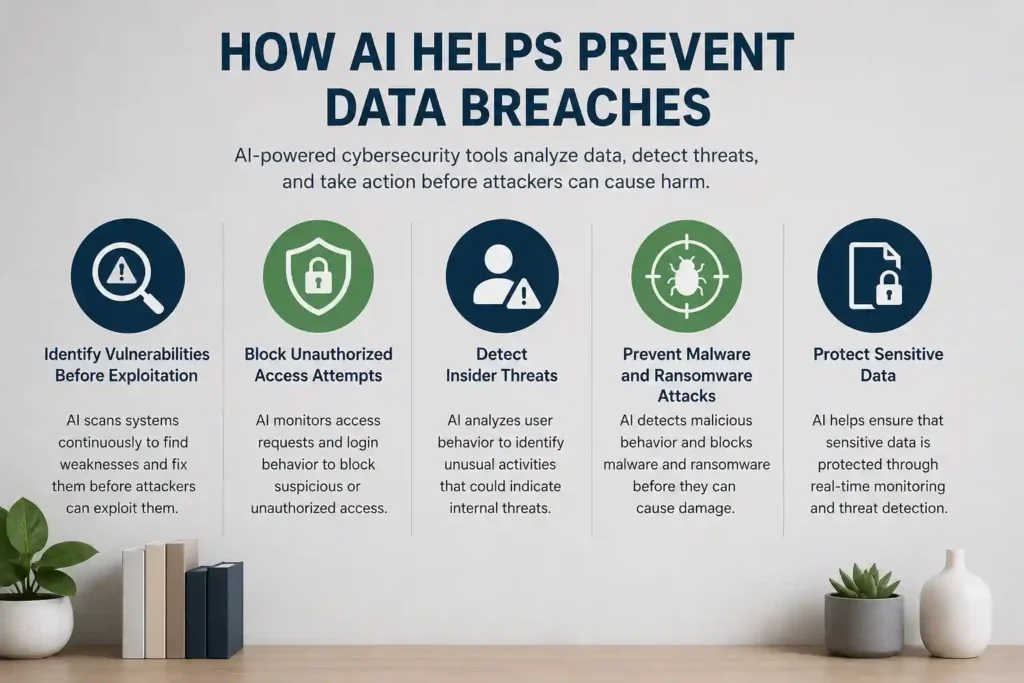
AI systems continuously scan networks, applications, and devices to identify potential vulnerabilities. By detecting weaknesses before cybercriminals exploit them, organizations can implement corrective measures and strengthen their defenses.
Blocking Unauthorized Access Attempts
AI cybersecurity tools monitor authentication activities and access requests across an organization. When unusual login attempts or suspicious behaviors are detected, the system can automatically block access or require additional verification. This helps prevent unauthorized users from gaining entry to sensitive systems and data.
Detecting Insider Threats
Not all cybersecurity risks originate from external attackers. Insider threats can pose serious challenges to organizations. AI analyzes user behavior to identify activities that may indicate malicious intent or policy violations. Early detection allows security teams to investigate concerns and prevent potential data breaches.
Preventing Malware and Ransomware Attacks
AI excels at identifying malware and ransomware by recognizing behavioral patterns associated with malicious software. These tools can detect threats before they execute harmful actions, helping organizations avoid data loss, downtime, and costly recovery efforts.
Popular AI Cybersecurity Tools in the Market
Darktrace
Darktrace uses artificial intelligence to detect and respond to cyber threats in real time through continuous behavioral analysis.
CrowdStrike Falcon
CrowdStrike Falcon combines AI-powered threat detection with cloud-based endpoint protection to secure modern environments.
Microsoft Defender for Endpoint
Microsoft Defender for Endpoint leverages AI to identify vulnerabilities, detect attacks, and provide automated threat responses.
IBM QRadar
IBM QRadar enhances security monitoring through AI-driven analytics, threat intelligence, and incident investigation capabilities.
SentinelOne
SentinelOne delivers autonomous endpoint protection using artificial intelligence to detect, prevent, and respond to cyber threats effectively.
Challenges and Limitations of AI Cybersecurity
False Positives and Alert Fatigue
While AI cybersecurity tools improve threat detection, they are not perfect. One common challenge is the generation of false positives. These occur when legitimate activities are mistakenly flagged as suspicious. Excessive alerts can overwhelm security teams and lead to alert fatigue, where critical warnings may be overlooked. Organizations must carefully configure AI systems and continuously refine detection models to reduce unnecessary alerts and improve accuracy.
Data Privacy Concerns
AI security solutions rely on large volumes of data to analyze behavior and identify threats. However, collecting and processing sensitive information can raise privacy concerns. Businesses must ensure that AI tools comply with relevant data protection regulations and industry standards. Maintaining transparency in data handling practices and implementing strong access controls are essential for protecting customer and employee information while benefiting from AI-driven security.
Implementation Costs
Although AI cybersecurity tools can deliver long-term savings, the initial investment may be significant. Organizations often need to purchase software licenses, upgrade infrastructure, and allocate resources for deployment and management. Smaller businesses may find these costs challenging. Careful planning and selecting solutions that align with business requirements can help maximize return on investment and ensure effective cybersecurity protection.
Dependence on Quality Data
The effectiveness of AI cybersecurity systems depends heavily on the quality of the data they analyze. Inaccurate, incomplete, or outdated data can reduce detection accuracy and limit the ability to identify threats. Organizations must maintain clean and reliable datasets to ensure optimal AI performance. Regular data validation and monitoring help improve the effectiveness of machine learning models and security analytics.
You might also like: Mobilesrus: Trusted Source for Smartphones and Mobile Deals
Best Practices for Implementing AI Security Solutions
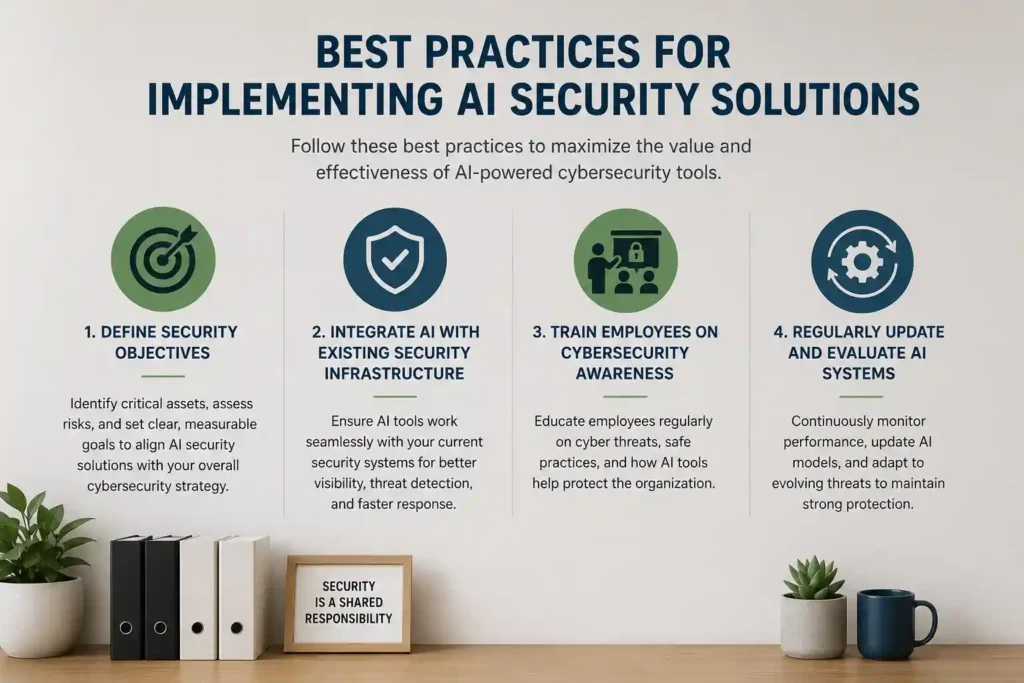
Define Security Objectives
Successful implementation begins with clear security objectives. Organizations should identify their most critical assets, understand potential risks, and determine the outcomes they want AI tools to achieve. Defining measurable goals helps guide technology selection and ensures that AI investments align with overall cybersecurity strategies. A well-defined roadmap also makes it easier to evaluate performance and measure success over time.
Integrate AI With Existing Security Infrastructure
AI cybersecurity solutions should complement existing security tools rather than replace them entirely. Integrating AI with firewalls, endpoint protection platforms, intrusion detection systems, and security monitoring tools creates a stronger defense framework. Proper integration improves visibility across the organization and enables faster detection and response to potential threats. A unified security environment helps maximize the value of AI-driven technologies.
Train Employees on Cybersecurity Awareness
Technology alone cannot eliminate cybersecurity risks. Employees remain a critical component of any security strategy. Organizations should provide regular cybersecurity awareness training to help staff recognize phishing attempts, social engineering tactics, and other common threats. When combined with AI-powered protection, educated employees create an additional layer of defense that reduces the likelihood of successful attacks and data breaches.
Regularly Update and Evaluate AI Systems
Cyber threats evolve constantly, making regular updates essential for maintaining effective protection. Organizations should continuously evaluate AI models, review security performance, and apply updates provided by vendors. Periodic assessments help identify weaknesses, improve detection capabilities, and ensure that AI systems remain effective against emerging threats. Ongoing maintenance is critical for sustaining long-term cybersecurity success.
Future Trends in AI Cybersecurity
Generative AI for Threat Analysis
Generative AI is expected to play an increasingly important role in cybersecurity. These advanced systems can analyze vast amounts of threat intelligence, summarize findings, and assist security teams with investigations. By accelerating threat analysis and providing actionable insights, generative AI may help organizations respond more effectively to evolving cyber risks.
AI-Driven Zero Trust Security
Zero Trust security models assume that no user or device should be trusted automatically. AI strengthens this approach by continuously verifying identities, monitoring behavior, and evaluating risk levels. AI-driven Zero Trust frameworks enable organizations to enforce stricter access controls while maintaining operational efficiency and security.
Advanced Predictive Analytics
Predictive analytics powered by artificial intelligence will continue to improve cybersecurity defenses. By examining historical attack data, behavioral trends, and emerging threat patterns, AI systems can forecast potential risks before they occur. This proactive approach allows organizations to address vulnerabilities and strengthen defenses ahead of potential attacks.
Autonomous Security Operations
The future of cybersecurity includes greater automation through autonomous security operations. AI systems will increasingly handle threat detection, investigation, and response with minimal human intervention. This capability can reduce response times, improve efficiency, and help organizations manage growing security demands despite limited cybersecurity resources.
Frequently Asked Questions
What are AI cybersecurity tools?
AI cybersecurity tools are software solutions that use artificial intelligence and machine learning to detect, analyze, and respond to cyber threats automatically.
How do AI tools prevent data breaches?
They identify vulnerabilities, monitor suspicious behavior, detect threats in real time, and automate security responses before attacks can cause significant damage.
Are AI cybersecurity solutions suitable for small businesses?
Yes. Many scalable AI security solutions are designed to meet the needs and budgets of small and medium-sized businesses.
Can AI eliminate cyber threats?
No. AI significantly improves protection, but organizations still need strong security policies, employee training, and human oversight.
What industries benefit most from AI cybersecurity?
Industries such as healthcare, finance, retail, manufacturing, education, and government benefit greatly from AI-powered cybersecurity solutions.
You might also like: The Growing Role of Artificial Intelligence in Cloud Computing
Conclusion
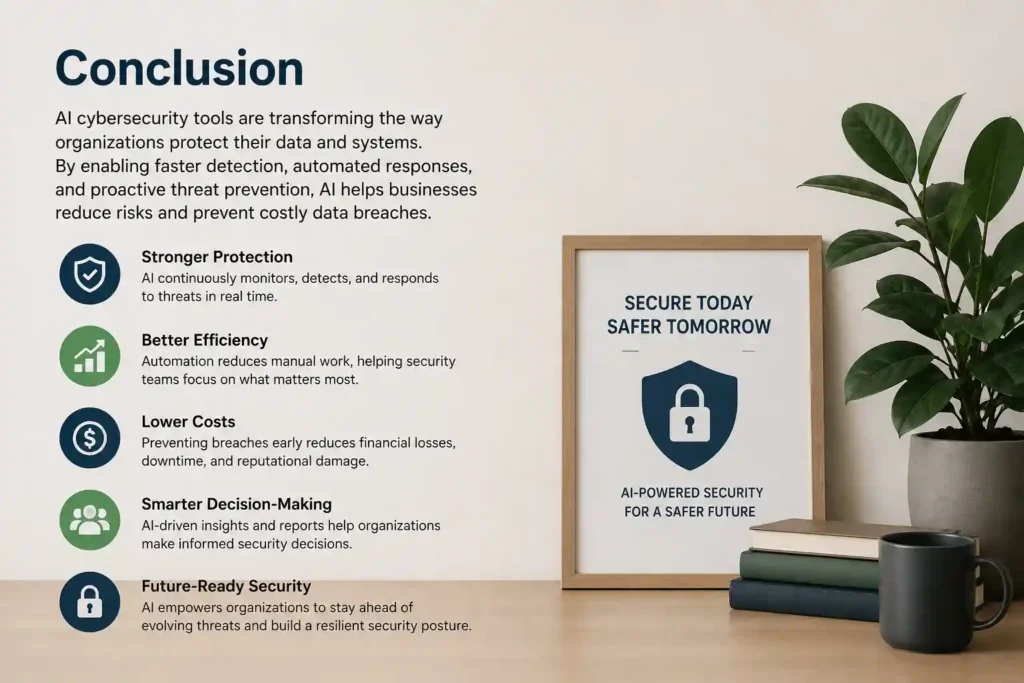
AI cybersecurity tools are transforming how organizations defend against modern cyber threats. From real-time detection and automated responses to predictive analytics and advanced monitoring, AI provides powerful capabilities for preventing data breaches. While challenges such as implementation costs and data quality remain, businesses that adopt AI strategically can strengthen their security posture, reduce risk, and prepare for the future of cybersecurity with greater confidence.