
The Growing Role of Artificial Intelligence in Cloud Computing
These tasks include learning from data, recognizing patterns, making decisions, understanding language, and solving problems. AI technologies such as machine learning, natural language processing, and computer vision are transforming industries by enabling smarter and faster operations. As organizations generate more data than ever before, AI helps extract valuable insights and automate complex processes.
Understanding Cloud Computing
Instead of relying on local servers or personal devices, businesses can access storage, databases, networking, software, and processing power through cloud platforms. This model offers flexibility, scalability, and cost savings, allowing organizations to expand resources as needed. Cloud computing has become a foundation for digital transformation because it provides on-demand access to advanced technologies without significant upfront investments.
The Convergence of AI and Cloud Technologies
The combination of AI and cloud computing is creating powerful opportunities for businesses. Together, these technologies enable organizations to build intelligent applications, improve operational efficiency, and accelerate innovation. As cloud environments continue to evolve, AI is becoming an essential component of modern cloud services.
How AI Is Transforming Cloud Computing
Evolution of Intelligent Cloud Services
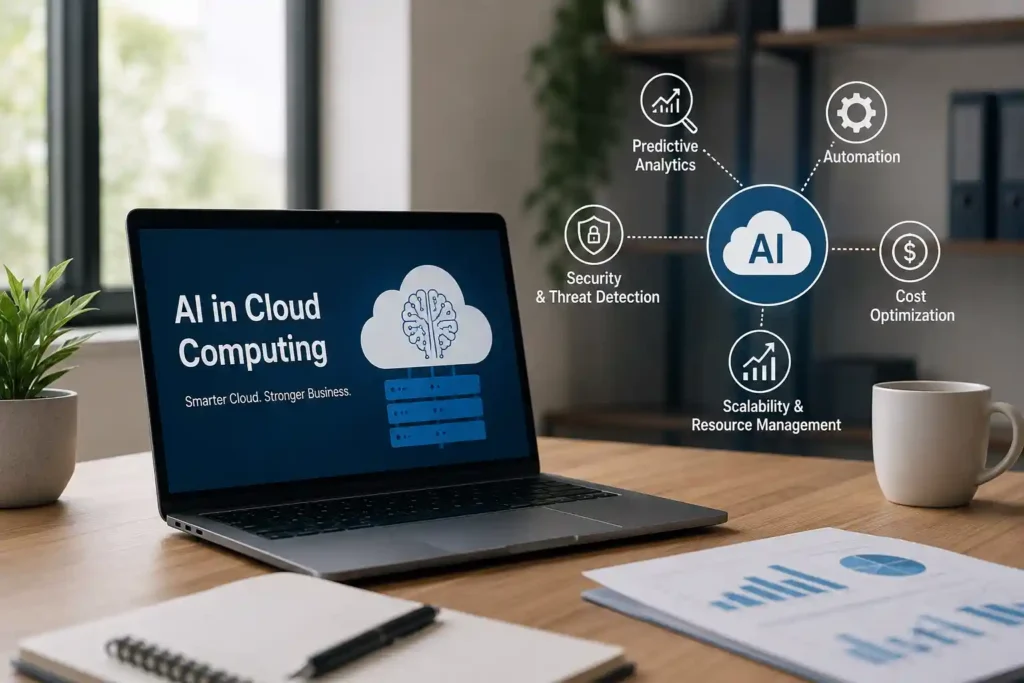
Cloud services have evolved from simple storage and computing solutions into intelligent platforms powered by AI. Modern cloud providers now offer built-in AI capabilities that allow businesses to develop smart applications without extensive technical expertise. Features such as predictive analytics, automated monitoring, and intelligent security have become standard components of cloud ecosystems. This evolution helps organizations leverage advanced technologies more effectively and gain a competitive advantage.
Why Businesses Are Adopting AI-Powered Cloud Solutions
Businesses are increasingly adopting AI-powered cloud solutions because they offer greater efficiency, scalability, and innovation. AI enables organizations to automate repetitive tasks, analyze large datasets, and improve customer experiences. Cloud-based AI tools also reduce the need for expensive infrastructure and specialized hardware. By combining the power of AI with the flexibility of the cloud, companies can respond more quickly to market demands and make informed strategic decisions.
You might also like: Smart Ways to Automate Daily Business Tasks with AI
Key Benefits of AI in Cloud Computing
Improved Operational Efficiency
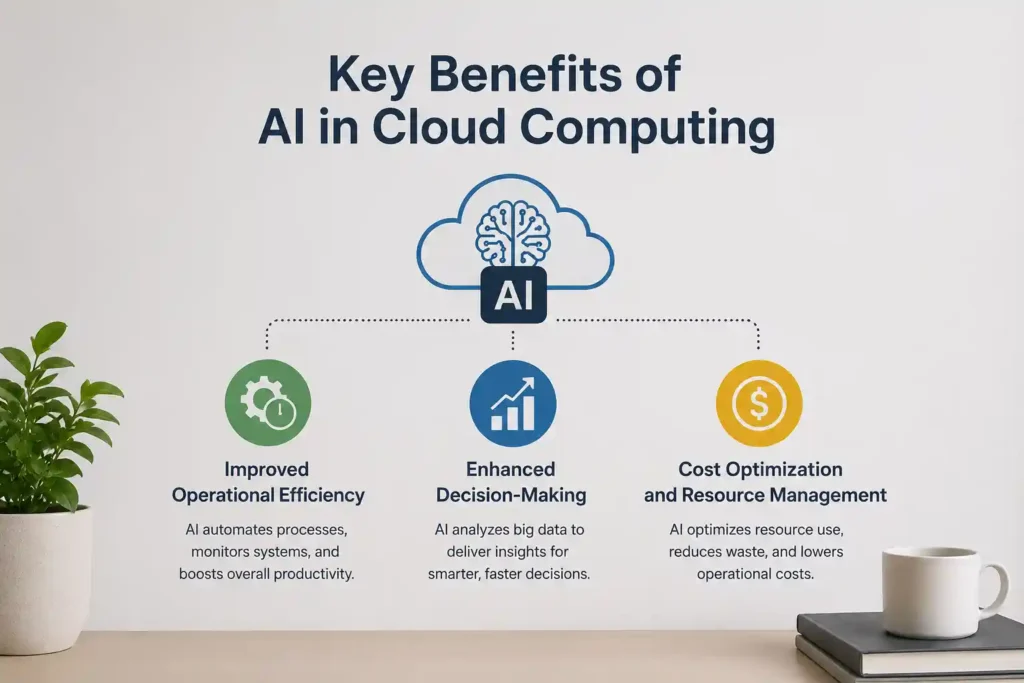
One of the most significant benefits of AI in cloud computing is improved operational efficiency. AI systems can monitor cloud environments, identify performance issues, and optimize resource usage automatically. This reduces downtime and enhances system reliability. Automated processes also free employees from routine tasks, allowing them to focus on higher-value activities that contribute to business growth and innovation.
Enhanced Decision-Making Capabilities
Cloud platforms provide the computing power needed to process complex datasets, while AI algorithms identify trends, patterns, and opportunities. This enables businesses to make accurate forecasts, improve strategic planning, and respond proactively to changing conditions. Data-driven decision-making has become a key advantage in today’s competitive business environment.
Cost Optimization and Resource Management
AI-driven cloud solutions help businesses optimize costs by managing resources more efficiently. Intelligent algorithms can predict demand, allocate resources dynamically, and prevent unnecessary spending. Organizations can scale services based on actual requirements rather than maintaining excess capacity. This approach not only reduces operational costs but also improves overall resource utilization and system performance.
AI-Driven Cloud Automation
Automated Infrastructure Management
AI is revolutionizing infrastructure management by automating routine maintenance and monitoring tasks. Intelligent systems can detect anomalies, predict equipment failures, and perform corrective actions without human intervention. This proactive approach improves system stability and reduces the risk of service disruptions. Automated infrastructure management also allows IT teams to focus on strategic initiatives rather than manual maintenance activities.
Intelligent Workflow Automation
AI-powered workflow automation streamlines business processes by reducing manual effort and increasing accuracy. Cloud-based AI tools can automate data processing, customer support interactions, and administrative tasks. These capabilities help organizations improve productivity, accelerate workflows, and deliver better services. As automation technologies continue to advance, businesses can achieve higher levels of efficiency across multiple departments.
Reducing Human Intervention
Reducing human intervention is a major advantage of AI-driven cloud automation. Intelligent systems can handle repetitive and time-consuming tasks with speed and precision, minimizing the likelihood of human error. This allows organizations to maintain consistent performance while improving productivity. By automating routine operations, businesses can allocate human resources to more creative and strategic responsibilities, driving long-term growth and innovation.
Predictive Analytics in Cloud Environments
By combining cloud-based data storage with advanced AI algorithms, organizations can analyze historical and real-time information to predict future outcomes. This capability helps businesses improve planning, reduce risks, and make informed decisions. As cloud platforms continue to expand, predictive analytics is playing a critical role in helping companies stay competitive and adapt to changing market conditions.
Forecasting Business Trends
AI-powered predictive analytics enables organizations to forecast business trends with greater accuracy. By examining customer behavior, sales data, and market patterns, AI models can identify emerging opportunities and potential challenges. Businesses can use these insights to optimize marketing strategies, improve product development, and anticipate customer needs. Cloud environments provide the scalability required to process large datasets quickly, making trend forecasting more efficient and reliable.
Predicting System Failures
Predicting system failures is another significant advantage of predictive analytics in cloud environments. AI algorithms continuously monitor infrastructure performance and detect unusual patterns that may indicate future problems. Organizations can address issues before they cause downtime or service interruptions. This proactive approach improves system reliability, enhances customer satisfaction, and reduces maintenance costs. Predictive maintenance has become an essential strategy for businesses seeking to maintain uninterrupted operations.
Data-Driven Insights for Organizations
Predictive analytics transforms raw data into meaningful insights that support better decision-making. Cloud-based AI tools can process information from multiple sources and uncover trends that might otherwise remain hidden. Organizations can use these insights to improve operational efficiency, identify growth opportunities, and strengthen strategic planning. Data-driven decision-making allows businesses to respond quickly to market changes while maintaining a competitive advantage.
You might also like: The Future of AI in E-Commerce and Online Shopping
AI for Cloud Security and Threat Detection
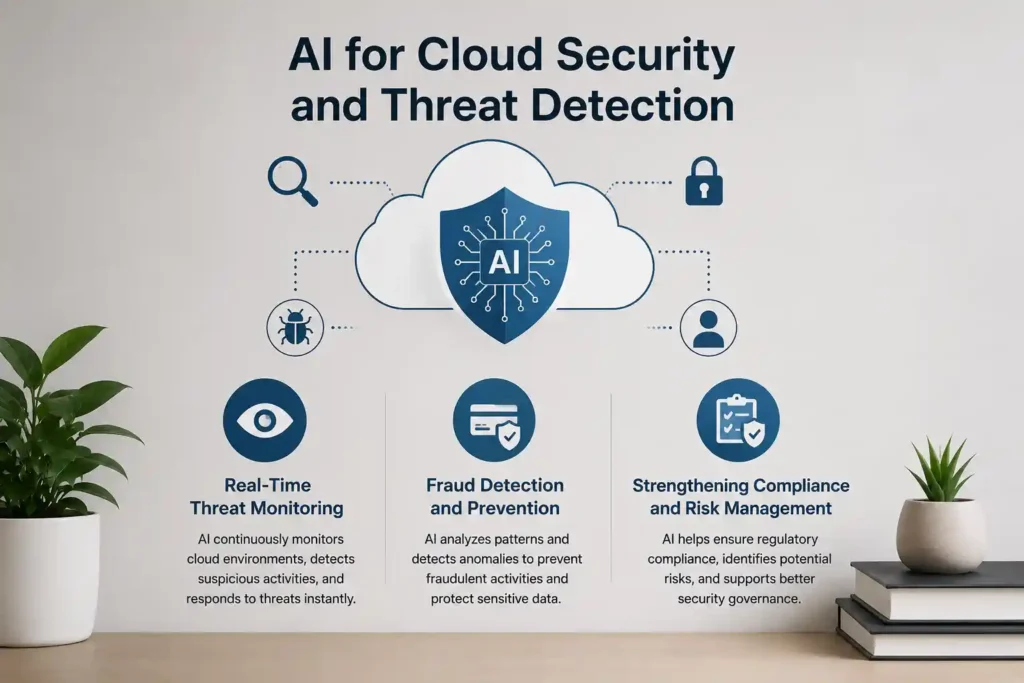
Security remains a top priority for organizations using cloud computing. AI is enhancing cloud security by identifying threats, monitoring suspicious activities, and responding to risks in real time. By analyzing vast amounts of security data, AI systems can detect patterns that traditional methods may overlook. This capability helps organizations strengthen their defenses and protect sensitive information from evolving cyber threats.
Real-Time Threat Monitoring
Real-time threat monitoring is one of the most important applications of AI in cloud security. AI-powered systems continuously analyze network traffic, user behavior, and system activity to identify unusual events. When suspicious activity is detected, automated alerts and responses can be triggered immediately. This rapid detection process helps organizations minimize potential damage and respond more effectively to cyberattacks.
Fraud Detection and Prevention
AI is widely used to detect and prevent fraud in cloud environments. Machine learning algorithms analyze transaction patterns and identify anomalies that may indicate fraudulent activity. Financial institutions, e-commerce companies, and other organizations rely on AI to improve security and reduce financial losses. By continuously learning from new data, AI systems become more effective at identifying emerging fraud techniques and protecting valuable assets.
Strengthening Compliance and Risk Management
AI also supports compliance and risk management by monitoring regulatory requirements and identifying potential violations. Automated systems can analyze large volumes of data to ensure policies are being followed consistently. This reduces the burden on compliance teams and improves accuracy. Organizations can better manage risks while maintaining adherence to industry regulations and security standards.
Machine Learning as a Service (MLaaS)
Machine Learning as a Service, commonly known as MLaaS, is becoming increasingly popular among businesses seeking accessible AI solutions. MLaaS allows organizations to develop, train, and deploy machine learning models through cloud-based platforms without investing heavily in infrastructure. This approach simplifies AI adoption and makes advanced technologies available to organizations of all sizes.
What Is MLaaS?
MLaaS is a cloud-based service that provides machine learning tools, frameworks, and infrastructure on demand. Businesses can use these services to build predictive models, analyze data, and automate decision-making processes. Because the service is hosted in the cloud, organizations can access powerful machine learning capabilities without managing complex hardware or software environments.
Popular MLaaS Platforms
Many leading cloud providers offer MLaaS solutions designed to support different business needs. These platforms provide prebuilt models, development tools, and scalable computing resources. Organizations can choose services based on their requirements and integrate machine learning capabilities into existing workflows more efficiently.
Benefits for Businesses and Developers
MLaaS offers numerous benefits, including reduced development costs, faster deployment, and easier scalability. Developers gain access to advanced tools and resources, while businesses can accelerate innovation and improve operational efficiency. The flexibility of cloud-based machine learning enables organizations to experiment with AI solutions and achieve measurable results.
AI-Powered Resource Optimization in the Cloud
Intelligent Workload Distribution
AI improves cloud performance by distributing workloads intelligently across available resources. This ensures applications run efficiently while preventing resource bottlenecks and performance issues.
Dynamic Scaling and Capacity Planning
AI enables dynamic scaling by adjusting resources automatically based on demand. Organizations can maintain optimal performance during traffic spikes while avoiding unnecessary resource allocation.
Reducing Infrastructure Costs
By optimizing resource utilization and eliminating waste, AI helps businesses reduce infrastructure costs. Intelligent cloud management ensures resources are used effectively, improving performance while supporting long-term financial sustainability.
You might also like: AI Software Trends Changing Digital Business Operations
Real-World Applications of AI in Cloud Computing
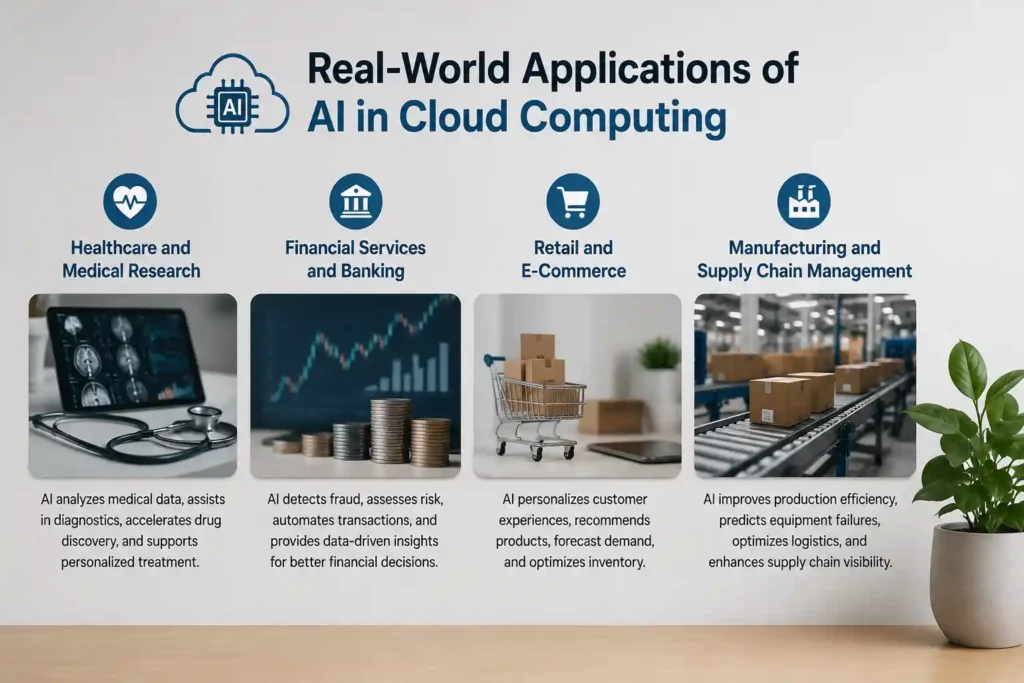
The integration of artificial intelligence and cloud computing is transforming industries worldwide. Businesses are using AI-powered cloud platforms to improve efficiency, enhance customer experiences, and drive innovation. The scalability and flexibility of cloud infrastructure allow organizations to deploy AI solutions quickly and cost-effectively. As adoption continues to grow, AI in cloud computing is delivering measurable value across various sectors.
Healthcare and Medical Research
Healthcare organizations use AI-powered cloud solutions to analyze medical data, improve diagnostics, and accelerate research. Machine learning algorithms can identify patterns in patient records, helping healthcare professionals make more accurate decisions. Cloud-based AI also supports medical imaging analysis, drug discovery, and personalized treatment plans. These capabilities enable faster innovation while improving patient outcomes and operational efficiency.
Financial Services and Banking
The financial sector relies heavily on AI and cloud computing to enhance security, automate processes, and improve customer service. AI systems analyze transaction data to detect fraud, assess risk, and support investment decisions. Cloud infrastructure provides the scalability needed to process large volumes of financial information in real time. As a result, banks and financial institutions can deliver more secure and efficient services.
Retail and E-Commerce
Retailers use AI-driven cloud platforms to understand customer behavior, personalize shopping experiences, and optimize inventory management. By analyzing purchasing patterns and browsing activity, AI helps businesses recommend relevant products and improve customer engagement. Cloud-based analytics also supports demand forecasting, enabling retailers to maintain optimal stock levels and reduce operational inefficiencies.
Manufacturing and Supply Chain Management
Manufacturers leverage AI and cloud computing to streamline production processes and improve supply chain visibility. Predictive analytics helps identify potential equipment failures before they occur, reducing downtime and maintenance costs. Cloud-connected AI systems also optimize inventory management, logistics planning, and quality control. These improvements contribute to greater productivity and operational resilience.
Challenges of Integrating AI with Cloud Computing
Despite the many benefits of AI-powered cloud solutions, organizations face several challenges during implementation. Addressing these obstacles is essential for maximizing the value of AI investments and ensuring long-term success.
Data Privacy Concerns
Data privacy remains one of the biggest concerns associated with AI and cloud computing. Organizations often process large amounts of sensitive information, making security and compliance critical priorities. Businesses must implement strong encryption, access controls, and governance policies to protect customer data. Failure to address privacy concerns can lead to regulatory penalties and reputational damage.
High Implementation Costs
Although cloud services can reduce infrastructure expenses, implementing AI solutions often requires significant investment. Costs may include software licensing, cloud resources, data preparation, and employee training. Careful planning and strategic deployment are necessary to achieve a positive return on investment.
Skills and Talent Shortages
The demand for AI and cloud computing expertise continues to exceed supply. Organizations often struggle to find qualified professionals with experience in machine learning, data science, and cloud architecture. This talent shortage can slow adoption and increase project costs. Investing in workforce development and training programs can help address this challenge.
Future Trends in AI and Cloud Computing
As technology evolves, AI and cloud computing will continue to shape the future of digital transformation. Emerging trends are expected to drive innovation, improve efficiency, and create new opportunities for businesses worldwide.
Edge AI and Distributed Computing
Edge AI is gaining popularity as organizations seek faster processing and reduced latency. Instead of sending all data to centralized cloud servers, AI models can process information closer to the source. This approach improves response times and supports real-time decision-making in applications such as autonomous systems, industrial automation, and smart devices.
Generative AI in Cloud Platforms
Generative AI is becoming a major feature of modern cloud platforms. These technologies can create text, images, code, and other content based on user input. Businesses are using generative AI to improve productivity, enhance customer interactions, and accelerate innovation. Cloud providers are increasingly integrating these capabilities into their services.
The Rise of Autonomous Cloud Systems
Autonomous cloud systems represent the next stage of cloud evolution. These environments use AI to monitor, optimize, and manage resources with minimal human intervention. Automated decision-making can improve performance, strengthen security, and reduce operational complexity.
You might also like: AI Solutions for Smarter Marketing and Customer Support
Frequently Asked Questions (FAQs)
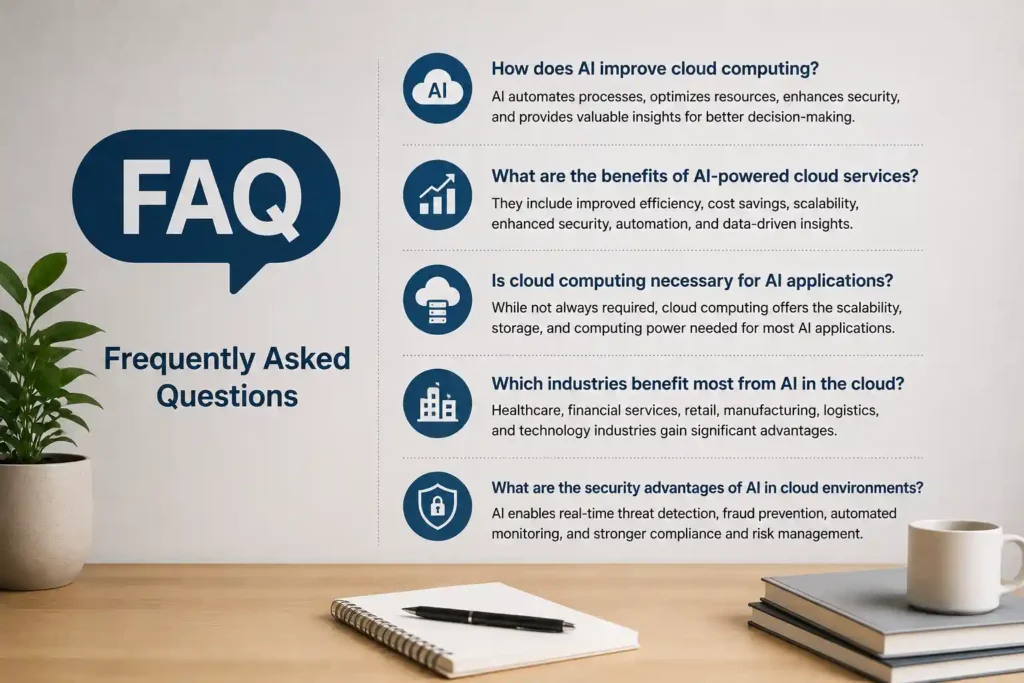
How does AI improve cloud computing?
AI improves cloud computing by automating processes, enhancing security, optimizing resources, and generating valuable insights from data.
What are the benefits of AI-powered cloud services?
Key benefits include improved efficiency, better decision-making, enhanced scalability, stronger security, and reduced operational costs.
Is cloud computing necessary for AI applications?
While not always required, cloud computing provides the scalability and computing power needed for many advanced AI applications.
Which industries benefit most from AI in the cloud?
Healthcare, finance, retail, manufacturing, logistics, and technology sectors benefit significantly from AI-powered cloud solutions.
What are the security advantages of AI in cloud environments?
AI strengthens security through real-time monitoring, threat detection, fraud prevention, and automated risk management.
Conclusion
Artificial intelligence and cloud computing are reshaping the digital landscape by enabling smarter, faster, and more efficient operations. From predictive analytics and security to automation and resource optimization, AI-driven cloud technologies provide significant advantages across industries. Although challenges such as privacy concerns, implementation costs, and talent shortages remain, continued innovation is driving widespread adoption. As emerging trends like edge AI, generative AI, and autonomous cloud systems gain momentum, the partnership between AI and cloud computing will continue to fuel business growth and technological advancement in the years ahead.