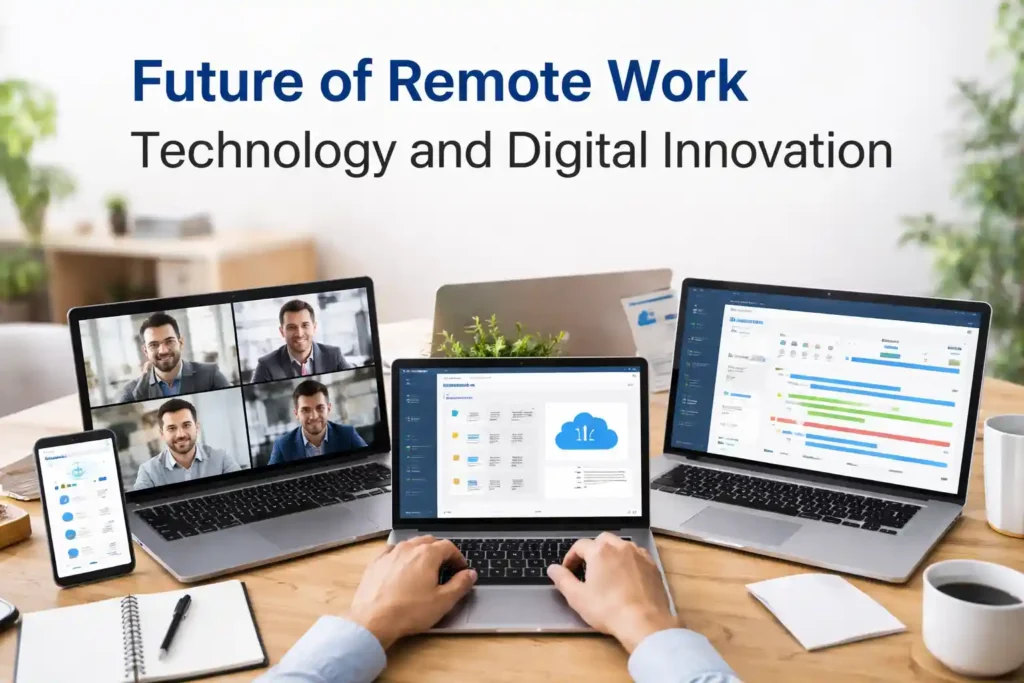

Future of Remote Work Technology and Digital Innovation
The modern workplace has undergone a significant transformation over the past decade, with remote work becoming the standard rather than the exception. Previously, organizations relied heavily on physical offices where employees had to be present to perform daily tasks. However, changing workforce expectations, globalization, and unexpected global events accelerated the transition toward flexible work environments.
Today, remote work allows employees to operate from anywhere, breaking geographical barriers and enabling companies to hire talent from across the world. This shift has not only improved work-life balance for many individuals but also helped organizations reduce operational costs. As a result, remote work is no longer viewed as a temporary solution, but rather as a long-term strategy that is shaping the future of employment.
Importance of Technology in Modern Workplaces
Technology plays a central role in making remote work possible and efficient. Without digital tools, managing distributed teams would be extremely challenging. Modern workplaces rely on advanced software, cloud systems, and communication platforms to maintain productivity and collaboration.
From managing projects to hosting virtual meetings, technology ensures that teams stay connected and aligned with business goals. It also provides flexibility, allowing employees to access files, tools, and systems anytime. As innovation continues, the reliance on technology will only grow stronger, making it the backbone of remote work transformation.
Core Technologies Driving Remote Work
Cloud Computing and SaaS Platforms
Cloud computing is one of the most important technologies enabling remote work. It allows businesses to store data online and access it from any location with an internet connection. This eliminates the need for physical servers and makes collaboration seamless.
Software as a Service (SaaS) platforms further enhance this experience by offering ready-to-use applications through the cloud. Tools for project management, file storage, and customer relationship management are now easily accessible without installation. Employees can work on shared documents in real time, improving efficiency and reducing delays.
Overall, cloud technology ensures that remote teams remain productive, secure, and well-connected, regardless of their location.
Communication and Collaboration Tools
Effective communication is critical for remote teams, and modern tools have made it easier than ever. Video conferencing platforms, instant messaging apps, and collaborative workspaces allow teams to interact in real time. These tools bridge the gap created by physical distance and ensure that employees stay engaged.
Collaboration platforms also enable teams to share files, assign tasks, and track progress in one place. This improves transparency and accountability within the organization. Whether it is a quick chat or a detailed meeting, these tools support smooth communication and teamwork, which are essential for remote success.
You might also like this: Axurbain Review 2026
Role of Artificial Intelligence in Remote Work

Automation and Smart Workflows
Artificial intelligence is transforming how remote teams operate by automating repetitive tasks and creating smarter workflows. Routine activities such as data entry, scheduling, and reporting can now be handled by automated systems, saving time and reducing human error.
Smart workflows allow tasks to move seamlessly from one stage to another without manual intervention. This not only increases efficiency but also helps employees focus on more strategic and creative work. As businesses adopt AI-driven systems, productivity continues to improve across remote environments.
AI-Powered Productivity Tools
AI-powered tools are becoming essential for enhancing individual and team productivity. These tools can analyze work patterns, suggest improvements, and even provide reminders for deadlines. Virtual assistants help manage schedules, organize tasks, and streamline daily operations.
Additionally, AI can offer insights into team performance, helping managers make informed decisions. By using data-driven recommendations, organizations can optimize workflows and improve overall efficiency. The integration of AI into remote work is making processes faster, smarter, and more reliable.
Virtual Workspaces and Digital Offices
Rise of Virtual Collaboration Platforms
Virtual workspaces are redefining how teams interact and collaborate. These platforms simulate a digital office environment where employees can communicate, share ideas, and work together in real time. They bring structure to remote work and create a sense of connection among team members.
With features like shared dashboards, virtual meeting rooms, and collaborative documents, these platforms make remote work more organized and interactive. They help maintain team culture and ensure that everyone stays aligned with company objectives.
Use of VR and AR in Remote Work
Virtual reality (VR) and augmented reality (AR) are emerging technologies that are beginning to influence remote work. These tools create immersive environments where employees can participate in meetings, training sessions, and collaborative projects as if they were physically present.
Cybersecurity in Remote Work Environments
Common Security Threats
As remote work continues to grow, cybersecurity has become a major concern for organizations and individuals alike. Working outside traditional office networks exposes employees to a variety of digital risks that can compromise sensitive data. One of the most common threats is phishing, where attackers use fake emails or messages to trick users into sharing confidential information.
Another major risk is unsecured Wi-Fi networks. Many remote workers rely on public or home internet connections that may not have strong security measures in place. This creates opportunities for hackers to intercept data and gain unauthorized access. Additionally, weak passwords and a lack of multi-factor authentication further increase vulnerability.
Malware and ransomware attacks are also rising in remote environments. These malicious programs can infect devices, lock important files, and demand payment for access. Without proper protection, remote workers can unknowingly expose entire organizational systems to cyber threats.
Best Practices for Data Protection
To address these risks, organizations must implement strong cybersecurity measures. One of the most effective practices is using secure and encrypted connections, such as virtual private networks (VPNs), to protect data transmission. This ensures that sensitive information remains safe even when accessed remotely.
Employees should also be trained to recognize phishing attempts and avoid suspicious links or attachments. Regular awareness programs can significantly reduce the chances of human error, which is often the weakest link in cybersecurity.
Another important step is enforcing strong password policies and enabling multi-factor authentication. This adds an extra layer of security, making it harder for unauthorized users to access systems. Keeping software and devices updated is equally essential, as updates often include fixes for security vulnerabilities.
By adopting these practices, organizations can create a safer remote work environment and protect valuable data from potential threats.
You might also like this: Miuzo Explained
Remote Work Tools Enhancing Productivity
Project Management Software
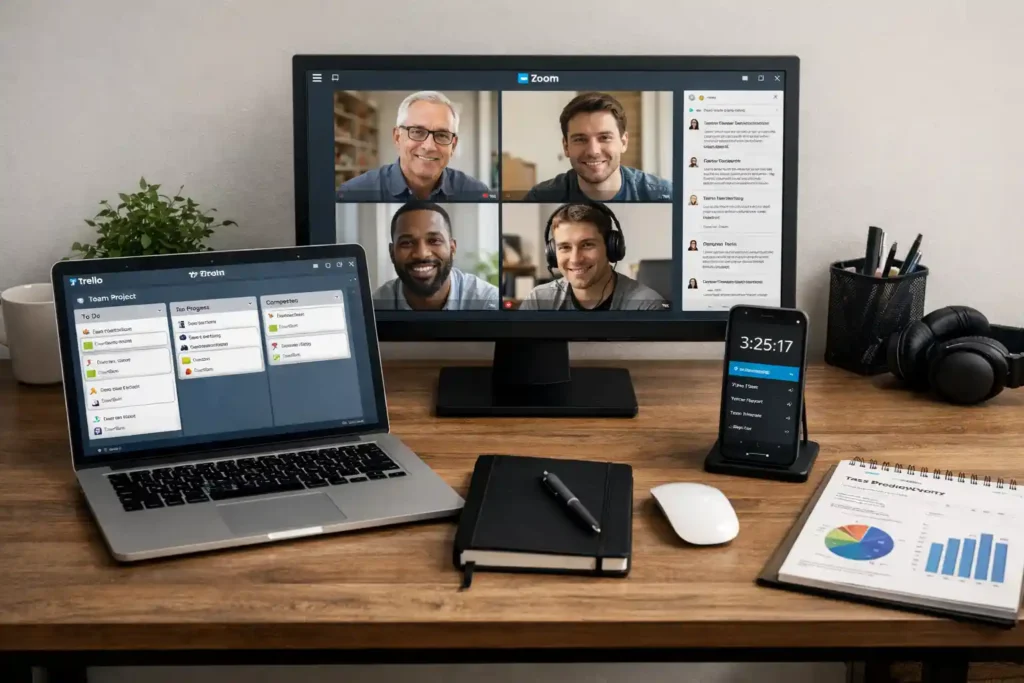
Project management software plays a crucial role in keeping remote teams organized and productive. These tools allow managers and team members to plan tasks, assign responsibilities, and track progress in real time. With clear visibility into ongoing projects, teams can stay aligned and meet deadlines more effectively.
Modern project management platforms also offer features such as task prioritization, file sharing, and progress tracking. These capabilities reduce confusion and ensure that everyone understands their role within the team. By centralizing information, these tools eliminate the need for constant back-and-forth communication.
For remote teams, having a structured workflow is essential. Project management software provides that structure, enabling smoother collaboration and better overall performance.
Time Tracking and Monitoring Tools
Time tracking tools help organizations understand how employees spend their working hours. These tools provide insights into productivity levels, helping managers identify areas for improvement. They also assist in maintaining accountability, especially in fully remote setups.
Monitoring tools can track task completion, measure efficiency, and generate detailed reports. This data allows businesses to optimize workflows and allocate resources more effectively. However, it is important to use these tools responsibly to maintain trust and avoid micromanagement.
When implemented correctly, time tracking and monitoring tools can boost productivity without compromising employee satisfaction. They create a balance between performance tracking and flexibility, which is essential for remote work success.
Impact of High-Speed Internet and 5G
Faster Connectivity and Collaboration
High-speed internet has become the foundation of remote work, enabling seamless communication and collaboration. With faster connections, employees can participate in video meetings, share large files, and access cloud-based tools without delays. This improves efficiency and reduces frustration caused by slow networks.
The introduction of 5G technology takes connectivity to the next level by offering ultra-fast speeds and low latency. This allows real-time collaboration, making remote interactions feel almost as smooth as in-person communication.
Expanding Remote Work Opportunities
Improved internet infrastructure is also expanding remote work opportunities to new regions. Areas that previously struggled with poor connectivity can now support remote jobs, opening doors for a wider talent pool. This benefits both employees and employers by creating more inclusive work environments.
With better connectivity, businesses can hire skilled professionals from different parts of the world without worrying about technical limitations. This not only increases diversity but also enhances innovation and productivity within organizations.
Hybrid Work Model and Its Growth
Benefits of Hybrid Workplaces
The hybrid work model combines remote and in-office work, offering employees flexibility while maintaining some level of physical collaboration. This approach has gained popularity as it provides the best of both worlds. Employees can enjoy the comfort of working from home while still having opportunities for face-to-face interaction.
Hybrid workplaces also help companies reduce operational costs, such as office space and utilities. At the same time, they improve employee satisfaction and retention by offering a more balanced work environment.
Technologies Supporting Hybrid Teams
To make hybrid work successful, organizations rely on advanced technologies that bridge the gap between remote and in-office employees. Collaboration tools, cloud platforms, and communication software ensure that all team members stay connected and informed.
You might also like this: Best AI Tools for Content Creators
Benefits of Remote Work Technology
Increased Productivity and Flexibility
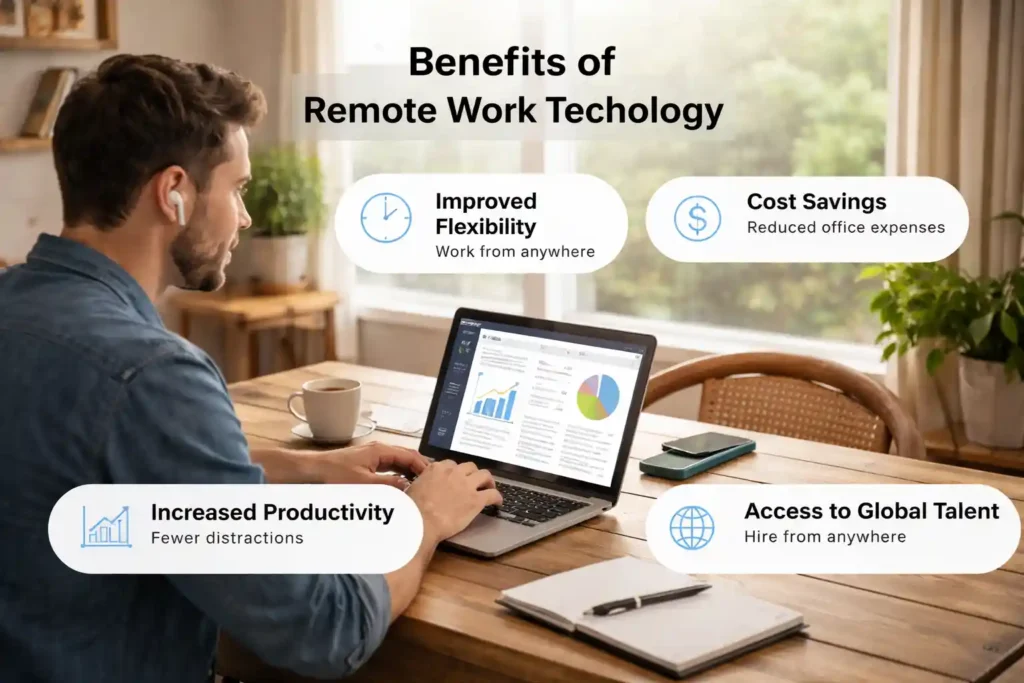
Remote work technology has significantly improved how employees manage their tasks and time. With access to digital tools, workers can complete assignments from anywhere, reducing commuting stress and allowing more focus on meaningful work. This flexibility often leads to higher productivity, as individuals can design their schedules around peak performance hours.
Employees also benefit from a better work-life balance, which directly impacts motivation and efficiency. When people feel more in control of their routines, they are more likely to stay engaged and produce quality results. Remote work tools such as cloud platforms and collaboration software further streamline workflows, ensuring that teams remain connected and aligned despite physical distance.
Cost Savings for Businesses
One of the biggest advantages of remote work technology is cost reduction for organizations. Companies can save significantly on office space, utilities, and maintenance expenses. With fewer employees working on-site, businesses can optimize their resources and invest in growth opportunities instead.
Additionally, remote work reduces travel and relocation costs. Organizations can hire skilled professionals from different regions without the need to move them physically. This not only cuts expenses but also expands access to a diverse talent pool. Over time, these savings contribute to improved profitability and long-term sustainability.
Challenges of Remote Work Technology
Digital Fatigue and Burnout
Despite its many benefits, remote work technology also brings challenges, particularly digital fatigue. Spending long hours in front of screens can lead to physical strain, reduced concentration, and mental exhaustion. Continuous virtual meetings and constant notifications often make it difficult for employees to disconnect from work.
Burnout is another growing concern in remote environments. Without clear boundaries between personal and professional life, individuals may feel pressured to work longer hours. This can negatively impact well-being and overall productivity. To address this issue, organizations must encourage regular breaks and promote healthy work habits.
Dependence on Technology
Remote work heavily relies on technology, which can become a limitation when systems fail or connectivity issues arise. Technical problems such as software glitches, slow internet, or hardware failures can disrupt workflows and delay important tasks.
Moreover, excessive dependence on digital tools may reduce human interaction, affecting team collaboration and communication. While technology enables remote work, it is important to balance its use with effective management strategies to ensure smooth operations and maintain team cohesion.
Future Trends in Remote Work Technology
AI and Automation Expansion
The future of remote work technology is closely linked to the growth of artificial intelligence and automation. These technologies are expected to handle repetitive tasks, allowing employees to focus on more strategic and creative activities. Automation tools will continue to improve efficiency by streamlining workflows and reducing manual effort.
AI-powered systems can also provide valuable insights into performance and productivity. By analyzing data, these tools help organizations make better decisions and optimize their operations. As AI continues to evolve, it will play a central role in shaping the next generation of remote work environments.
Global Talent and Remote Hiring
Remote work technology has made it easier for companies to hire talent from around the world. This trend is expected to grow, creating more opportunities for both employers and job seekers. Businesses are no longer limited by geographic boundaries, allowing them to build diverse and highly skilled teams.
For employees, this means access to a wider range of job opportunities without the need to relocate. Global hiring also encourages cultural exchange and innovation, which can drive business success. As connectivity improves, the global workforce will become more interconnected than ever before.
You might also like this: Tribupneu Review 2026
FAQs About Remote Work Technology
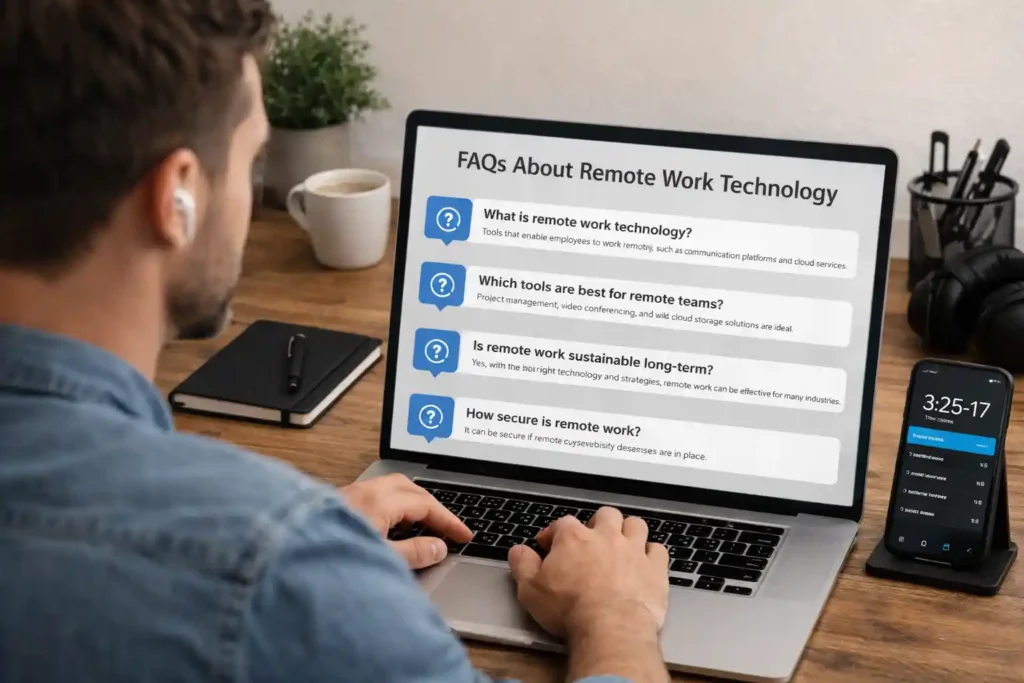
What is remote work technology?
Remote work technology refers to digital tools and systems that enable employees to work from locations outside traditional offices. These include communication platforms, cloud services, and productivity software.
Which tools are best for remote teams?
The best tools for remote teams typically include project management software, video conferencing platforms, and cloud storage solutions. These tools help teams collaborate effectively and stay organized.
Is remote work sustainable long-term?
Yes, remote work is considered sustainable for many industries. With continuous advancements in technology, businesses can maintain productivity while offering flexibility to employees.
How secure is remote work?
Remote work can be secure if proper measures are in place, such as strong passwords, encryption, and employee awareness. Organizations must invest in cybersecurity to protect sensitive data.
What is the future of hybrid work?
The future of hybrid work looks promising, as it combines the benefits of remote and in-office work. Technology will continue to support this model, making it more efficient and widely adopted.
Conclusion and Future Outlook
Remote work technology has transformed the modern workplace by offering flexibility, improving productivity, and reducing operational costs. While challenges such as digital fatigue and dependence on technology remain, ongoing advancements are addressing these issues effectively.
Looking ahead, innovations in artificial intelligence, automation, and global connectivity will continue to shape the future of work. Organizations that adapt to these changes and invest in the right tools will be better positioned for long-term success. Remote and hybrid work models are not just trends but essential components of the evolving digital workplace.