
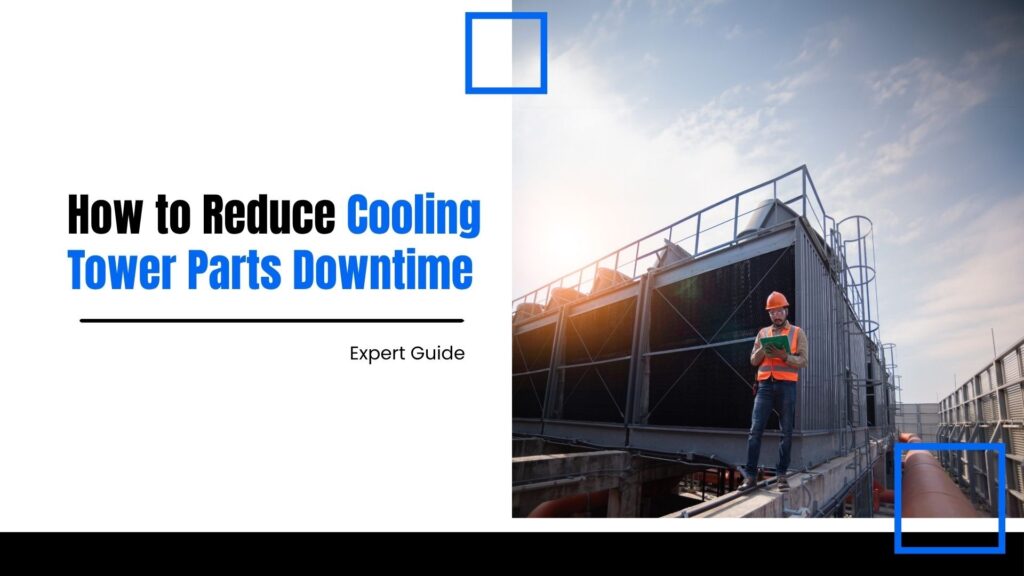
How to Reduce Cooling Tower Parts Downtime: Expert Guide
Cooling tower parts downtime is one of the most disruptive and preventable challenges facility managers face. When critical components like gearboxes, motors, and fill media fail unexpectedly, long supplier lead times transform routine maintenance into costly production shutdowns that impact your entire operation.
Reducing cooling tower parts downtime starts with a proactive two-part strategy: maintaining on-site inventory of high-wear spare parts and partnering with reliable Thailand-based suppliers who offer fast, consistent delivery. This combination eliminates the reactive scramble that turns minor component failures into extended operational halts.
Facility managers who take a structured approach to cooling tower spare parts availability don’t just minimize downtime, they protect production continuity, control maintenance costs, and build long-term operational resilience. The right parts, sourced from dependable suppliers, delivered fast, keep your cooling systems running without interruption.
Why Cooling Tower Downtime Is More Expensive Than You Think
Downtime is not merely a maintenance issue. It is a massive production risk that affects the entire bottom line. Facility operators must understand the true cost of unexpected failures. Consider these severe consequences that occur when towers shut down.
- Production halts completely within a matter of hours.
- Revenue loss accumulates rapidly during the outage.
- Emergency repair costs skyrocket due to rush shipping and overtime labor.
Cooling tower failures can stop entire operations quickly if managers do not prepare appropriately.
The Real Cause of Downtime: Parts Availability Failure
Sudden mechanical failures don’t cause most shutdowns. Instead, extended downtime of cooling tower components often stems from a severe shortage of replacement parts.
Operators often wait too long to order essential cooling tower parts and other spares, leading to prolonged and costly downtime when a failure does occur.
Lead Time vs Failure Time (Critical Insight)
Understanding the timeline of a mechanical failure is vital. You must recognize how long it takes to secure parts versus how quickly a machine breaks. Review these critical insights regarding lead times.
- Custom parts take weeks or even months to arrive from overseas.
- Mechanical failures happen instantly without any prior warning.
Lead time often determines downtime risk much more than the actual cost of the component.
Reactive vs Proactive Maintenance Gap
Maintenance approaches dictate the success of your cooling tower. A proactive stance keeps systems running efficiently. Observe the differences between these two strategies.
- Reactive Maintenance: This approach means you only fix things after they break. This almost always leads to surprise shutdowns, which cost you money in lost production.
- Proactive Maintenance: This involves regular checks and planned repairs to prevent failures. This strategy helps keep your systems running smoothly, avoids unexpected downtime, and makes your maintenance budget more predictable.
Critical vs Non-Critical Cooling Tower Parts (Key Framework)
To effectively manage your inventory and prevent cooling tower parts downtime, you must categorize your components. Some parts will stop your system immediately if they fail, while others might only reduce efficiency over time.
Critical Parts (Immediate Shutdown Risk)
Certain mechanical components carry an immediate shutdown risk. You cannot operate the tower if these items fail. Pay close attention to these vital parts.
- Fan blades and the complete fan assembly require immediate replacement upon failure.
- The gearbox drives the entire mechanical process and cannot be bypassed.
- The motor powers the system and must function perfectly.
- The drive shaft connects the motor to the gearbox securely.
Failure of these specific parts leads to an instant system shutdown.
Non-Critical but Strategic Parts
Other parts degrade slowly over time. They do not stop the tower immediately, but they do ruin performance. Monitor these components during routine inspections.
- Fill media handles the primary heat transfer and degrades from scaling.
- Drift eliminators prevent water loss but become brittle over time.
- Spray nozzles distribute water evenly and often clog with debris.
While these components degrade slowly, ignoring them can drastically impact performance and eventually increase the risk of cooling tower parts downtime.
Cooling Tower Parts vs Downtime Risk
| Part Category | Example Components | Downtime Risk Level | Recommended Strategy |
| Critical parts | Fan, gearbox, motor | Very high | Keep in stock (on-site) |
| Semi-critical | Bearings, shafts | High | Local supplier availability |
| Performance parts | Fill, nozzles | Medium | Scheduled replacement |
| Auxiliary parts | Louvers, casing | Low | Order when needed |
The Thailand Reality: Why Local Parts Availability Matters
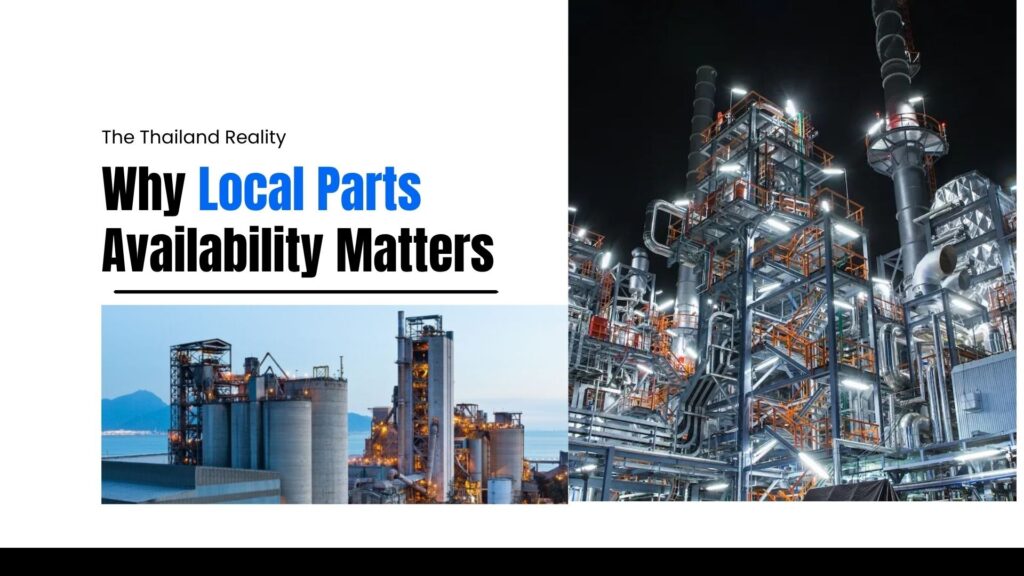
Geography directly affects how quickly you can recover from a breakdown. Relying on distant manufacturers creates unnecessary vulnerability. Facility managers in Southeast Asia face unique supply chain challenges.
Long Import Lead Times
Importing industrial components involves many frustrating delays. You cannot control the international shipping process. Consider these common hurdles when ordering abroad.
- Overseas shipping delays add weeks to your recovery timeline.
- Customs clearance processes often stall shipments at the border.
Importance of Local Suppliers
Partnering with regional distributors solves the lead time problem. You gain immediate access to the parts you need most. Look at the benefits of local sourcing.
- Get your parts delivered quickly from Bangkok, eliminating frustrating transit delays.
- Minimize the risk of downtime and protect your quarterly revenue goals.
Cooling Tower Spare Parts Strategy
The best facilities do not rely on luck. They built a robust cooling tower spare parts availability plan to handle any mechanical failure. You must take control of your supply chain.
On-Site Inventory Planning
Storing the right parts at your facility is your first line of defense. You must allocate warehouse space for high-risk items. Follow these guidelines for on-site storage.
- Keep high-risk components securely stored and protected from the elements.
- Avoid single-point failure by stocking redundant parts for crucial systems.
Supplier Reliability Evaluation
Not all parts distributors offer the same level of service. You must vet your partners carefully before an emergency strikes. Check for these essential supplier traits.
- Consistent stock availability proves the supplier can meet your demands.
- Dedicated technical support helps your team install complex parts correctly.
- Rapid delivery time ensures your downtime remains minimal.
Hybrid Strategy (Best Practice)
Combining on-site storage with local vendor support creates the ultimate safety net. This approach balances cost with security. Implement this best practice immediately.
- Keep critical parts on-site for immediate emergency access.
- Rely on a local supplier for all other necessary components.
Early Warning Signs That Require Immediate Parts Replacement
Most mechanical failures provide clues before they break down completely, and recognizing these signs early can prevent catastrophic damage and costly downtime for cooling tower parts.
Your maintenance team must learn to spot these indicators to keep operations running smoothly.
Mechanical Indicators
Machines communicate their health through physical feedback. You must train your operators to observe the equipment closely. Watch for these common mechanical warnings.
- Excessive vibration signals a misaligned shaft or damaged fan blade.
- Unusual grinding noise points directly to failing gearbox bearings.
- Noticeable imbalance requires an immediate system shutdown and inspection.
Thermal Indicators
A cooling tower must remove heat effectively. When temperatures rise, the internal components are likely to fail. Monitor your water temperatures to detect these issues.
- Reduced cooling efficiency indicates degraded fill media or clogged nozzles.
- Higher outlet temperatures mean the process water is not cooling properly.
Operational Indicators
Your control room data provides excellent insight into tower health. Changes in power consumption often highlight mechanical strain. Review your daily logs for these trends.
- Increased energy usage means the motor is working harder than normal.
- Irregular airflow suggests the fan pitch requires immediate adjustment.
Most failures show early warning signals before breakdown occurs.
Final Thoughts
Cooling tower parts downtime is rarely caused by sudden mechanical failure alone. In most cases, it results from poor spare parts planning and critical supply chain gaps. Every hour of cooling tower parts downtime translates directly into lost production, rising costs, and compromised operational reliability. Facilities that proactively secure emergency parts cooling tower Thailand and build a resilient tower parts stock Asia network gain a decisive advantage in minimizing cooling tower parts downtime across all maintenance scenarios.
Mastering cooling tower parts downtime prevention means aligning your supply chain, stocking critical components, and responding faster when it matters most. Strategic parts management is your strongest defense against unpredictable operational losses. Securing emergency parts cooling tower Thailand and building a reliable tower parts stock Asia network will transform your maintenance program. By mastering cooling tower parts downtime, you protect your facility from unpredictable losses.
Frequently Asked Questions
What causes cooling tower downtime the most?
The most common cause is the failure of critical components combined with the unavailability of replacement parts. Long lead times and poor inventory planning significantly increase downtime risk.
Which cooling tower parts should always be in stock?
Critical components such as fan assemblies, gearboxes, motors, and key drive parts should always be available on-site to prevent immediate system shutdown.
How can I reduce cooling tower downtime in Thailand?
Work with local suppliers that offer fast delivery, maintain essential spare parts on-site, and plan preventive maintenance aligned with part availability.
Why is spare parts availability more important than cost?
A low-cost part with a long delivery time can cause expensive production shutdowns. Availability ensures quick replacement and continuous operation.
What is the best spare parts strategy for cooling towers?
A hybrid approach works best. Keep critical parts on-site while relying on trusted local suppliers for less critical components.
Read More Informative Blogs at Kerkt…