
Embedded Systems Development Services for ScalableIoT Device
If you look around today, almost every device you interact with has some level of intelligence built into it. Whether it is a smart thermostat, a fitness tracker, or even a modern car, embedded systems are quietly doing the heavy lifting behind the scenes. They are not flashy, but they are essential.
This is exactly why Embedded Systems Development has become such a critical part of modern product engineering. Businesses are no longer just building hardware; they are building smart, connected, and responsive systems that need to perform reliably in real-world conditions.
Unlike traditional software that runs on general-purpose machines, embedded systems are built for one job, and they are expected to do it extremely well. That focus on precision, efficiency, and reliability is what makes them so powerful.
What Embedded Systems Development Really Means
At its core, Embedded Systems Development is about creating tightly integrated hardware and software that work together to perform a specific function.
Think of it as designing a system where every byte of memory and every cycle of processing power matters. You are not just writing code, you are shaping how a device behaves in the real world.
A typical embedded system includes:
- A microcontroller or processor that acts as the brain
- Firmware that controls operations
- Sensors or inputs that gather data
- Outputs that trigger actions
What makes this process interesting is the level of constraint involved. You are often working with limited memory, strict power budgets, and real-time performance requirements. That forces developers to think differently compared to traditional application development.
Why Embedded Systems Matter More Than Ever
The importance of Embedded Systems Development has grown significantly over the past decade, largely due to the rise of connected devices and automation.
One major reason is efficiency. Embedded systems are designed for a purpose, so they do not waste resources. This makes them faster and more reliable for specific tasks.
Another reason is scalability. A well-designed embedded system can evolve over time. Whether it is adding new features or integrating with other systems, scalability ensures the product does not become obsolete too quickly.
Reliability is also a key factor. Many embedded systems operate in environments where failure is not an option ,think medical devices or industrial machinery. These systems must work consistently, often for years, without interruption.
Key Building Blocks of Embedded Systems
Hardware Design
Everything starts with hardware. The choice of microcontroller, memory, and supporting components determines what the system is capable of. A strong hardware foundation makes everything else easier.
Firmware Development
Firmware is where the logic lives. It controls how the hardware behaves and responds to inputs. Most embedded firmware is written in C or C++ because of the control these languages provide.
Real-Time Processing
In many applications, timing is critical. A delay of even a few milliseconds can cause issues. That is where real-time systems come in, ensuring tasks are executed exactly when needed.
Connectivity
Modern embedded systems rarely operate in isolation. They communicate with other devices, cloud platforms, or mobile apps. This requires reliable communication protocols and secure data handling.
Testing
Testing in embedded systems is not optional; it is essential. Since these systems often run in critical environments, they must be thoroughly validated before deployment.
Where Embedded Systems Are Used
Embedded systems are everywhere, even if most people do not notice them.
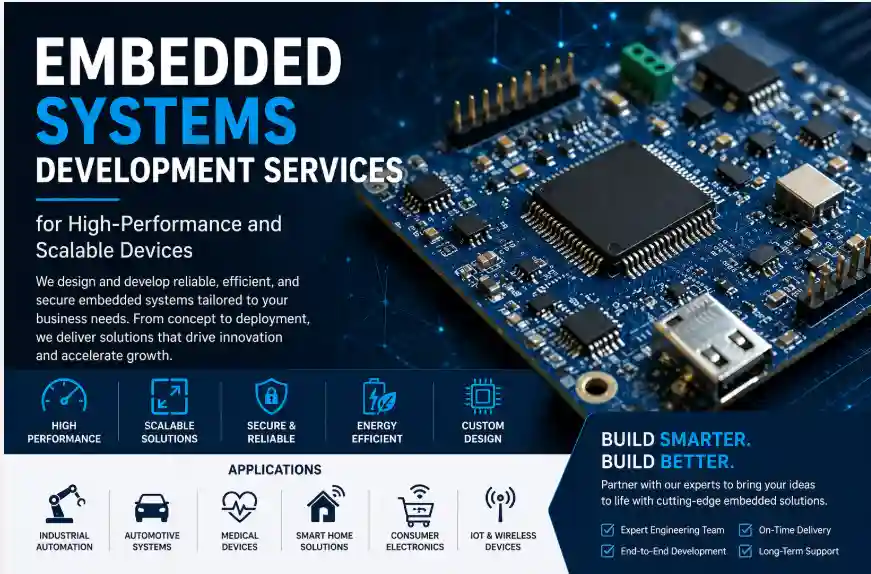
In consumer electronics, they power devices like smart TVs, washing machines, and wearables. These systems make everyday products more convenient and efficient.
In the automotive industry, embedded systems control everything from engine performance to safety features. Modern vehicles rely heavily on embedded technology.
Healthcare is another area where embedded systems play a crucial role. Devices like patient monitors and diagnostic equipment depend on accurate and reliable embedded solutions.
In industrial environments, embedded systems are used for automation, monitoring, and control. They help improve efficiency and reduce human error.
And of course, there is IoT. Without embedded systems, connected devices simply would not exist. They are the foundation of smart homes, smart cities, and connected infrastructure.
Benefits for Businesses
For businesses, investing in Embedded Systems Development is not just a technical decision; it is a strategic one.
One clear advantage is a faster time to market. With the right development approach, companies can move from concept to product much more quickly.
There is also the benefit of customization. Embedded systems can be designed to meet very specific requirements, which gives businesses a competitive edge.
Cost efficiency is another factor. While development may require an upfront investment, optimized systems reduce long-term costs by improving performance and reducing failures.
Most importantly, embedded systems improve product quality. A well-designed system enhances user experience, reliability, and overall value.
Challenges You Cannot Ignore
Of course, Embedded Systems Development is not without its challenges.
One of the biggest hurdles is resource limitation. Developers must work within strict constraints, which require careful planning and optimization.
Another challenge is complexity. Integrating hardware and software seamlessly is not easy. It requires expertise in multiple domains.
Security is also becoming a major concern. Protecting data and ensuring secure communication is critical.
Finally, there is the issue of long-term support. Embedded systems often need to operate for years, which means updates and maintenance must be considered from the start.
What the Future Looks Like
The future of Embedded Systems Development is closely tied to advancements in technology.
Artificial intelligence is starting to make its way into embedded devices, enabling smarter and more autonomous systems.
Edge computing is also gaining traction. Instead of sending data to the cloud, devices process information locally, which improves speed and reduces latency.
The growth of IoT will continue to drive demand for embedded solutions. As more devices become connected, the need for efficient and reliable systems will only increase.
Security will also remain a top priority, with new techniques being developed to protect devices from evolving threats.
Choosing the Right Development Partner
Not every company has the in-house expertise needed for Embedded Systems Development.
You need a team that understands both hardware and software, and more importantly, how they work together. Experience, proven processes, and attention to detail all matter.
Avantari Technologies is one such company that focuses on delivering practical, scalable embedded solutions. Their approach combines technical expertise with a strong understanding of real-world requirements, helping businesses turn ideas into reliable products.
Conclusion
Embedded Systems Development is no longer a niche field; it’s a core part of modern technology. From everyday consumer devices to complex industrial systems, embedded solutions are driving innovation across industries.
The key to success lies in building systems that are not only functional but also efficient, scalable, and reliable. That requires the right combination of design, development, and testing.
As technology continues to evolve, embedded systems will become even more important. Businesses that invest in this area today will be better positioned to adapt, innovate, and grow in the future.